 ShengHuang
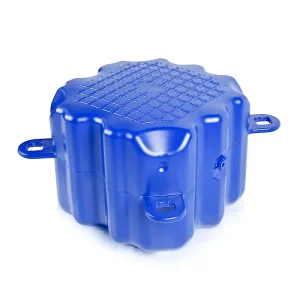
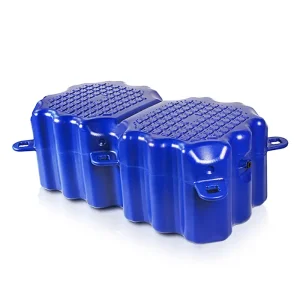
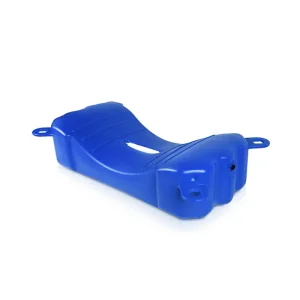
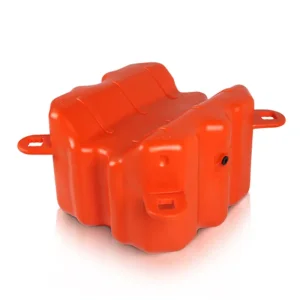
The Greater Houston region, encompassing Galveston Bay, the Houston Ship Channel, and major inland waterways like Lake Conroe and Clear Lake, represents one of the most demanding marine environments in North America. Serving as a crucial global logistics hub and supporting extensive commercial, industrial, and recreational marine infrastructure, the demand for resilient floating systems is paramount.
Pontoons and modular floating docks in the Houston market must withstand intense environmental stresses. These include high salinity in the Gulf Coast, extreme heat waves that accelerate UV degradation, tidal surges, and volatile weather patterns such as tropical storms and hurricanes. Traditional wood and concrete dock installations are increasingly being replaced by engineered High-Density Polyethylene (HDPE) modular pontoons due to their superior chemical resistance, flexibility under wave load, and zero-maintenance profile.
Within Houston’s commercial sectors, modular HDPE pontoons serve various applications:
Founded in 2019, Shenghuang Industrial & Trade Blow Molding Factory has quickly emerged as a leading global innovator in the plastic blow molding sector. Headquartered in Huangyan, Taizhou, Zhejiang—an area internationally recognized for its world-class manufacturing infrastructure and plastic tooling expertise—our facility delivers top-tier OEM and ODM solutions to clients across North America, Europe, and the Asia-Pacific region.
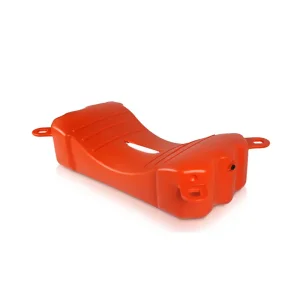
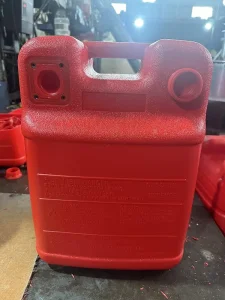
Our facility is equipped with automated blow molding lines capable of shaping precision components from 10L to 3000L. This enables reliable manufacturing of high-capacity pontoons and modular floats under tight dimensional tolerances.
Quality assurance is embedded in our operations. From high-grade raw HDPE granulate verification to melt-flow index checks and load testing, every step aligns with ISO 9001:2015 standards.
We actively utilize 100% recyclable thermoplastic raw materials. Our manufacturing loops feature closed-circuit water cooling and integrated scrap regrinding to minimize our environmental footprint.
Shenghuang's continuous investments in raw material R&D allow us to introduce advanced polymer blends that resist environmental stress cracking (ESCR) and sustain mechanical integrity even when exposed to raw petrochemicals and marine fuel oils.
Global procurement teams face challenges in securing high-quality pontoon components that combine long lifespans with simple installation. For complex marine operations, sourcing goes beyond purchasing plastic cubes; it involves securing a comprehensive, engineered solution that addresses structural design, material longevity, logistics, and compliance.
Our marine pontoons are manufactured from High Molecular Weight High-Density Polyethylene (HMWHDPE). HMWHDPE offers superior tensile strength, chemical inertia, and impact resistance compared to standard low-density polyethylenes. To meet the demands of high-UV regions like the Texas Gulf Coast, our raw material formulation integrates carbon black and specialized hindered amine light stabilizers (HALS). This prevents degradation, embrittlement, and discoloration over decades of intense sun exposure.
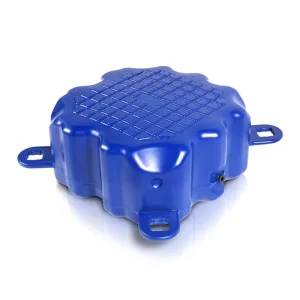
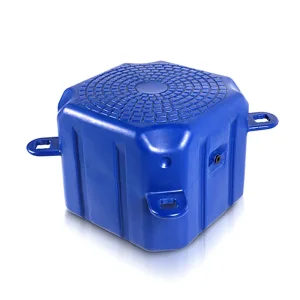
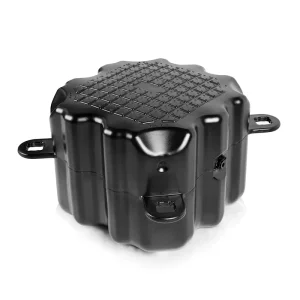
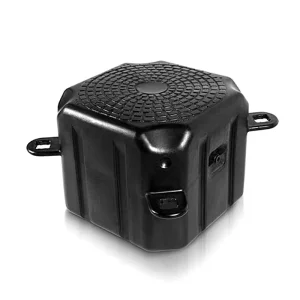
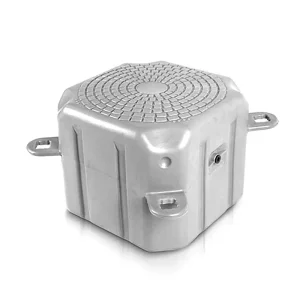
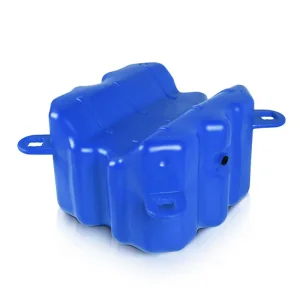
Our standard single floating cubes offer a buoyancy capacity of 350 kg/m² (approx. 71.6 lbs/sq.ft). The load-bearing capacity is achieved through a structural ribbing pattern that resists hydrostatic pressure and minimizes deflection under localized weight load. Double-layered lock pins connect individual cubes, distributing shear loads uniformly across the entire system. This enables the construction of stable floating platforms capable of supporting small vehicles, light machinery, and heavy pedestrian traffic.
| Physical Property | Standard Testing Protocol | Typical Value (HMWHDPE) |
|---|---|---|
| Density | ASTM D1505 | 0.952 - 0.956 g/cm³ |
| Tensile Strength at Yield | ASTM D638 | 22 - 25 MPa |
| Flexural Modulus | ASTM D790 | 1,000 - 1,200 MPa |
| Buoyancy per Square Meter | Hydrostatic Floating Test | 350 kg / m² |
| Environmental Stress Cracking | ASTM D1693 (Condition B) | F50 > 1000 hours |
The primary advantage of modular polymer pontoons over traditional wood, concrete, or steel-piling docks is their configuration flexibility. With our unique locking pin mechanism, a small crew can assemble a complete dock system without heavy equipment. The system can be configured as a simple walking pier, a complex multi-slip marina, or a dynamic U-shaped floating slip for quick vessel docking and dry launching.
For installations in the Houston and wider Texas region, adherence to local environmental and safety standards is critical. The U.S. Army Corps of Engineers (USACE) Galveston District, the Texas General Land Office (GLO), and local municipal water authorities regulate all shoreline modifications and floating structure installations. Our modular HDPE pontoons help simplify this compliance path:
Unlike treated wood, which can leach toxic copper, chromium, or arsenic into delicate bayou ecosystems, our HDPE floats are non-toxic, chemically inert, and safe for marine life.
Rigid docks often buckle or break during storm surges. Our modular system flexes under wave action, riding surge heights to significantly reduce structural damage risks during coastal storms.
Our modular installations do not require heavy pile driving, preserving seabed and shoreline habitats. This helps expedite local municipal permitting processes.
Shenghuang provides comprehensive documentation packages to assist marine contractors and developers. These include raw material certificates, buoyancy calculators, and loading diagrams required to secure local municipal building approvals.
As the marine infrastructure market evolves, our product research and development targets key performance and sustainability metrics:
1. Bio-Sourced Polymers: We are testing bio-sourced polyethylene resins to develop renewable, carbon-neutral marine flotation systems that perform matching conventional HMWHDPE.
2. Smart Anchorage Monitoring: We are exploring integration paths for load-monitoring sensors within structural locking pins. This technology will track anchor line tension and dock deflection in real-time, helping commercial operators plan predictive maintenance.
3. Advanced Antimicrobial Surfaces: Future product lines will feature molded-in slip resistance combined with non-leaching antimicrobial surfaces. This reduces marine bio-fouling and algae accumulation, making walkways safer and easier to maintain.
Contact our technical engineering and logistics teams to design a modular dock solution suited for the Gulf Coast region. We provide fast quotes, custom layouts, and direct shipping coordination.
Send Inquiry Now