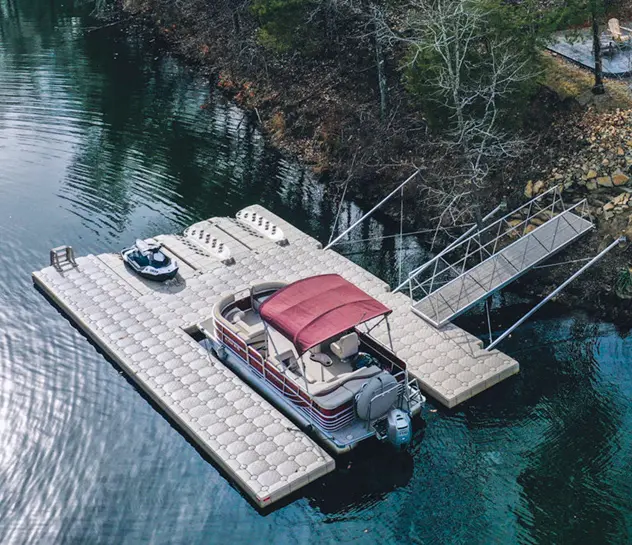
Empowering New Zealand's Marinas, Aquaculture, and Shoreline Infrastructure with High-Density Polyethylene (HDPE) Modular Pontoon Systems
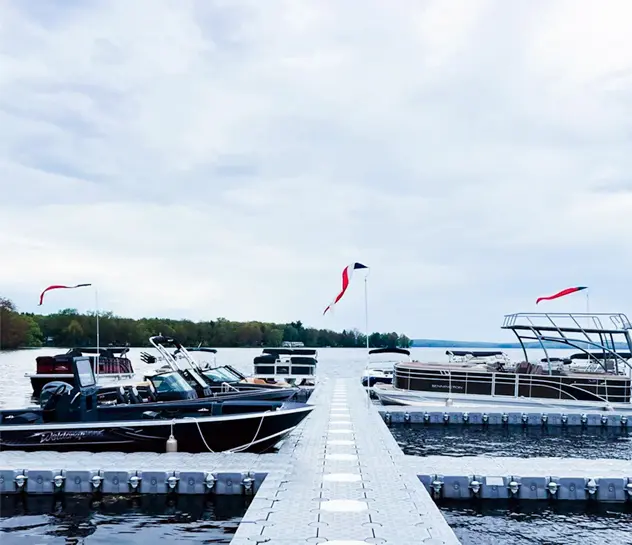
Optimized for commercial marinas, private jetty installations, jet-ski platforms, and public coastal walkways across Auckland, Marlborough Sounds, and the Southern Lakes.
New Zealand (Aotearoa) features over 15,000 kilometers of diverse, dynamic coastline coupled with extensive inland lake systems. From the tidal estuaries of the Hauraki Gulf to the high-energy marine environments of Cook Strait and the aquaculture sanctuaries of the Marlborough Sounds, the demand for robust, environmentally neutral floating structures has never been more critical.
Historically, concrete and treated timber dominated New Zealand's marine construction sector. However, the modern marine regulatory landscape, defined by regional council coastal plans and stringent environmental protection parameters, has driven a paradigm shift towards high-performance polymer solutions. Modular HDPE pontoons represent the future of NZ's marine layout, offering complete resistance to marine borers, zero chemical leaching, and superior wave-energy dissipation.
Providing heavy-duty, highly buoyant work platforms capable of withstanding the sub-antarctic currents and variable wind loads typical of southern commercial aquaculture zones.
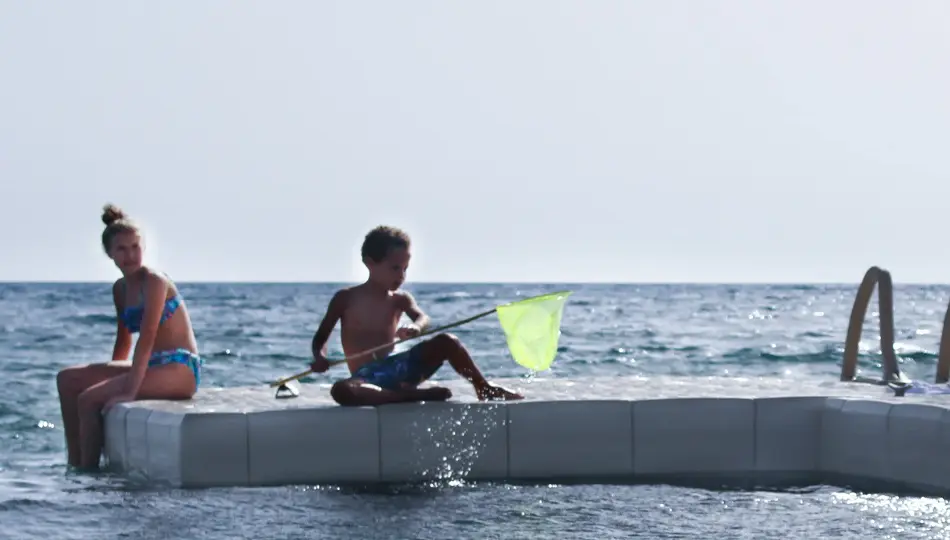
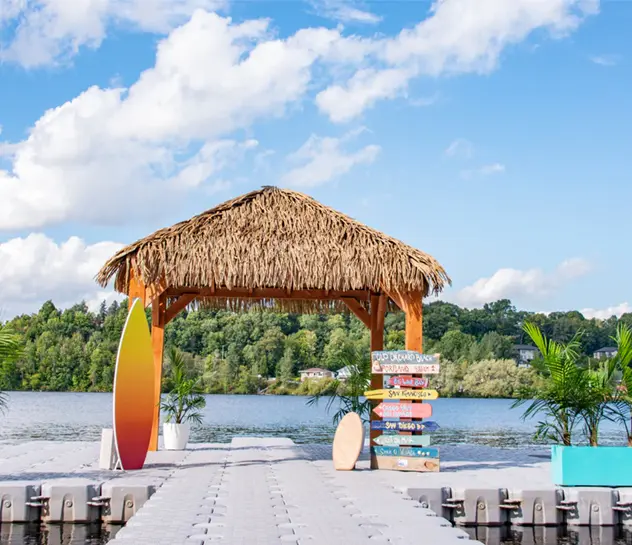
Enabling regional councils and private operators to construct eco-compliant kayak launches, public swimming pontoons, and boat slips that blend seamlessly with natural conservation areas.
New Zealand's unique atmosphere requires high-dose UV protection. Our pontoon compounding process integrates specialized UV-stabilizing agents to ensure a service life exceeding 15 years under Southern Hemisphere sun exposure.
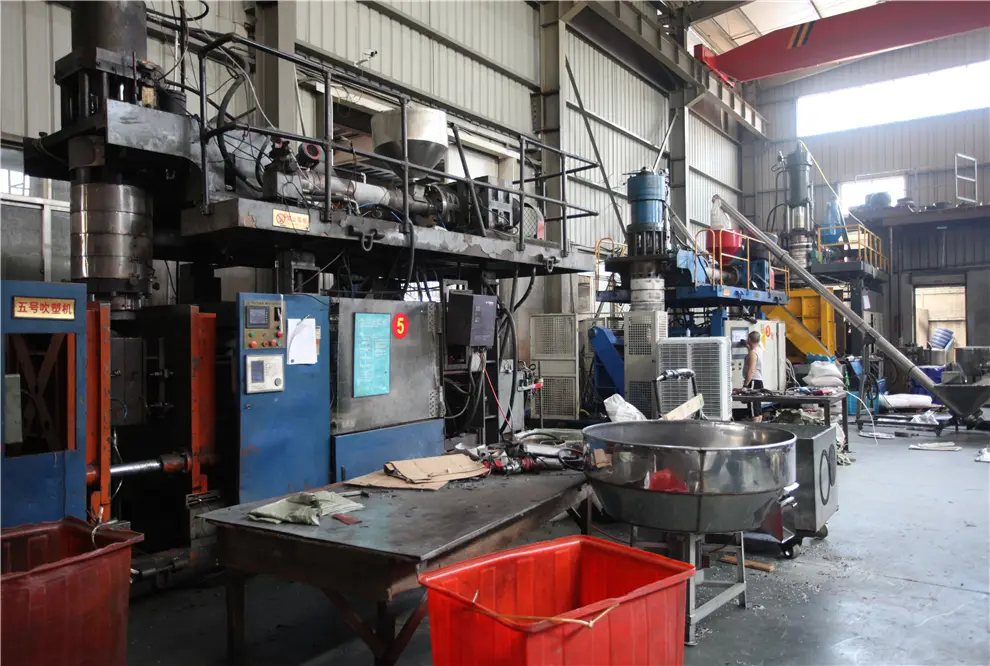
Founded in 2019, Shenghuang Industrial & Trade Blow Molding Factory is a leading innovator in the plastic blow molding industry. With its headquarters strategically located in Huangyan, Taizhou, Zhejiang—an area internationally recognized for its robust manufacturing infrastructure and industrial mold design cluster—the company has quickly grown into a trusted partner of high-quality blow-molded products across multiple sectors, including packaging, automotive components, environmental applications, and high-load marine pontoons.
Our facility is equipped with state-of-the-art automated blow molding production lines. These installations allow us to efficiently produce a wide range of plastic products, such as plastic containers, industrial bottles, marine pontoons, and custom-designed structural solutions. This machinery ensures we meet the global demand for high-precision, durable, and cost-effective plastic products while maintaining tight dimensional tolerances and consistent wall thicknesses.
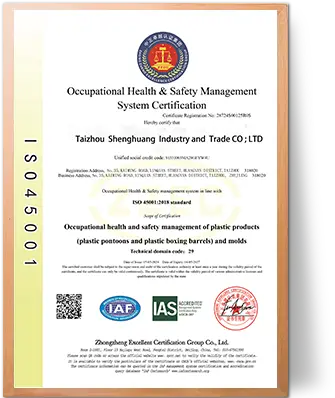
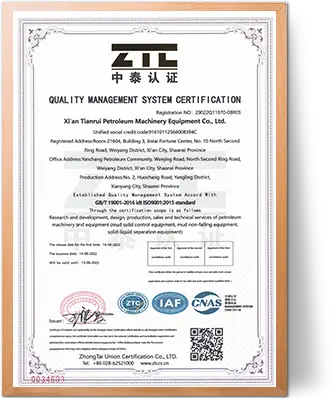
Shenghuang adheres strictly to the ISO 9001 quality management system, ensuring that every stage of production—from raw material procurement to final hydrostatic testing—meets stringent global standards.

Discover the material science and structural design principles that guarantee our modular pontoon systems outperform traditional marine materials in demanding oceanic and freshwater conditions.
We use virgin High-Density Polyethylene (HDPE) with high molecular weight, cross-linked for impact resilience. Our material resists diesel fuel, acids, saltwater, and common marine pollutants without structural degradation.
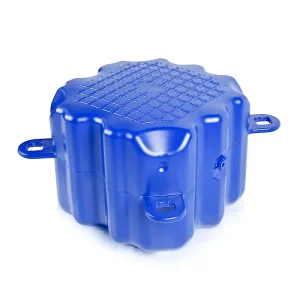
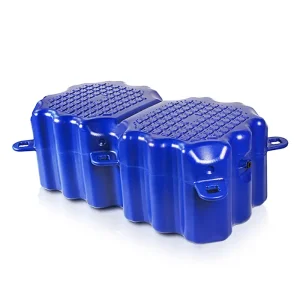
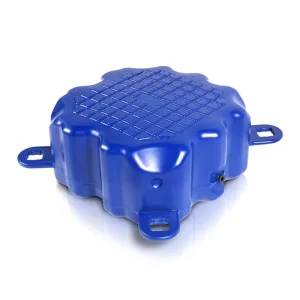
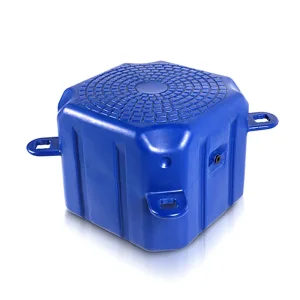
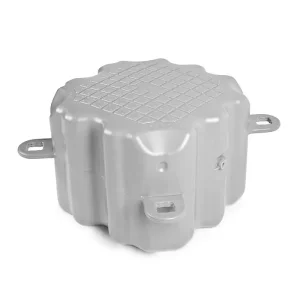
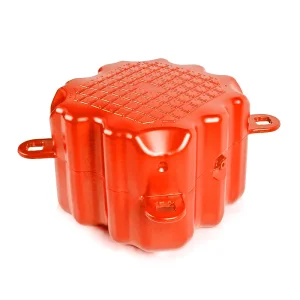
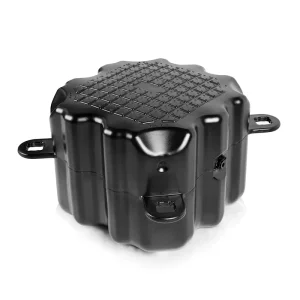
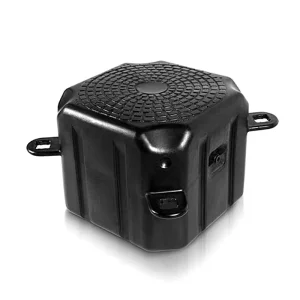
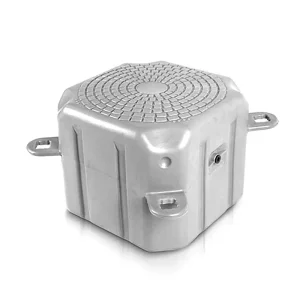
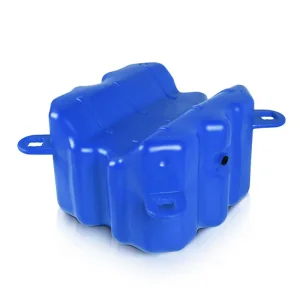
Every cube features four patented interlocking lugs at the corners. When coupled with heavy-duty connection pins, the system distributes torsional load and shear force evenly across the entire surface area of the platform.
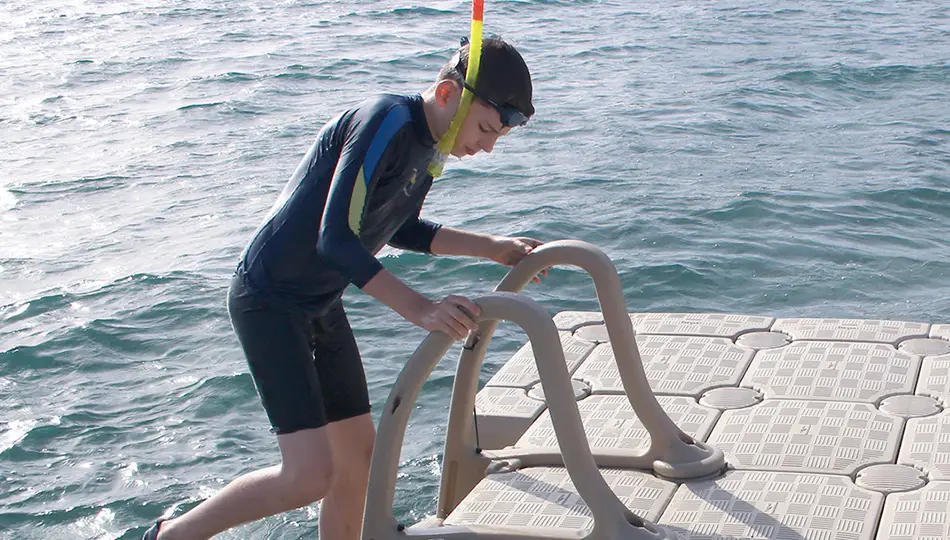
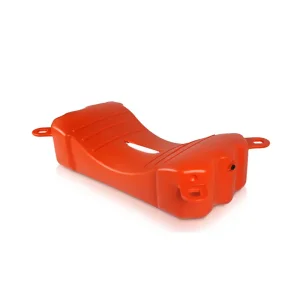
The top surface of each pontoon block features a molded, non-slip textured finish. Designed with micro-grooves to facilitate fast water run-off, it provides secure traction for pedestrians, even when completely wet.
| Engineering Property | HDPE Modular Pontoons | Treated Timber Docks | Concrete Floating Docks |
|---|---|---|---|
| Design Service Life | 15 - 20+ Years | 8 - 12 Years (Rot-prone) | 20+ Years (Heavy / High cost) |
| Maintenance Overhead | Virtually Zero | High (Staining, sanding, sealers) | Medium (Spalling repairs, biofouling scraping) |
| Chemical & Saltwater Resistance | 100% Inert (Immune to corrosion) | Low (Leaches CCA chemicals into water) | Medium (Rebar prone to saltwater corrosion) |
| Eco-Friendly Credentials | 100% Recyclable, No leaching | Poor (Toxic preservative run-off) | High carbon footprint during manufacture |
| Adaptability & Scalability | Infinite modular adjustment in hours | Fixed design (Requires rebuild to modify) | Fixed configuration (Requires heavy cranes) |
From industrial aquaculture setups in choppy waters to floating sports centers on calm lakes, we design modular platforms that deliver buoyancy, stability, and longevity.
Navigating the Resource Management Act (RMA) and regional council consent requirements (such as those from Auckland Council, Environment Canterbury, or Waikato Regional Council) is a key challenge for New Zealand marine projects. Installing marine structures requires compliance with strict rules regarding marine ecology preservation, coastal hazard mitigation, and water flow protection.
Our HDPE pontoons are manufactured using food-contact grade, virgin high-density polyethylene. They are entirely free of toxic additives, phthalates, or chemical preservatives, ensuring zero risk of chemical leaching into sensitive marine reserves. The modular nature of our systems allows for non-invasive anchoring solutions (such as helical screw anchors, elastic mooring ropes, or pile brackets), minimizing seabed disturbance and benthic community impacts during installation.
Additionally, our engineering team works with local NZ consultants to supply the technical documentation, buoyancy analysis, and wind/wave calculations needed for resource consent applications.
Operating out of Huangyan, Taizhou, Zhejiang—the mold capital of China—Shenghuang Blow Molding Factory combines precision tool design with advanced manufacturing techniques. This industrial ecosystem allows us to design, prototype, and manufacture custom blow-molded molds at a fraction of the cost and time compared to regional competitors.
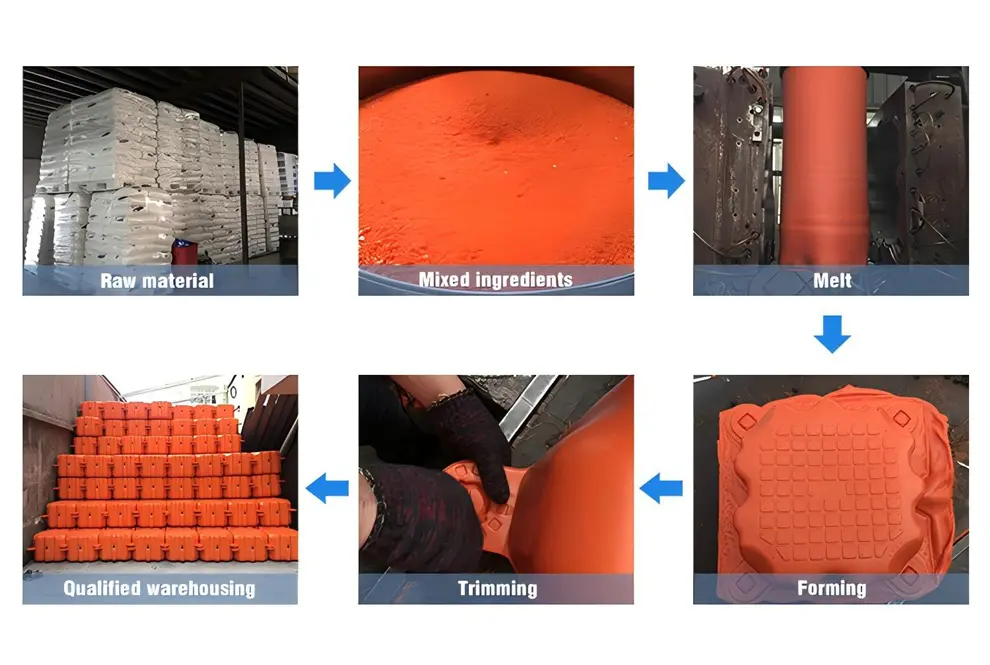
Our Factory 4.0 strategy is built on automated manufacturing lines, raw material quality checks, and real-time process monitoring. Our automated machinery ensures uniform wall thickness across each pontoon block, preventing weak points that could lead to punctures under stress. By maintaining raw material reserves and direct relations with ocean freight hubs, we shield our international buyers from price fluctuations and shipping delays.
For New Zealand procurement directors, this means cost savings, verified product quality, and reliable delivery times directly to key ports like Auckland, Lyttelton, and Tauranga.
Direct-from-factory solutions engineered for New Zealand's harsh marine and high-UV environments.
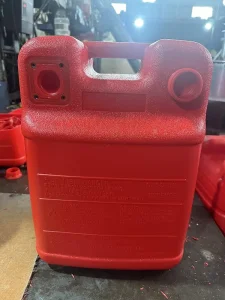
Optimized fuel storage, custom sandbags, and reinforced structural components to support complete dock installations.
Our client network spans across commercial ports, marine leisure businesses, and aquaculture operations globally.









Find answers to common questions about durability, installation, environmental impact, and winterization for modular floating docks.
Floating Dock's modular design and material quality hold up well in typhoons, depending on the installation configuration. By distributing hydrodynamic pressure across multiple flexible joints, the structure moves with the waves rather than resisting them. Our customers report excellent results even for docks hit directly by severe storms.
Yes. In areas without a local dealer, we ship your ordered Floating Dock system directly from our factory to your nearest international shipping terminal (Auckland, Tauranga, Lyttelton/Christchurch) or coordinate regional delivery to your project site.
Absolutely. The dock can be left in the water year-round, including in marine environments. The system is designed to handle ice expansion; the sloped profile of the modular cubes allows the dock to rise above the ice sheets during freezing conditions, protecting the structural integrity of the blocks.
The main factor to consider is water flow and ice movement. If winter ice thaws and melts in place, the dock can remain in the water. However, if your location experiences heavy moving ice flows or strong currents carrying large debris, we recommend dismantling and storing the dock during the off-season to prevent physical damage.
For safe walking platforms, gangways, or fingers, we recommend a minimum width of three cubes (approx. 1.5 meters). This width ensures lateral stability, distributing body weight and preventing tipping. Each individual modular cube provides balanced buoyancy of up to 90kg (200 lbs).
Yes. The cubes require only 5 to 10 cm (2 to 4 inches) of water draft when unloaded. If the tide goes out completely, the dock can rest directly on mud, sand, or gravel bottoms. However, ensure there is sufficient water depth at the launch point when boarding or docking watercraft.
Our factory began manufacturing modular floating docks in 2019. Over the years, we have grown our production capacity to become a major supplier in China, delivering high-performance polymer products to international buyers.
Yes. Our pontoons are compounded with UV stabilizers designed for environments with high solar radiation, like New Zealand. This prevents polymer degradation, cracking, and color fading over years of exposure.
Get in touch with our team for pricing, custom layouts, or assistance with technical documentation for New Zealand resource consent applications.
Send Inquiry Now ShengHuang