 ShengHuang
1 / 3
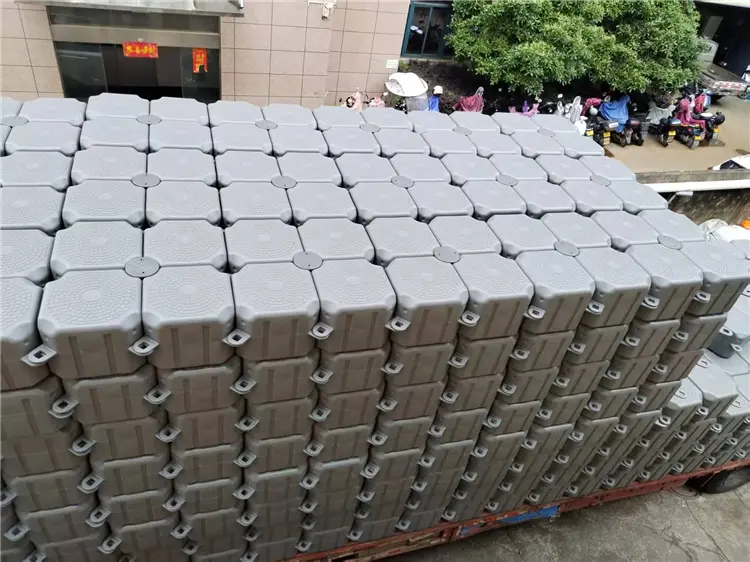
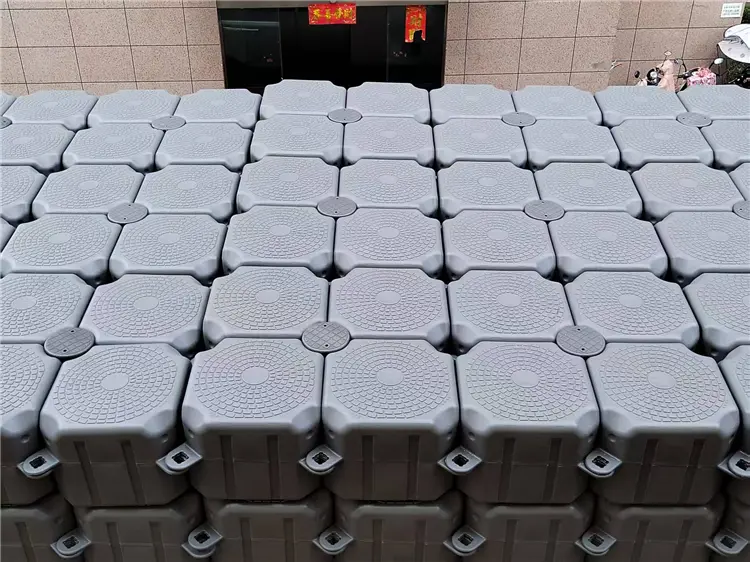
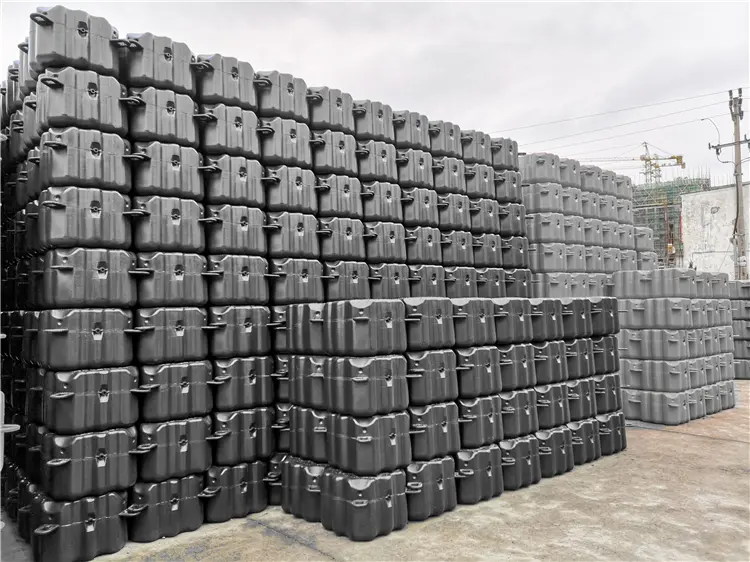
The load-bearing capacity of buoys of different specifications varies. For example, a buoy with a size of 500mm×500mm×400mm has a load-bearing capacity of up to 300 - 350 kg/㎡, which can provide stable support for water facilities.
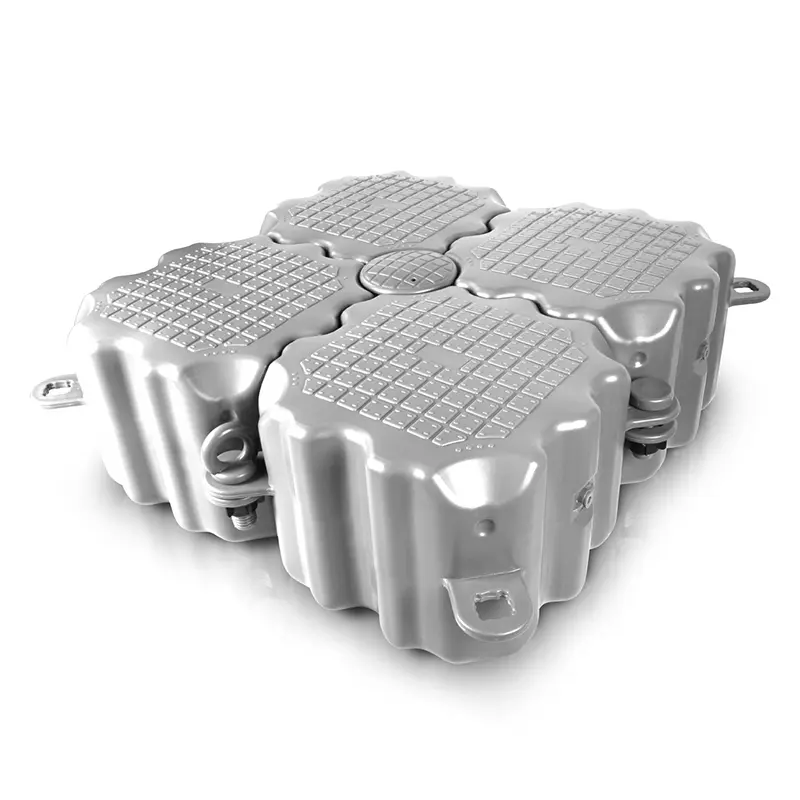
The product is integrally formed at one time and seamless. The rated average wall thickness is 7mm, the maximum wall thickness is 11mm, and the bottom wall thickness is about 3.52 - 4.2mm. The service life is more than 15 years.
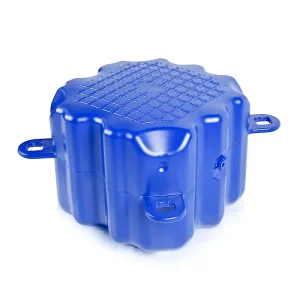
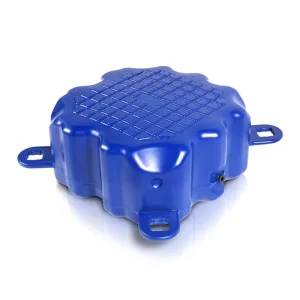
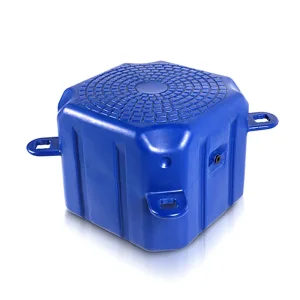
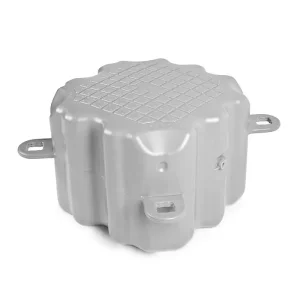
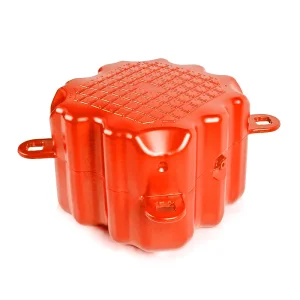
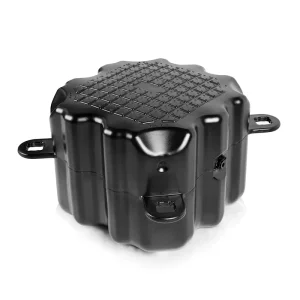
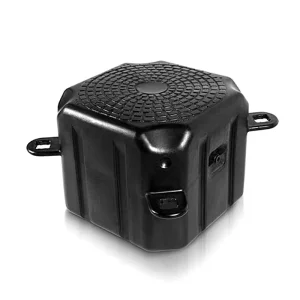
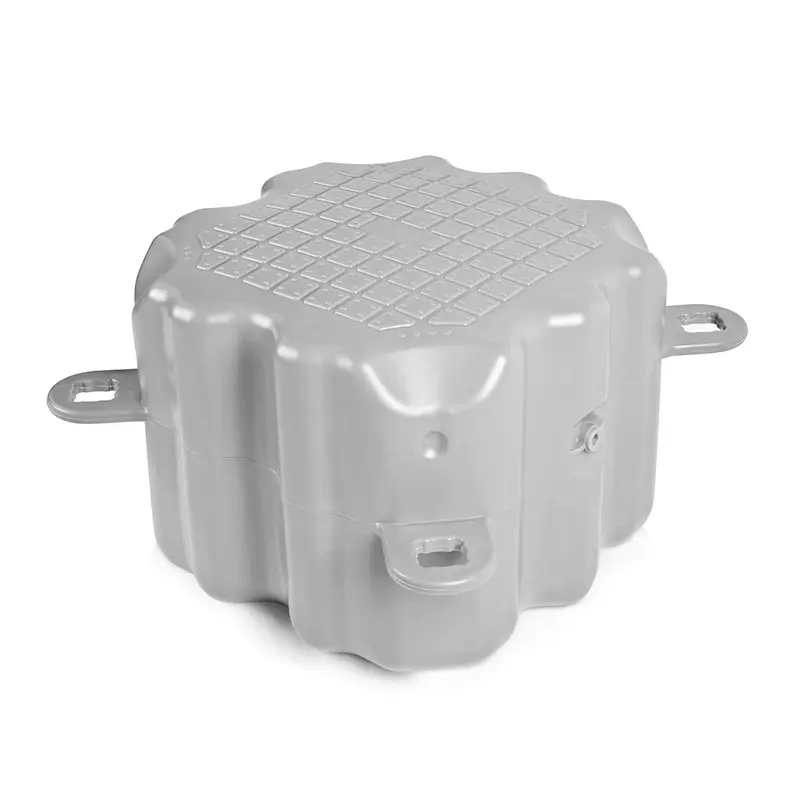
The surface has an anti-slip design, the four corners are in the shape of rounded obtuse angles, and there are grooves around, which strengthens the stability, and it is not easy to shake or tip over during use.
Corresponding auxiliary materials such as antistatic agents, antioxidants and UV-resistant agents are added during the production process, which meets the health standards, is pollution-free and does not damage the ecological environment.
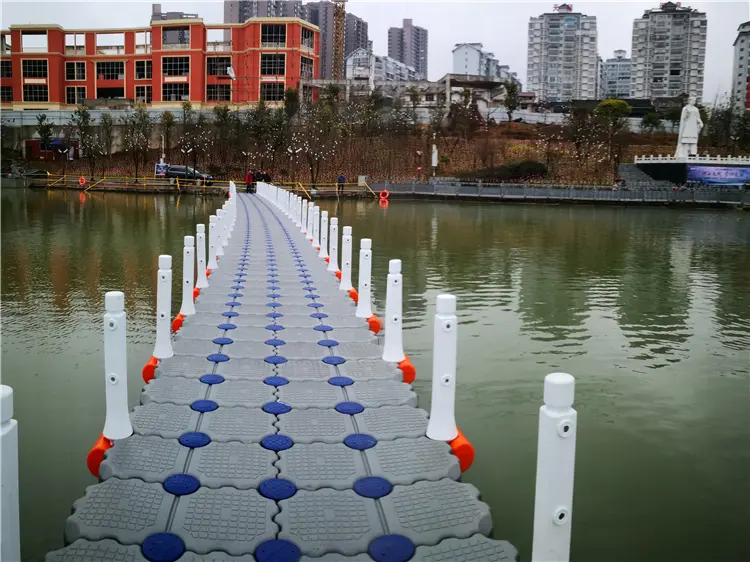
Used to build floating bridges and floating docks, providing berthing and mooring places for ships. It can also be used as a water boardwalk to facilitate the passage of pedestrians.
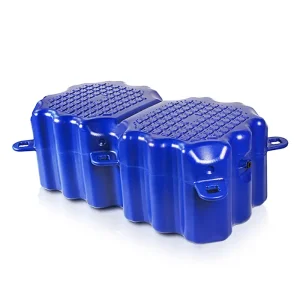
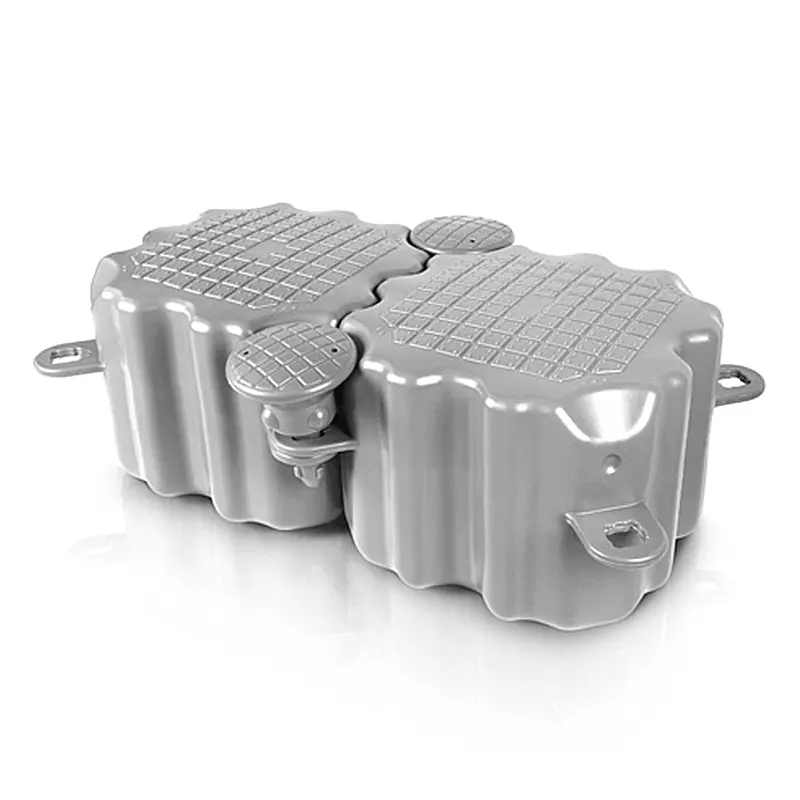
It can be combined into a water platform, used for building water swimming pools, water dance halls, stages, water bathing places, etc., providing people with space for recreation and entertainment.
In the offshore oil and natural gas system, it is installed on the outside of deepwater marine risers to reduce the weight of the risers and provide protection. It can also be used in fishery aquaculture as a floating body support for cage aquaculture.
It can be used as a trash buoy to block branches, weeds, garbage, etc. during the flood season of the river, preventing them from blocking the river and polluting the water quality.

The buoy is primarily made of High Molecular Weight High Density Polyethylene (HMWHDPE) with a content of ≥ 95%. Some buoys may also utilize polyurethane foam, cross-linked copolymer foam, or composite foam materials depending on specific application requirements.
The standard dimensions are 500mm×500mm×400mm. A buoy of this size offers a load-bearing capacity of up to 300 - 350 kg/㎡, providing exceptionally stable support for various water facilities.
Thanks to the seamless, one-time integral molding process and robust wall thickness (averaging 7mm, maximum 11mm), the buoys have a service life of more than 15 years.
Yes, the HMWHDPE material is highly resistant to corrosion, frost, oxidation, and UV rays. It is designed to withstand erosion from seawater, chemicals, oil stains, and marine aquatic organisms.
They are highly versatile and used for water traffic facilities (floating bridges, docks, boardwalks), water recreation (swimming pools, stages, platforms), industrial and fishery uses (deepwater marine riser protection, cage aquaculture), and water conservancy projects (trash buoys).
The surface features an anti-slip design, with four corners in the shape of rounded obtuse angles and surrounding grooves, which significantly strengthens stability and prevents shaking or tipping over during use.