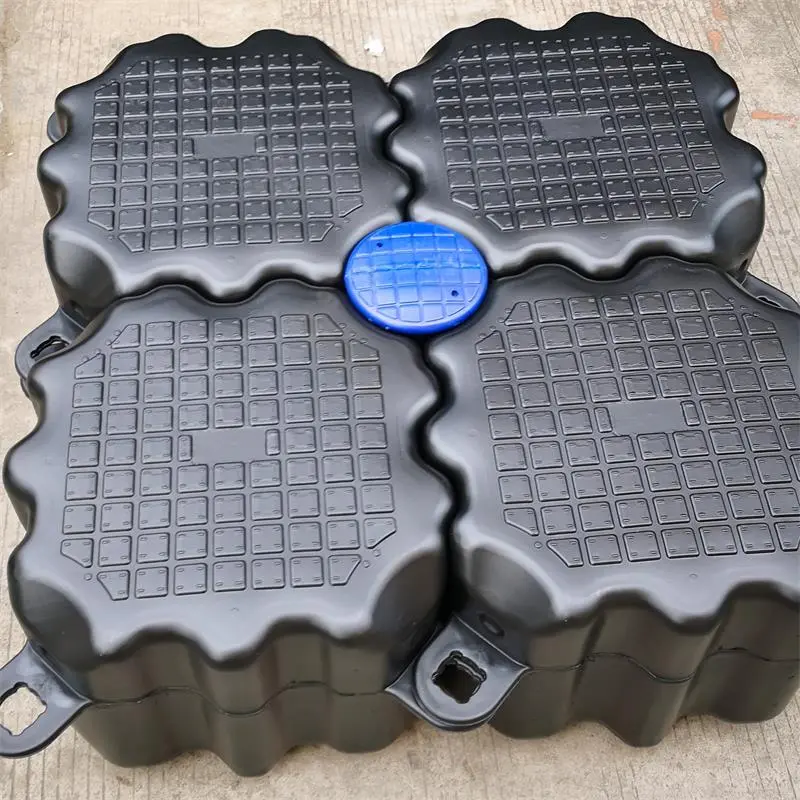
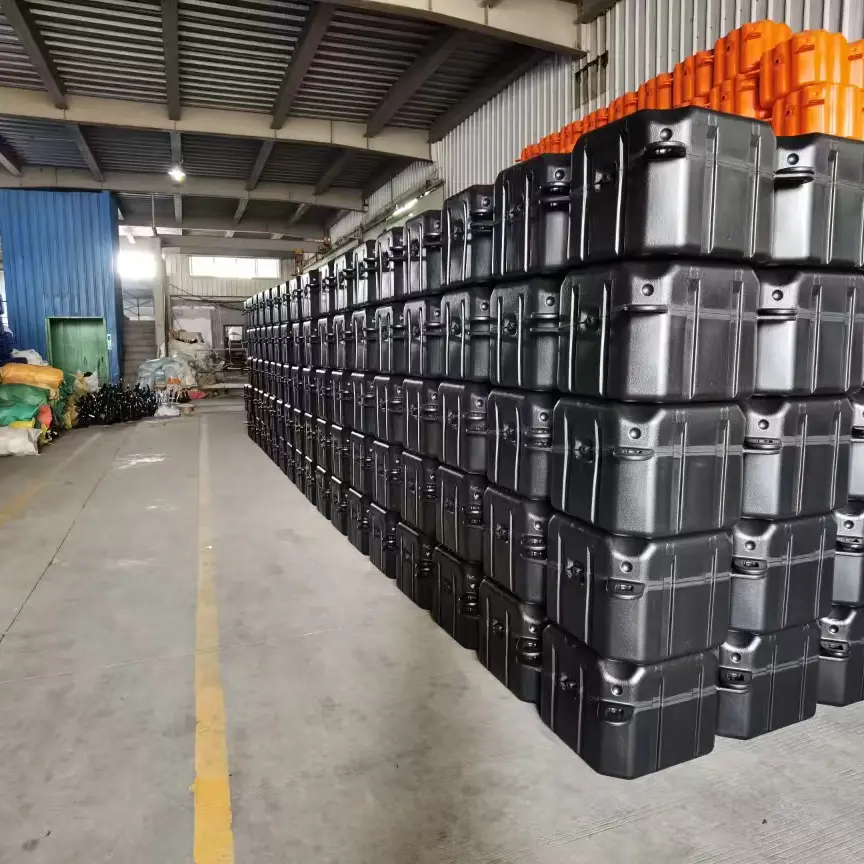
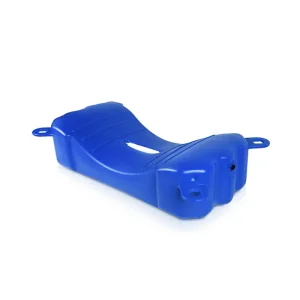
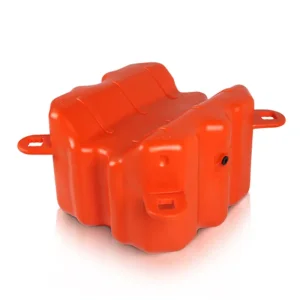
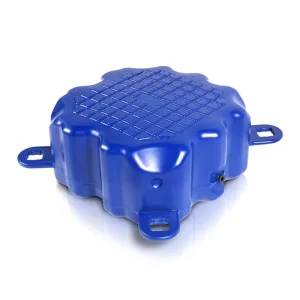
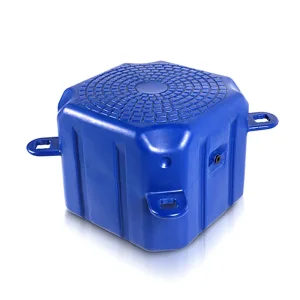
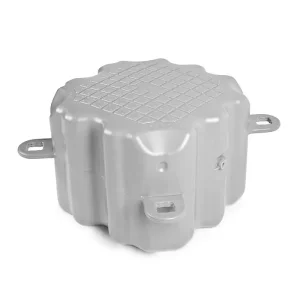
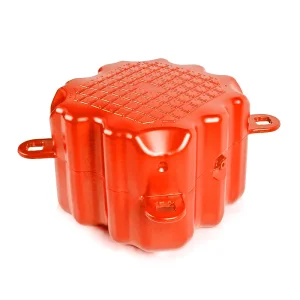
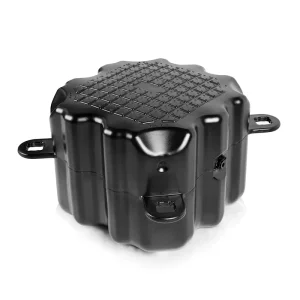
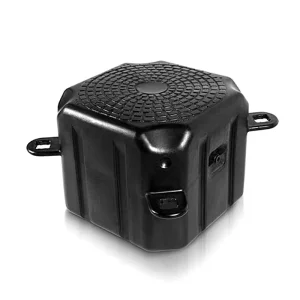
What material is used to manufacture these buoys?
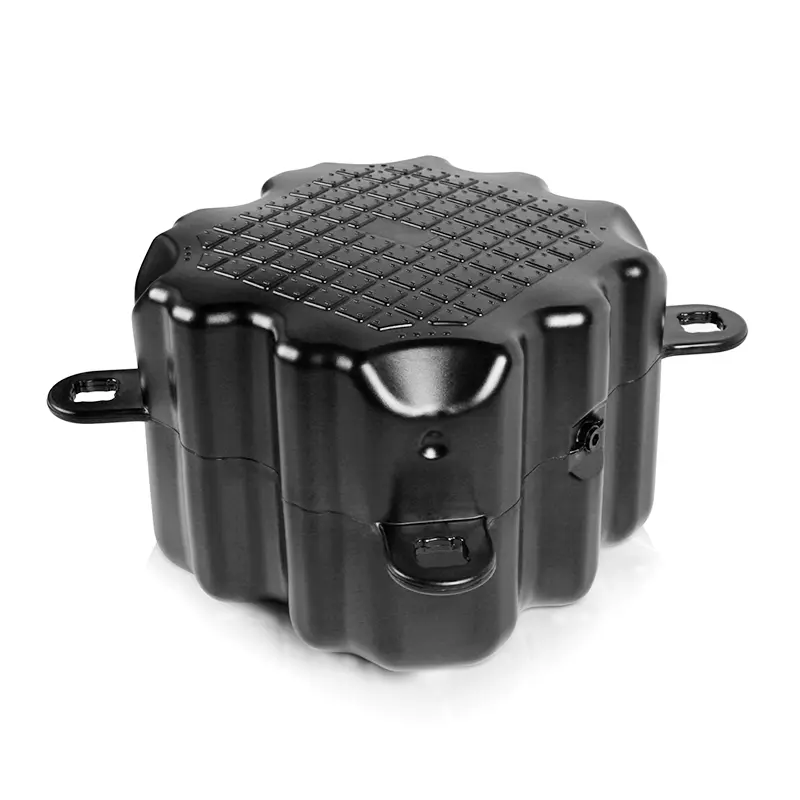
Our buoys are primarily made of High Molecular Weight High Density Polyethylene (HMWHDPE) with a content of ≥ 95%. This provides excellent resistance to corrosion, frost, oxidation, and UV rays. Depending on specific requirements, polyurethane foam, cross-linked copolymer foam, or composite foam materials may also be utilized.
What are the dimensions and weight specifications of the buoys?
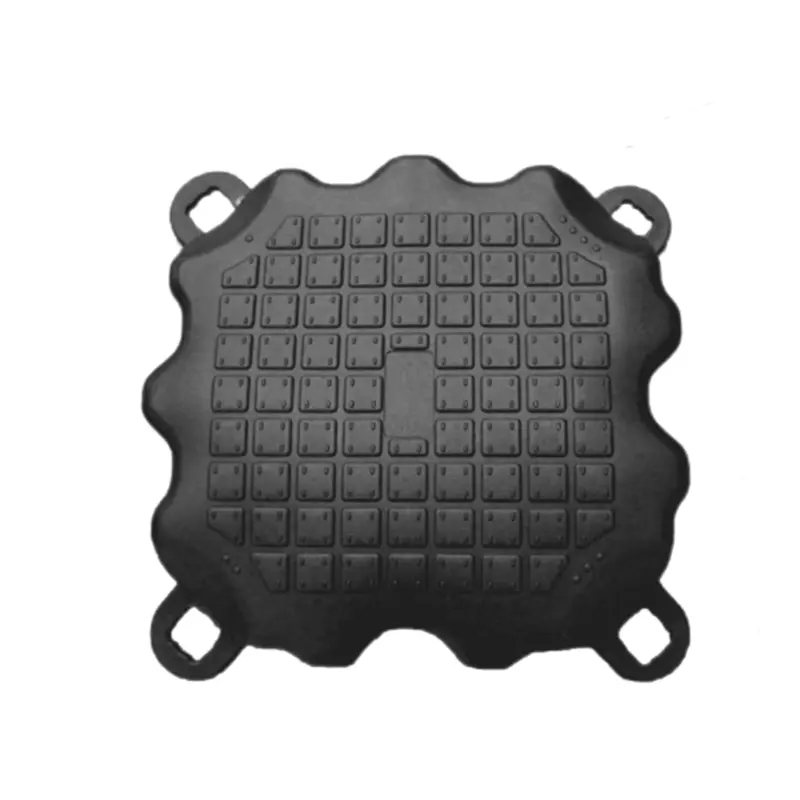
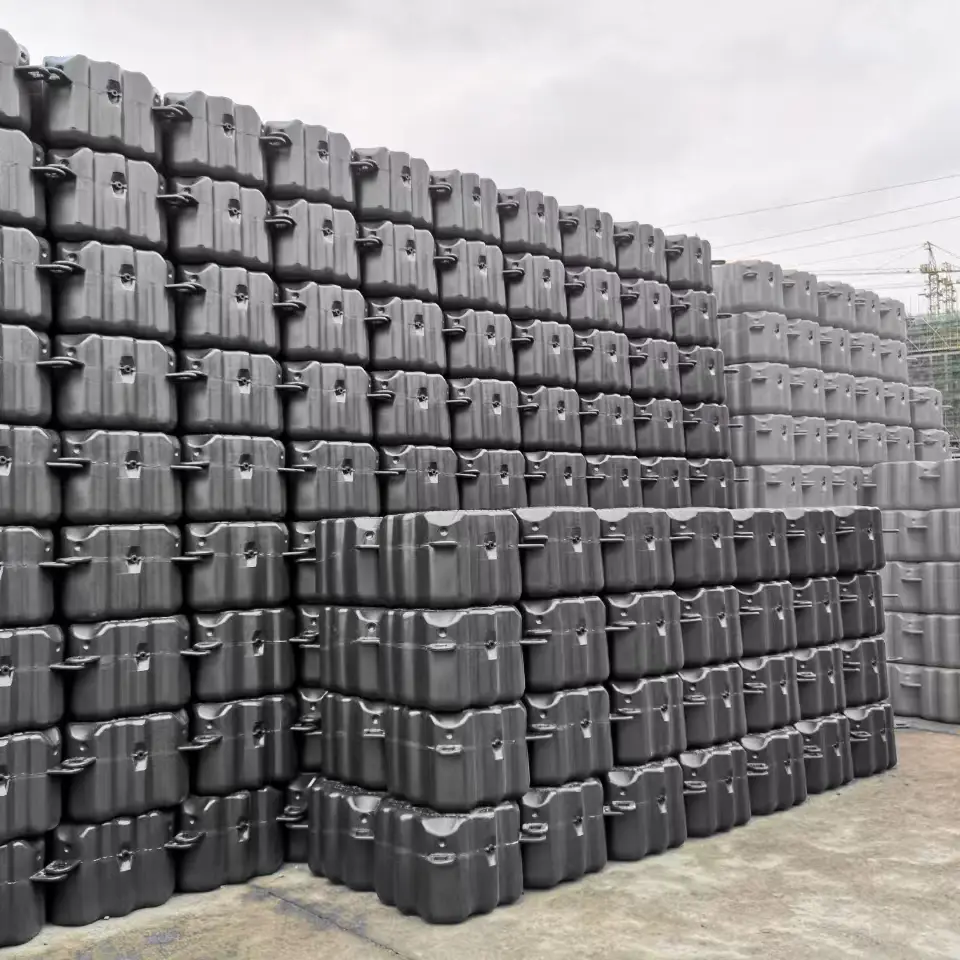
The standard size is 500mm × 500mm × 400mm. We offer two weight variations for this dimension: 7 kg ± 0.2 kg and 6.5 kg ± 0.2 kg.
What is the load-bearing capacity of these floating buoys?
A standard buoy measuring 500mm × 500mm × 400mm offers a stable load-bearing capacity of up to 300 - 350 kg/㎡, making it ideal for supporting various water installations safely.
How long is the expected service life of the buoys?
The buoys are integrally formed in a single step with a seamless design. With a rated average wall thickness of 7mm (up to 11mm maximum, and 3.52 - 4.2mm at the bottom), they have a reliable service life of more than 15 years.
Are these buoys environmentally friendly and safe for aquatic environments?
Yes. During production, we add auxiliary materials such as antistatic agents, antioxidants, and UV-resistant agents. The product meets strict health standards, is completely pollution-free, and does not damage the surrounding aquatic ecological environment.
In what applications can these buoys be used?
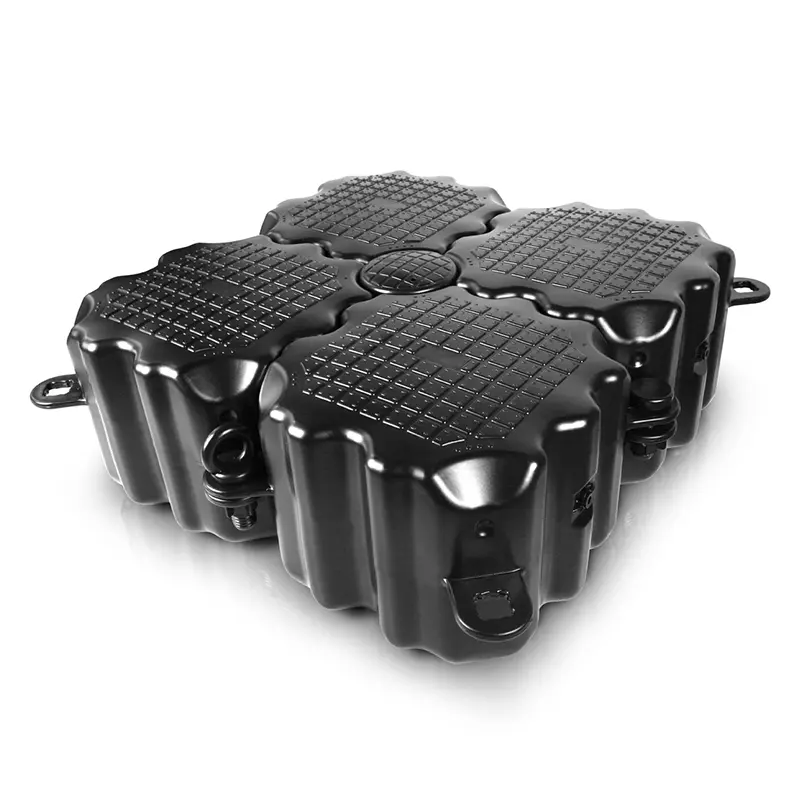
They are highly versatile and used for water traffic facilities (floating bridges/docks), water recreation (swimming pools, stages), industrial & fishery setups (deepwater riser protection, cage aquaculture support), and water conservancy projects (trashbuoys for blocking river debris).
 ShengHuang