Explore our premium range of high-buoyancy modular docks, customizable safety gear, and marine-grade components.
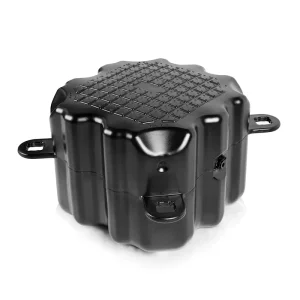
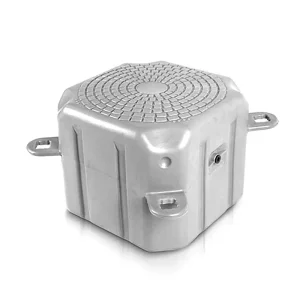
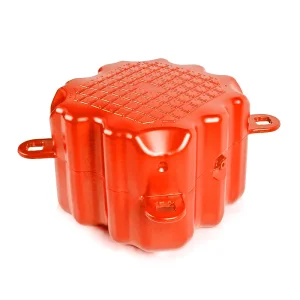
Understanding the tectonic shifts in modern marine development, sustainability, and polymer engineering.
The global marine construction sector is undergoing a rapid transition from traditional fixed wood and heavy concrete docks toward modular, high-durability polymer platforms. Rising sea levels, volatile weather patterns, and the demand for zero-environmental-impact solutions have made High-Density Polyethylene (HDPE) the gold standard for contemporary marine structures. Unlike static wood structures that leach heavy treatment chemicals or concrete assemblies that fracture under heavy wave stress, modular HDPE floating boat jetties offer unparalleled structural elasticity and mechanical resilience.
Modern coastal structures face heightened frequencies of superstorms and extreme tidal dynamics. Modular floating boat jetties utilize interconnected flexible pin links that allow the structure to flex dynamically under severe swell and wave action, absorbing kinetic energy and preventing structural shearing.
Environmental protection agencies globally are restricting the installation of preservative-treated wood and deteriorating expanded polystyrene (EPS) foams. Marine-grade HDPE is 100% recyclable, completely inert, UV-stabilized, and does not degrade or leach chemical toxins into fragile marine ecosystems.
Traditional jetties require constant structural inspections, rustproofing, anti-rot treatments, and timber replacement. Advanced blow-molded HDPE floating jetties feature zero corrosion, require no painting or sanding, and maintain a functional service life exceeding 15 years with minimal maintenance overhead.
As maritime activities expand from recreational boating to massive offshore aquaculture hubs, commercial landing pads, and floating solar (FPV) arrays, floating platforms must satisfy rigorous engineering requirements. Procurement entities are no longer searching merely for catalog products; they require sophisticated ODM (Original Design Manufacturer) partners capable of optimizing structural designs to survive local hydrographic conditions.
International engineering, procurement, and construction (EPC) contractors require high-performance modular platforms that comply with stringent global safety guidelines. From heavy industrial float-platforms for deepwater mining pipelines to tourist marinas in remote resort locations, the product must meet specific engineering thresholds.
Critical validation criteria include: Buoyancy capability (typically requiring 200kg/m² to over 350kg/m² depending on draft dynamics), skid resistance (anti-slip textured surfaces), UV protection packages (UV stabilizer additives to withstand intensive sunlight exposure without surface chalking or structural embrittlement), and modular interoperability.
Shenghuang Industrial & Trade Blow Molding Factory matches these challenges by engineering systems that feature high load capacities, robust connecting pins, and a thick, shock-absorbent outer wall designed to withstand extreme impact stress from docking vessels.
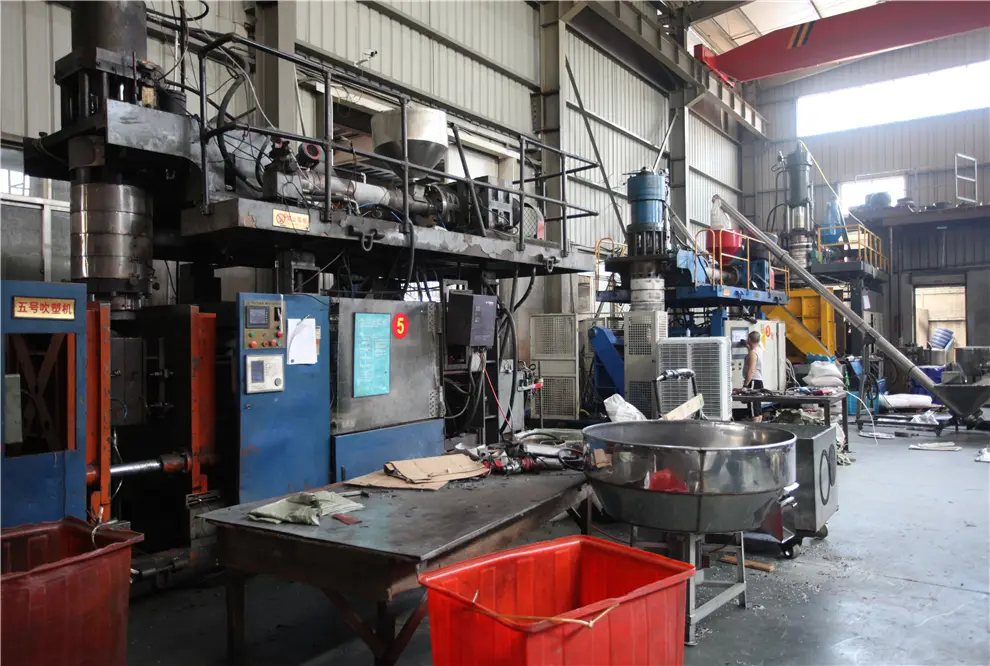
Leveraging high-precision blow molding automation and integrated material supply chains in Zhejiang.
Located in Huangyan, Taizhou, Zhejiang Province—the globally recognized capital of plastic mold engineering and precision blow molding—Shenghuang Industrial & Trade Blow Molding Factory represents the cutting-edge of China's modern manufacturing infrastructure. Founded in 2019, our factory integrates computerized parison controls, high-speed automated material handling, and real-time wall thickness monitoring systems to ensure consistency across millions of production units.
Our automated production facilities use advanced parison programming. This regulates raw plastic distribution, ensuring consistent wall thickness at stress-prone corners and lug regions.
We work exclusively with certified high-molecular-weight HDPE. This resin is combined with custom anti-static, anti-UV, and flame-retardant packages to withstand brutal marine environments.
With our internal mold-making department, we can quickly transition designs from CAD models to finished production molds for specialized, proprietary floats.
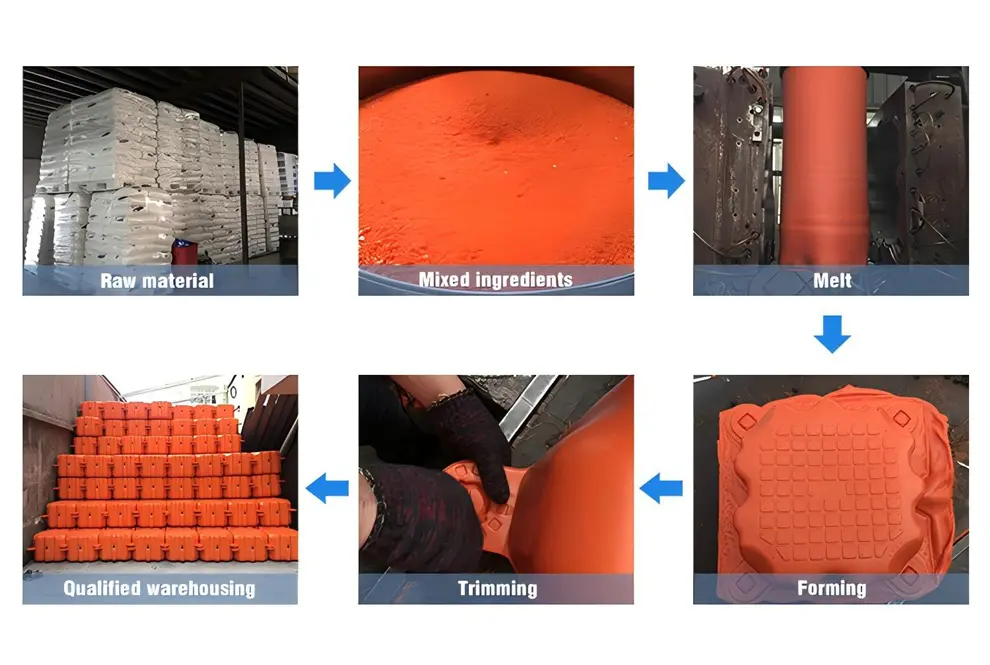
Operating a modern factory requires more than just manufacturing molds. It demands secure material procurement networks, domestic shipping coordination, and reliable customs integration. Thanks to Zhejiang’s dense manufacturing clusters, we enjoy direct access to key polymer suppliers, automated logistics infrastructure, and deep-water container ports (including Ningbo and Shanghai). This localized ecosystem allows us to bypass supply chain bottlenecks and deliver high-volume orders globally with short lead times.
Verify the physical, mechanical, and safety properties of our blow-molded HDPE floating components.
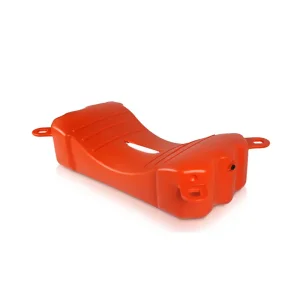
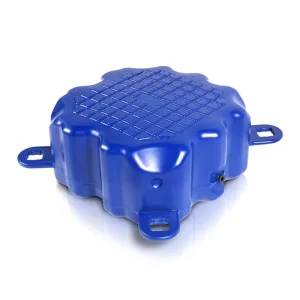
| Performance Metric | Square Floating Dock (500x500x400mm) | U Floating Dock / Jet Ski Dock | Twins / Low Floating Dock |
|---|---|---|---|
| Material Base | High-Density Polyethylene (HDPE) | High-Density Polyethylene (HDPE) | High-Density Polyethylene (HDPE) |
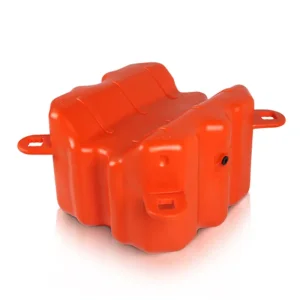
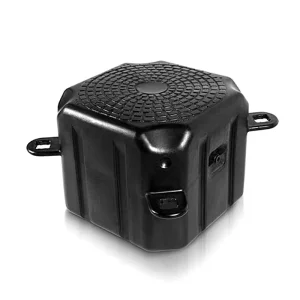
| Static Load Capacity | ≥ 350 kg / m² | ≥ 200 kg / m² | ≥ 180 - 240 kg / m² |
| Tensile Strength | > 21 MPa (ASTM D638) | > 21 MPa (ASTM D638) | > 21 MPa (ASTM D638) |
| Service Temperature Bounds | -60°C to +80°C | -60°C to +80°C | -60°C to +80°C |
| UV Resistance Index | UV Stabilized (Grade 8) | UV Stabilized (Grade 8) | UV Stabilized (Grade 8) |
| Anti-Slip Rating | Class C (Textured Micro-Grid) | Class C (Textured Micro-Grid) | Class C (Textured Micro-Grid) |
Providing functional floating solutions across diverse environments, climates, and industrial landscapes.
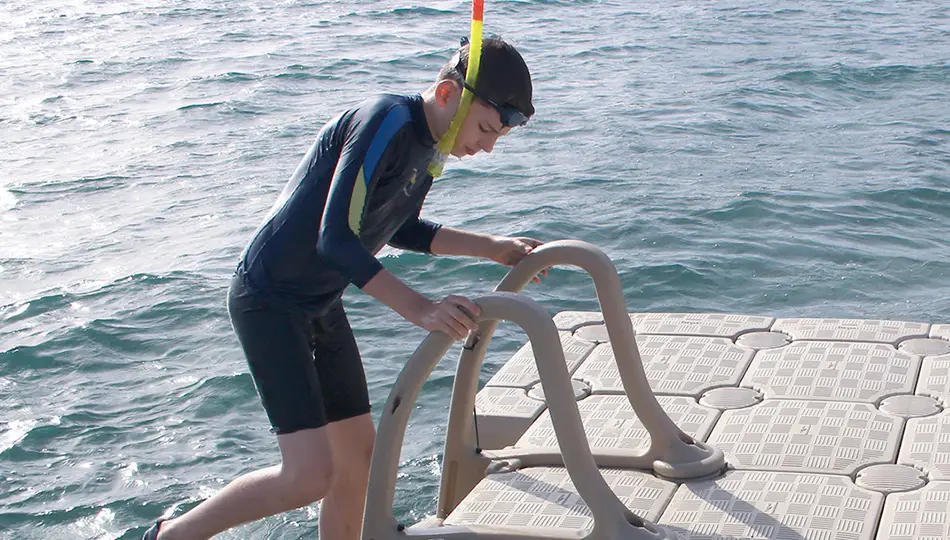
Creating highly adaptable floating pathways and pedestrian gangways for lake resorts, public parks, and private yacht harbors.

Durable slipway structures designed to dock speedboats, jet skis, and specialized maintenance vessels securely.
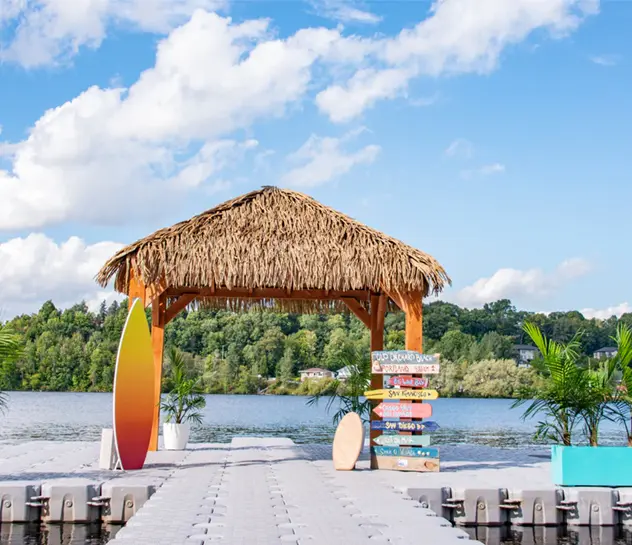
Stable, load-bearing work decks used by marine engineering crews to conduct underwater repairs, bridge painting, and dredging operations.
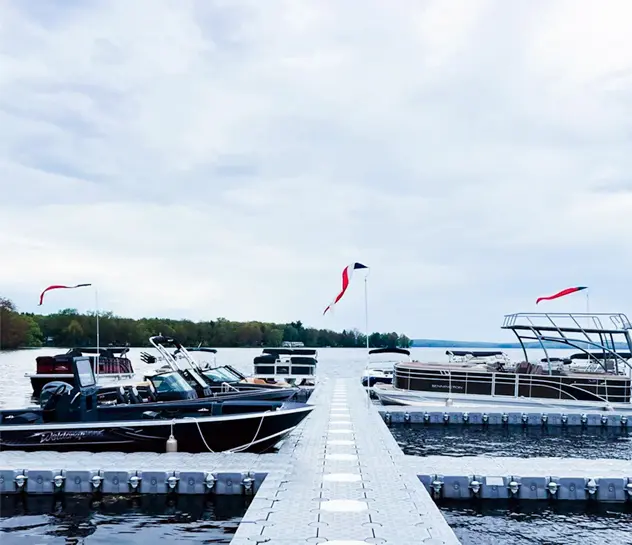
Non-toxic floating structures designed to support fish cages, shellfish lines, and monitoring gear in both freshwater and marine environments.
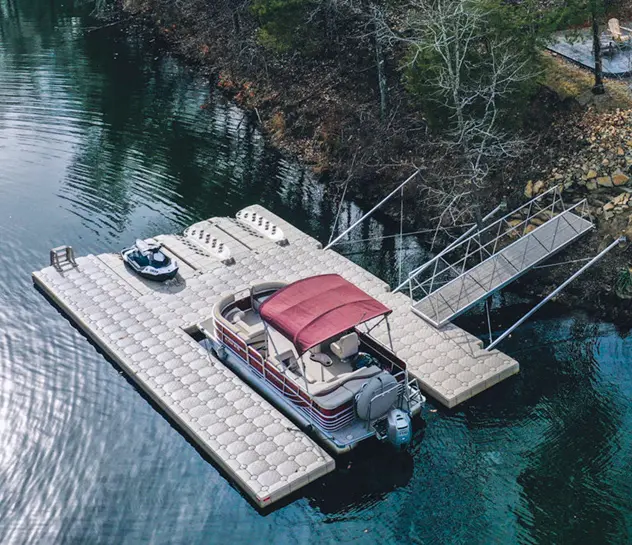
Large-scale modular platforms configured to support heavy payloads, tourist centers, and specialized marine equipment installations.
Demonstrating compliance with ISO 9001 and international safety standards.
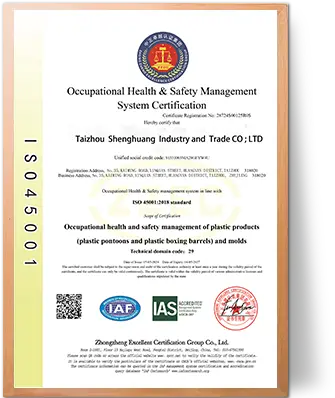
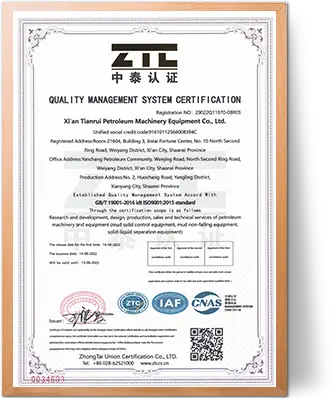

Building trusted relationships with marine project developers and industrial distributors worldwide.








Detailed technical answers for marine engineers, logistics directors, and procurement specialists.
Our modular HDPE floating docks perform exceptionally well in heavy storms. Unlike static wood or concrete docks, their modular design allows them to flex and move with wave action, distributing hydrodynamics across the assembly. Anchoring setups (such as elastic mooring lines, pile guides, or steel cables) play a critical role in keeping the system secure during severe storms.
Yes. If there is no local distributor, we handle export logistics and ship the modular system directly to your nearest commercial port. We provide complete customs documentation, including bills of lading, certificates of origin, and installation guides, to ensure a smooth import and assembly process.
Yes, our HDPE docks are designed to remain in the water year-round, even in freezing climates. Their sloped profile allows them to pop up and rest on top of forming ice sheets, protecting them from structural crushing. However, they should be moved if there are heavy currents carrying large, moving ice blocks that could shear the anchoring system.
The empty draft of our modular floats is only 5 to 10 cm (2 to 4 inches). They can rest directly on soft mud flats during low tide without damage. To load or launch watercraft, the water depth at the launch end must be deep enough to accommodate your vessel's draft and hull clearance.
For safe and stable pedestrian access, we recommend a gangway width of at least three cubes (1.5 meters). This width provides excellent lateral stability, preventing tipping and ensuring a secure walking surface for users.
We began manufacturing modular floating docks in 2019 in Huangyan, Taizhou. By leveraging regional mold technology and automated blow-molding equipment, we have grown into a leading supplier of high-buoyancy modular marine platforms for domestic and international markets.
Find specialized sports training systems, heavy-duty industrial docks, and premium marine accessories.
 ShengHuang