Discover our premium range of factory-direct blow-molded industrial products, built to withstand extreme loads and challenging marine environments.
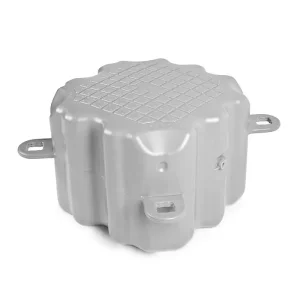
In the modern era of marine infrastructure development, Modular Floating Systems have emerged as a critical asset class. Once confined to simple recreational wooden docks and makeshift pontoons, today’s modular systems represent a high-stakes engineering convergence of advanced polymer materials, fluid mechanics, and modular logic. Driven by global expansions in marine commerce, aquaculture modernization, offshore renewable energy platforms, and climate-adaptive civil construction, the global market for floating platforms is experiencing a compound annual growth rate (CAGR) of over 7.5% through the current decade.
Industrial ports, coastal tourism complexes, and military logistics hubs are rapidly decommissioning rigid concrete and steel pile docks in favor of flexible, resilient modular floating platforms. The benefits are clear: reduced structural installation times by up to 70%, lowered capital expenditure (CapEx), and near-zero ongoing maintenance requirements compared to metal elements that succumb to severe marine rust.
"The shifts in oceanic environments require dynamically flexible infrastructure. Modular platforms distribute kinetic load across localized nodes, absorbing wave action instead of resisting it rigidly, reducing overall structural fatigue by orders of magnitude."
The growth of Floating Solar Arrays (Floating Photovoltaics - FPV) has further supercharged the demand for highly reliable modular platforms. By mounting solar panels on customized, blow-molded HDPE pontoons, utility companies can leverage the natural cooling properties of water bodies to boost solar conversion efficiencies by 10-15%, all while conserving valuable agricultural land. Developing and manufacturing these high-density systems requires dedicated material expertise, automated production capabilities, and rigorous environmental compliance.
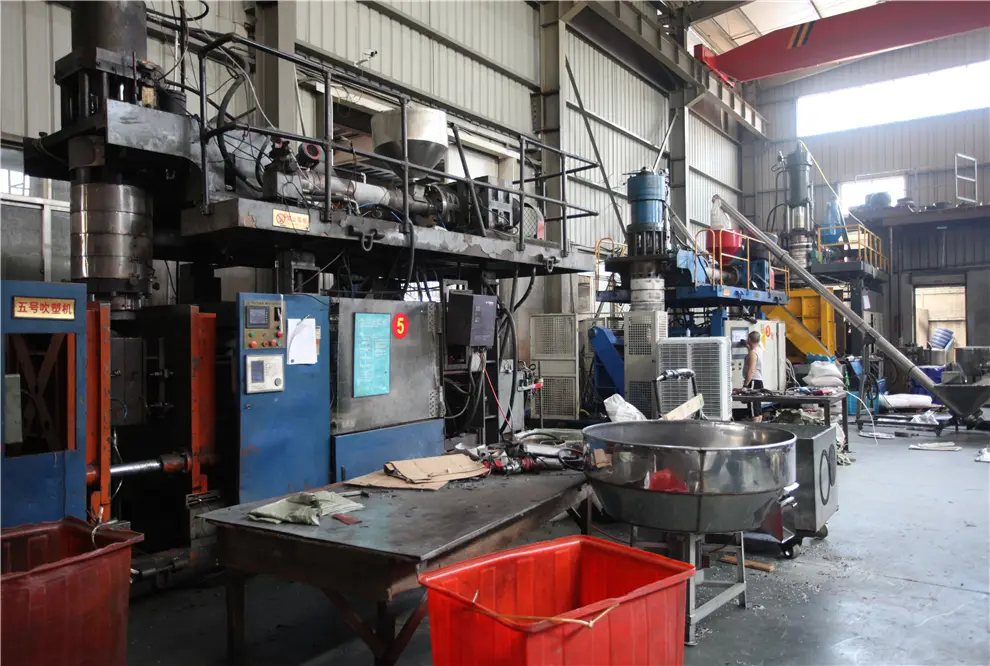
Shenghuang Industrial & Trade Blow Molding Factory integrates precision engineering, custom CAD molds, and advanced polymer chemistry to redefine the marine standard.
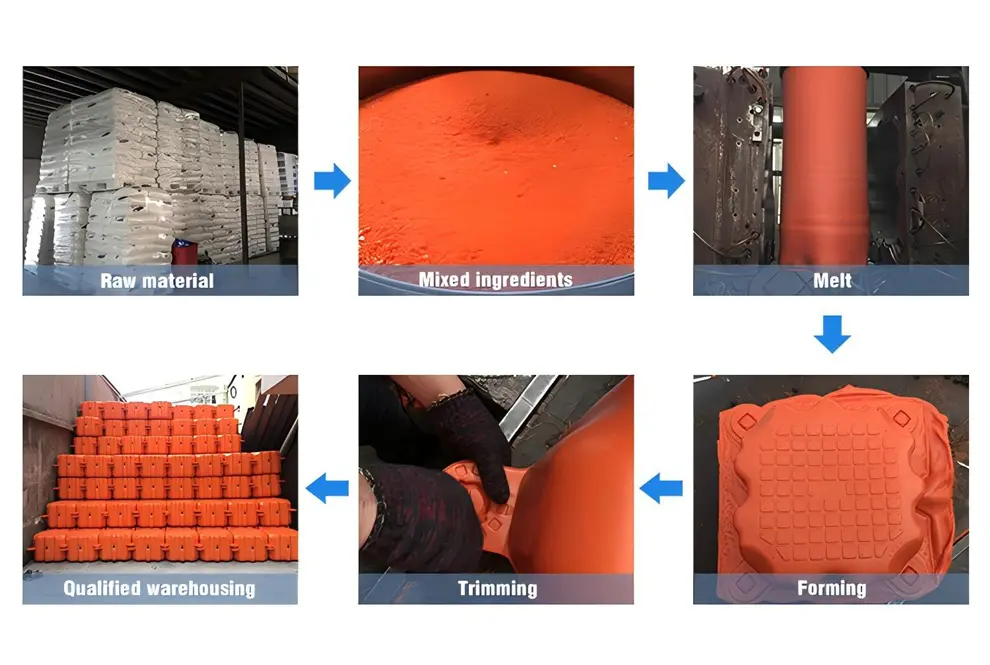
Our raw High-Density Polyethylene is combined with proprietary UV stabilizers (UV-8/UV-12 index rating) and carbon black compound arrays to completely shield the molecular backbone against aggressive solar irradiation, ensuring structural integrity for over 15 years.
Utilizing high-capacity parison program controllers, we ensure uniform wall-thickness distribution across every corner and vertex of our pontoons. This eliminates weak spots, bubbles, and stress fractures common in lesser extrusion setups.
Every batch of pontoons undergoes strict pneumatic pressure testing, load deformation analysis, and physical impact challenges. We adhere tightly to international safety standards, delivering highly reliable industrial-grade safety certificates.
How modular polymer structures adapt to harsh environments, dynamic tidal zones, and extreme weather systems globally.
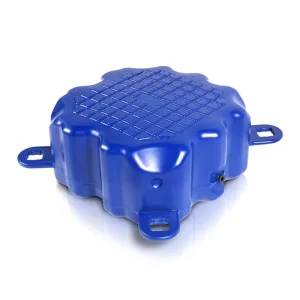
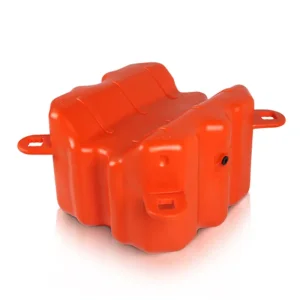
In coastal areas such as the Ring of Fire (Japan, Philippines, Taiwan) and the Caribbean, conventional docks face severe structural failures due to storm surges. Modular floating systems combat these forces via flexible structural joints. Rather than resisting wave energy with massive physical bulk, the modular layout bends, twists, and rolls over swells. By dividing the system into small cubes (typically 50x50cm or similar sizes) bound together by flexible, high-tensile connection pins, the system distributes load dynamically. As a wave passes beneath the platform, the vertical stress is localized, preventing structural failure across the wider system.
In Canada, Northern Europe, and the northern states of the US, winterizing traditional docks is an expensive, labor-intensive annual task. Leaving wood or steel docks in freezing lakes risks structural crushing as water expands into ice. However, Shenghuang's HDPE Modular Floating Systems are explicitly engineered to remain in place year-round. The design of our modular units features a tapered profile that allows the ice sheets to squeeze the dock upward. As the surrounding ice expands, the dock "pops" up, riding safely on top of the sheet rather than being crushed. When the spring thaw occurs, the docks settle back into the liquid water, requiring zero repositioning.
Intertidal zones present unique problems where the dock must sit in deep water during high tide but settle onto mud or sand during low tide. Standard hulls run the risk of puncturing or tipping. Our low draft floating systems (drawing only 5 to 10cm of water) settle flatly on muddy surfaces without tipping. The thick bottom plate of the blow-molded cubes acts as a skid, taking the load without structural damage. When the tide rises, the system floats effortlessly back into position.
Where modular marine engineering is heading over the next decade.
The future of floating structures lies at the intersection of smart technology and advanced material circularity. At Shenghuang Industrial & Trade, our R&D team is currently focusing on three key technology pillars:


Technical answers to key structural, hydrodynamic, and installation queries.
Our floating dock's modular design and superior material composition allow it to perform exceptionally well in heavy tropical storm systems. By dispersing the localized wave forces across multiple interlocking joints, the modular array flexes dynamically rather than presenting a rigid obstacle to the waves. Adequate anchoring (using high-flex tension rods, elastic marine mooring lines, or sliding pile rings) is vital to allow the system to rise and fall with storm surges without exceeding physical limits.
Yes. The HDPE material retains its flexibility down to -60°C, preventing brittle fracture. Additionally, the vertical sides of each modular unit feature a custom draft angle (tapered draft). When ice freezes and expands around the dock, it exerts an upward squeeze. This pressure forces the cubes to slide upward, popping up to sit on top of the ice sheets, completely avoiding crushing damage.
The primary concern during winter is water flow and drift. If the body of water freezes into a static sheet, the dock can remain in place safely. However, if there are fast, moving currents or large floating blocks of moving ice during thaw cycles, the kinetic impact can rip any structure from its anchors. In rivers with moving winter ice, we recommend disconnecting the modules and storing them onshore.
For safe walking platforms, gangways, or finger piers, we recommend a minimum width of three cubes (approximately 1.5 meters). This width balances buoyancy and distributes foot traffic load across a wider surface area, preventing twisting when someone walks along the outer edge. A three-cube-wide layout easily supports multiple adults with minimal roll.
Absolutely. The modular cubes require only 5 to 10cm of water draft when unloaded, and around 15cm under moderate loads. If the tide recedes completely, the system can rest safely on the mud or sandy bottom. Ensure there are no sharp rocks or debris that could puncture the bottom shell, and confirm that there is enough water at the end of the dock to allow watercraft to launch safely during low tide.
Trusted by leading marine engineers, industrial distributors, and aquatic facilities worldwide.










Explore our specialized high-density structures, custom shapes, and heavy training equipment solutions.
 ShengHuang