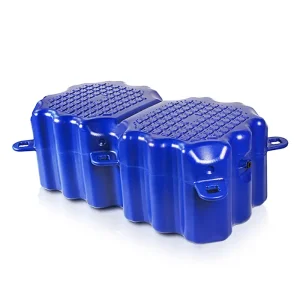
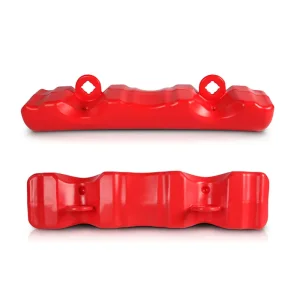
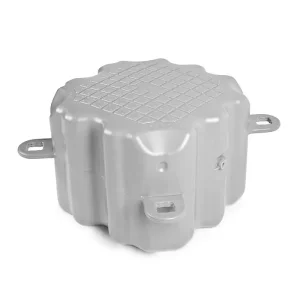
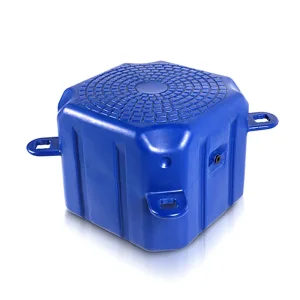
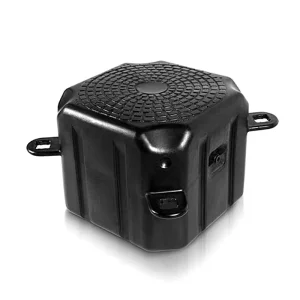
Marine environments impose harsh conditions, necessitating robust docking solutions. With the rise of jet boats and personal watercraft (PWC) globally, traditional static wood and steel docks are increasingly replaced by flexible, dynamic docking options. Jet boat propulsion systems—which pull water from below and eject it through directional nozzles—require specialized docking environments to prevent sand, silt, and marine debris from entering critical intake impellers during startup and shut-off sequences.
Drive-on jet boat floating docks address these requirements. Composed of modular High-Density Polyethylene (HDPE) pontoons, these platforms offer customizable configurations. They adapt to changing water levels and wave dynamics, protecting watercraft hulls and hulls from dynamic impact damages, biological growth, and mechanical corrosion. The engineering of these structures requires precise structural design, raw material optimization, and reliable blow molding processes. For global marina operators, public developers, and commercial waterfront owners, sourcing these structures from specialized, ISO-certified OEM factories in China provides crucial design adaptability, compliance, and material performance.
Founded in 2019, Shenghuang Industrial & Trade Blow Molding Factory is a leading innovator in the plastic blow molding industry. With its headquarters located in Huangyan, Taizhou, Zhejiang—an area known for its robust manufacturing infrastructure—the company has quickly grown into a trusted supplier of high-quality blow-molded products across multiple sectors, including packaging, automotive parts, household appliances, and environmental applications.
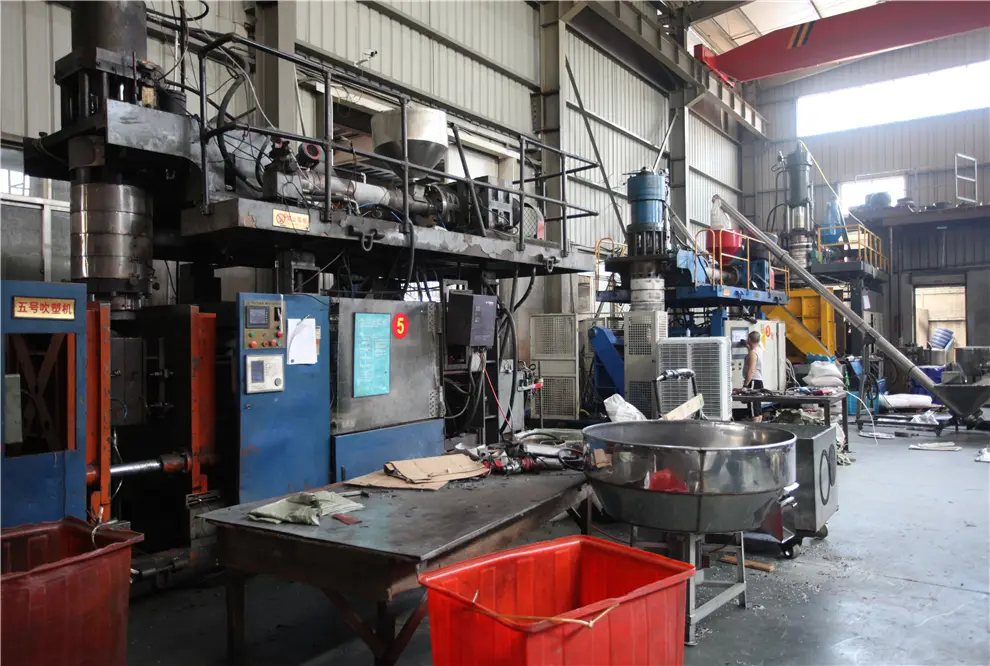
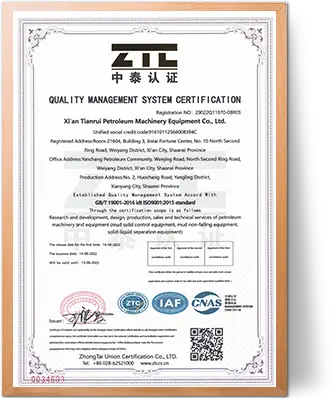
The factory is equipped with state-of-the-art automated blow molding production lines, which allow Shenghuang to efficiently produce a wide range of plastic products, such as plastic containers, bottles, pontoons, automotive parts, and custom-designed solutions. These advanced production lines ensure that Shenghuang can meet the growing demand for high-precision, durable, and cost-effective plastic products. The company adheres strictly to the ISO 9001 quality management system, ensuring that every stage of production—from raw material procurement to final product testing—meets stringent quality standards.


One of Shenghuang's key strengths is its commitment to environmental sustainability. The company actively promotes green manufacturing practices by using recyclable and eco-friendly materials in its production processes. Shenghuang continuously invests in research and development to enhance its products' environmental footprint, reducing waste and energy consumption while ensuring that all products comply with global environmental regulations.
Shenghuang places a strong emphasis on technological innovation. The company boasts a dedicated R&D team focused on developing new high-performance materials and advanced molding techniques to meet the evolving needs of its customers. This focus on innovation allows Shenghuang to offer a wide variety of customized solutions that are tailored to specific customer requirements, including specialized products for high-performance and industrial applications.
As part of its sustainability strategy, the company has also focused on improving material efficiency and adopting energy-saving technologies throughout its production facilities. Looking forward, Shenghuang will continue to focus on enhancing its technological capabilities, driving product innovation, and expanding its market presence worldwide, positioning itself as a trusted partner for clients in various industries globally.
The global market for modular marine docks has expanded significantly. Municipalities, commercial marina operators, aqua-tourism companies, and residential waterfront properties are transitioning to modern modular systems to reduce infrastructure costs. In North America and Northern Europe, environmental regulations restrict traditional treated timber docks due to wood-preservative leaching. This regulatory shift has driven demand for chemical-free, non-leaching HDPE systems.
Similarly, the growing popularity of rental PWCs and personal jet boats has led operators to deploy rapid docking solutions. Modular HDPE docks provide high impact absorption, dynamic range of motion, and low maintenance. This allows commercial operators to quickly dry-dock high-value assets and protect hulls from constant wave-driven friction.
HDPE jet boat docks can be configured to suit specific local conditions:
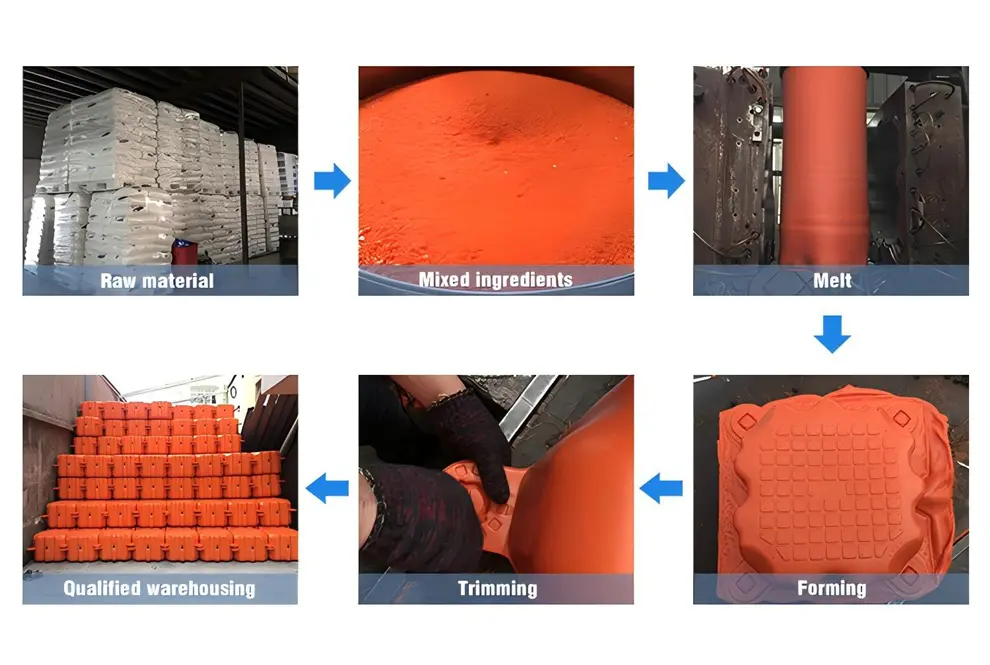
Marine plastics are subject to UV degradation, thermal expansion, physical impacts, and chemical exposure. To address these challenges, Shenghuang utilizes an advanced technical roadmap for materials and production:
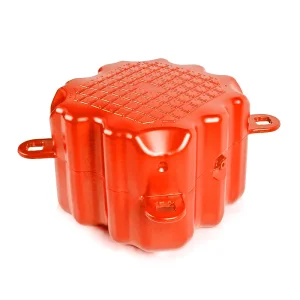
Our dock cubes are molded from high-grade High-Density Polyethylene (HDPE) with integrated additives. This includes long-term UV stabilizers (UV8 rating) to resist solar degradation, elastomer additives for impact resilience at sub-zero temperatures, and anti-static compounds to prevent static buildup on dry walk platforms.
We utilize automated extrusion blow molding systems. High-capacity extruders prepare a parison with uniform wall-thickness. Real-time parison programming ensures the final blow-molded dock cubes maintain consistent structural thickness across all walls and corners, preventing localized thinning and potential stress cracking.
Molds are engineered with internal support columns. During the inflation phase, internal walls bond together to create structural columns. This design allows the lightweight hollow cube to support heavy loads, achieving up to 350 kg/m² of buoyancy.
Shenghuang's long-term R&D focuses on incorporating post-consumer ocean-bound plastics into modular marine structures without compromising tensile strength. We are also testing smart telemetry elements inside anchoring accessories, allowing marina operators to monitor wave impact, structural strain, and local water temperature variations via IoT sensors.

Taizhou, Zhejiang is a global manufacturing center for injection molding and blow molding. This regional ecosystem provides distinct supply chain advantages. By sourcing raw materials and tooling locally, Shenghuang streamlines the design, testing, and production phases of new marine products.
Our localized infrastructure supports efficient scale-up. Raw HDPE resin is sourced nearby, reducing transport costs and transit times. Local mold-makers in Huangyan allow us to rapidly prototype custom tool configurations. Automated blow molding lines optimize energy use and output, ensuring stable lead times even during seasonal demand peaks.
For international buyers, this regional concentration reduces logistics challenges. With nearby access to major deep-water ports like Ningbo and Shanghai, we facilitate cost-effective shipping for large-volume container orders, helping mitigate global supply chain fluctuations.
Deploying marine structures globally requires compliance with regional safety, environmental, and engineering standards. Shenghuang supports international distributors, commercial developers, and project managers in meeting these localized requirements:
Our HDPE formulas undergo extraction tests to ensure they do not leach heavy metals, BPA, or chemical plasticizers into surrounding freshwater or marine ecosystems, satisfying strict environmental criteria.
Every batch of blow-molded cubes undergoes rigorous testing. This includes drop-weight impact tests, hydrostatic leak testing, and localized load-bearing verification to ensure performance consistency under real-world pressure.
To reduce shipping costs for large orders, we pack the modular cubes tightly into container loads. We also supply clear installation manuals, localized anchoring engineering guidelines, and simple connecting pins to streamline on-site assembly.










 ShengHuang