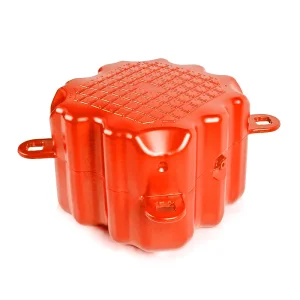
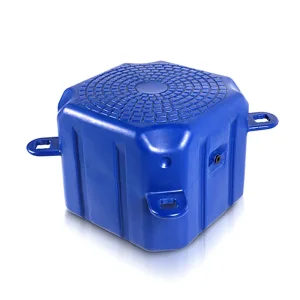
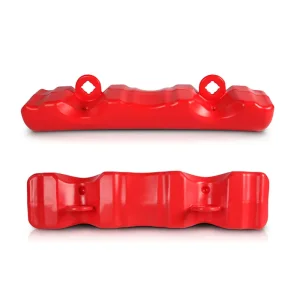
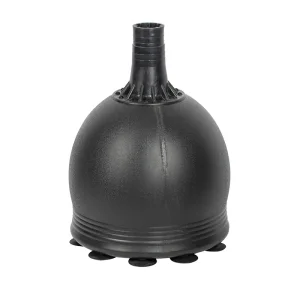
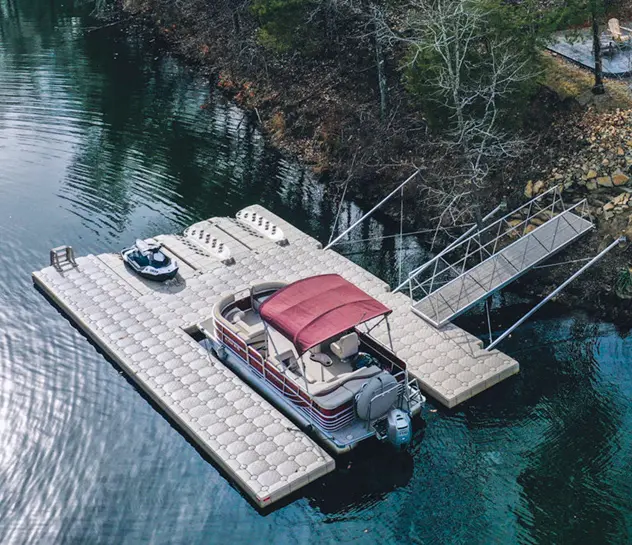
The global marine leisure and transport infrastructure markets have transitioned rapidly from fixed, rigid wooden and concrete docks toward modular thermoplastic systems. Foremost within this marine engineering evolution is the Candock-style drive-on system, engineered specifically for Personal Watercraft (PWCs) and jet skis. The global commercial market requires modular floating docks that can adapt seamlessly to varying water heights, handle violent weather systems, support heavy static loads, and allow rapid watercraft deployment.
Industrial ports, yacht clubs, eco-tourism resorts, and private marine operators rely heavily on OEM suppliers to deliver custom, high-durability polymer platforms. Traditional docks face constant degradation from marine borers, osmotic blistering, rust, and structural stress induced by tidal surges. Modular High-Density Polyethylene (HDPE) platforms solve these challenges by dispersing kinetic energy through a grid of articulating connections. This provides structural elasticity that dampens mechanical stress and ensures watercraft remain dry, clean, and secure when docked.
Founded in 2019, Shenghuang Industrial & Trade Blow Molding Factory has quickly established itself as a leading innovator in the plastic blow molding sector. Headquartered in Huangyan, Taizhou, Zhejiang province—the heart of China's plastics and mold industry—the factory benefits from an advanced local supply chain and highly specialized industrial tooling. The company specializes in the engineering, design, and mass production of premium blow-molded products, serving sectors including packaging, automotive parts, marine systems, and environmental safety installations.
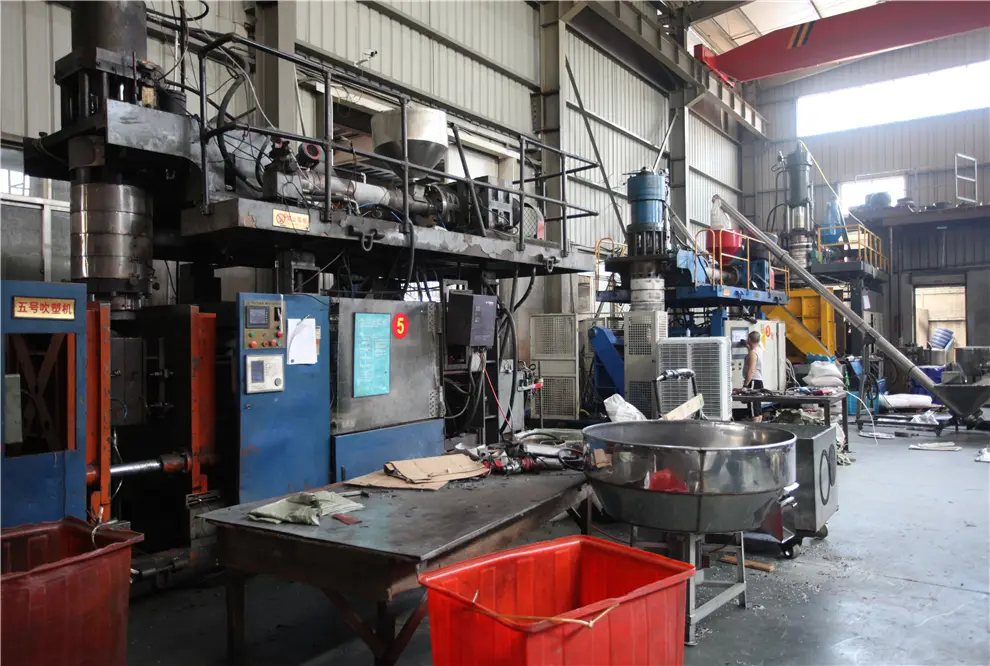
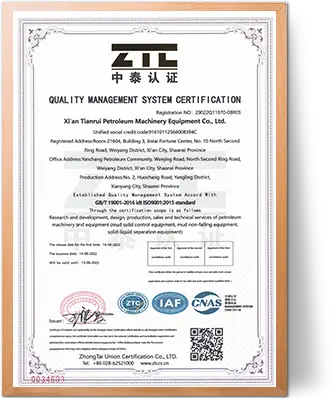
The manufacturing facility is equipped with automated blow molding production lines. These lines allow Shenghuang to efficiently manufacture complex plastic shapes, such as hollow containers, industrial safety panels, high-buoyancy marine pontoons, and custom OEM assemblies. Adhering strictly to the ISO 9001 quality management system, the factory ensures that every production stage, from raw material inspection (using premium virgin HDPE resins) to final structural stress tests, meets international safety and durability standards.


We actively promote green manufacturing by using recyclable and eco-friendly raw materials. We continuously invest in R&D to reduce carbon footprints, minimize waste, and ensure compliance with global environmental regulations.
Our dedicated engineering team designs new high-performance materials and advanced blow molding profiles. This enables us to offer tailor-made OEM/ODM solutions for challenging marine environments.
Strategically positioned for international expansion, we deliver high-precision products directly to port terminals worldwide, establishing ourselves as a reliable global manufacturing partner.
The commercial demands for modular HDPE systems vary significantly across geographical regions. In North America and Europe, the boom in personal watercraft rentals requires heavy-duty docks capable of handling continuous, high-impact docking cycles. In coastal zones prone to extreme weather, traditional wooden structures require frequent maintenance. The modular HDPE floating block system provides a flexible alternative that moves with water currents rather than resisting them.
Industrial operators, including environmental research teams, offshore oil rigs, and port authorities, utilize modified modular docks to deploy scientific buoys, secure workboats, and establish temporary bridges. These environments require materials that are chemically inert, resistant to petroleum oils, and structurally stable under heavy UV radiation. By selecting Shenghuang’s HDPE solutions, operators can deploy modular platforms in marine sanctuaries without risking heavy metal or microplastic contamination.








Shenghuang's engineering process utilizes High-Molecular-Weight High-Density Polyethylene (HMW-HDPE), combined with specialized UV-resistant and anti-oxidant additives. This material choice protects the modular blocks from thermo-oxidative degradation caused by exposure to intense sunlight and saltwater.
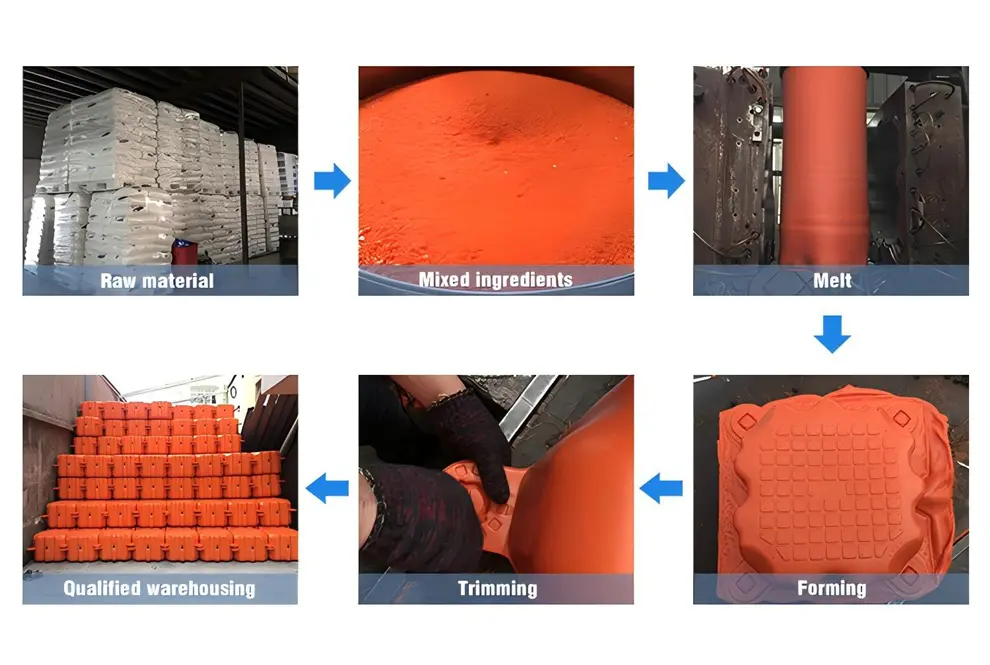
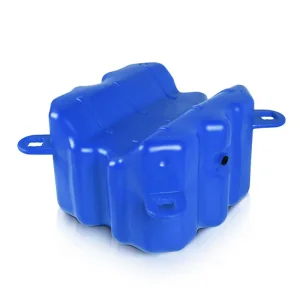
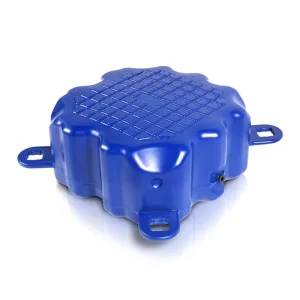
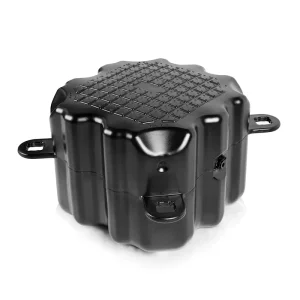
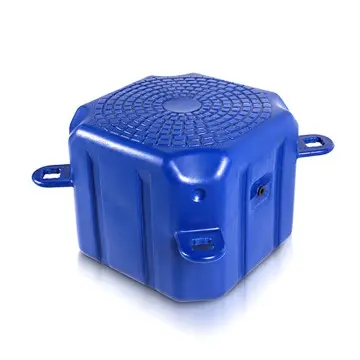
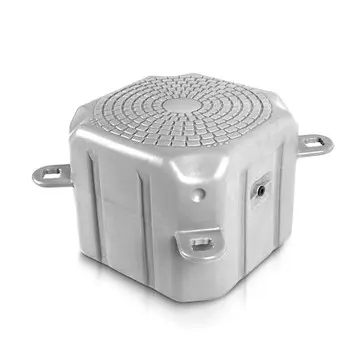
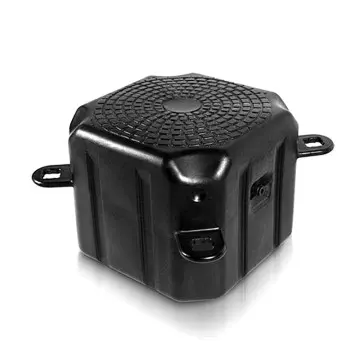
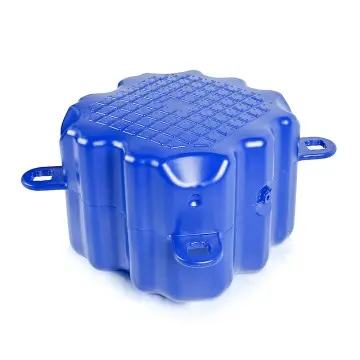
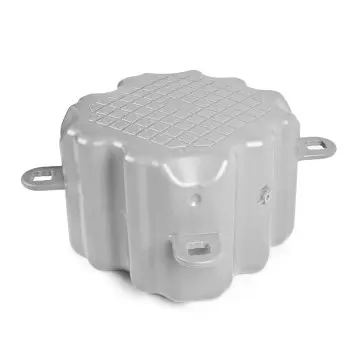
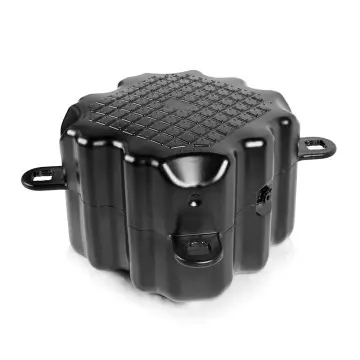
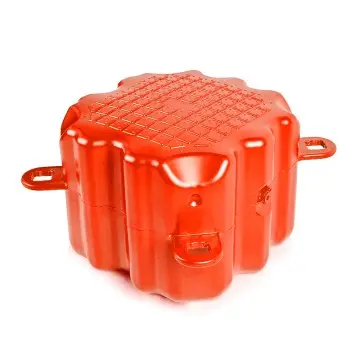
The modular cubes are manufactured using extrusion blow molding. In this process, raw HDPE is extruded into a hollow tube (parison), enclosed in a precision-molded steel cavity, and inflated with high-pressure air. This technique produces a seamless, double-walled structure with consistent wall thickness, high impact resistance, and excellent load-bearing capabilities.
Engineered with a nominal wall thickness of 8-10mm and internal structural ribbing to prevent oil canning (buckling) under static loads, ensuring the top deck remains flat.
Provides 350 kg/㎡ of buoyancy, allowing multiple modular units to support heavy modern multi-seater personal watercraft with minimal displacement.
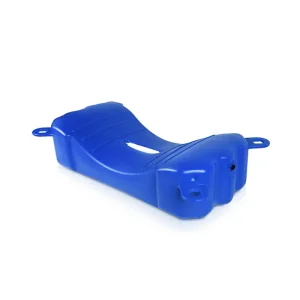
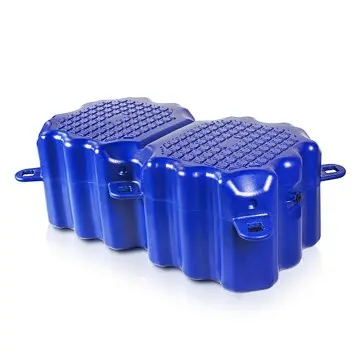
Uses a four-lug interlocking configuration with solid HDPE connecting pins, which shear-lock in place to distribute load stresses evenly across the entire grid.
A major advantage of modular floating systems is their adaptability to varied environmental conditions, from shallow lakes to tidal estuaries and open marine bays.
Requiring only 2 to 4 inches of draft when unladen, these docks can rest directly on soft mud or sand during low tides without sustaining structural damage.
The modular construction allows the platform to bend and flex with waves and tides, dissipating energy and reducing the risk of structural failure during high winds and storm surges.
The convex design of the modular units allows the platform to rise above freezing ice. This prevents ice crush damage and allows the system to remain installed year-round in northern latitudes.
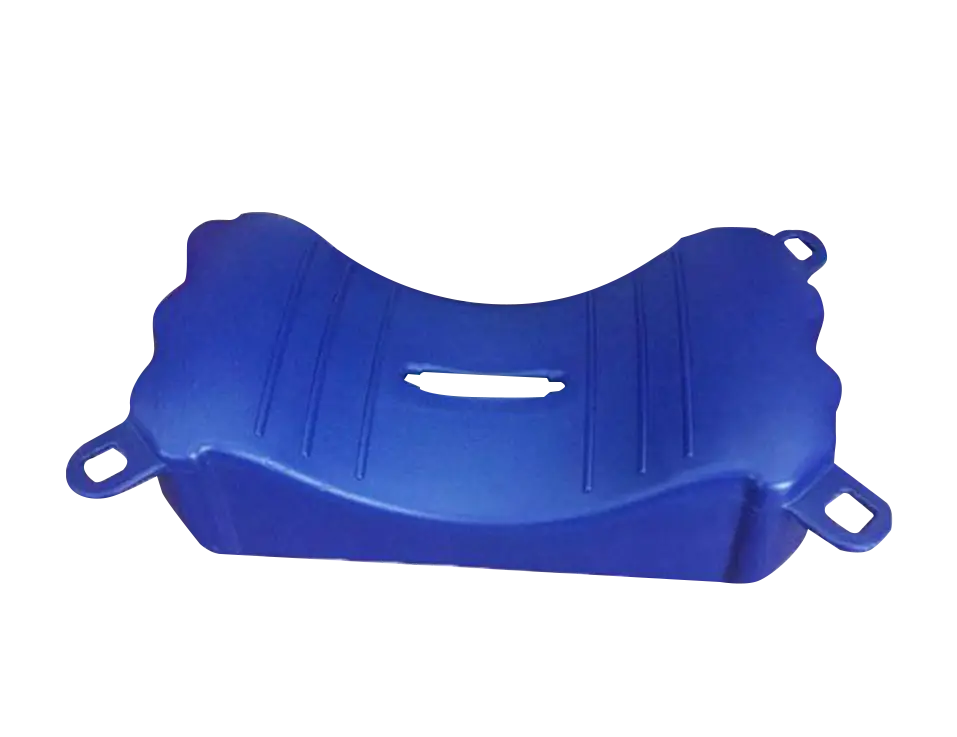
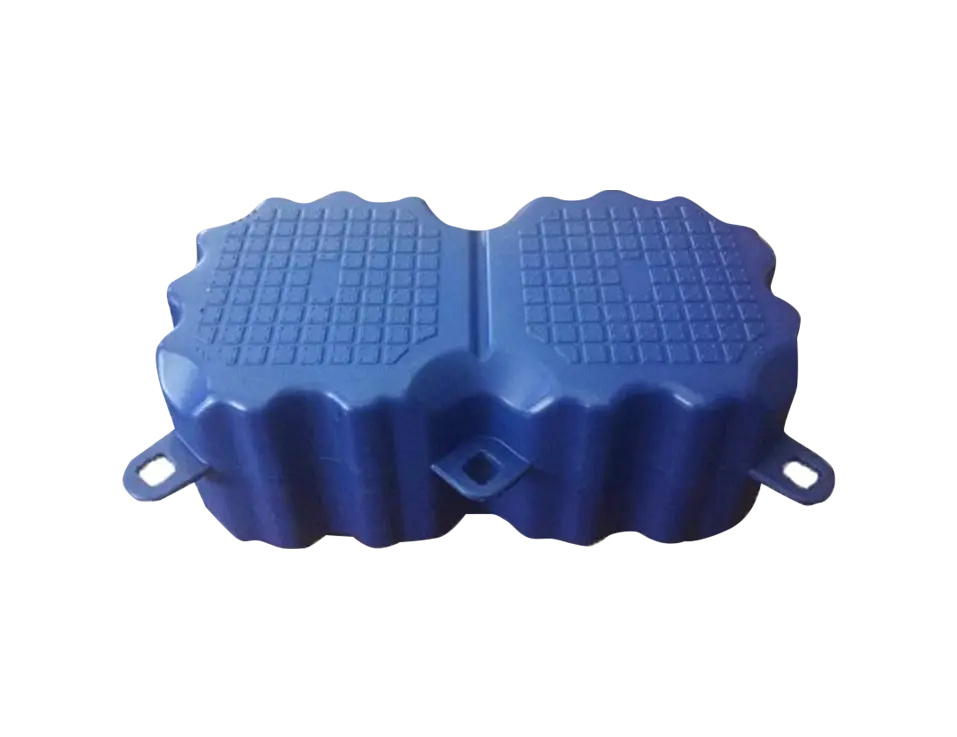
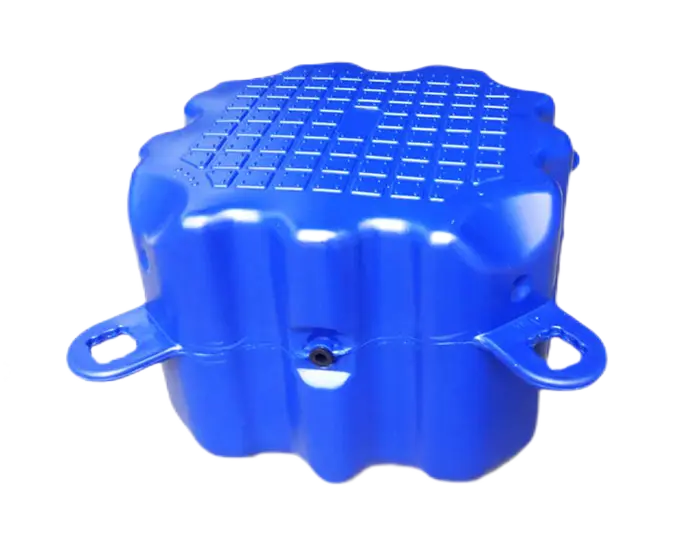
Our high-density modular pontoon configurations are utilized globally across key industry segments, providing stable work platforms and reliable vessel protection in diverse marine environments.
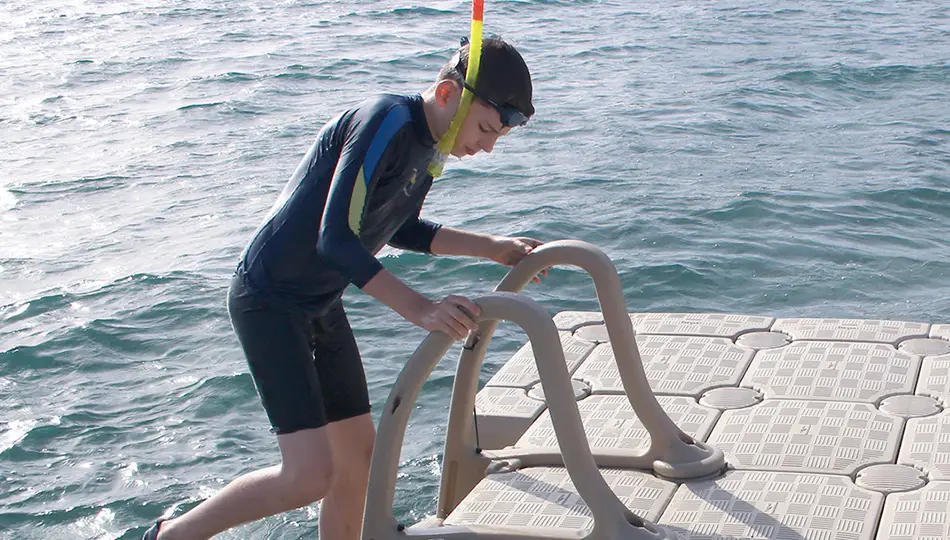

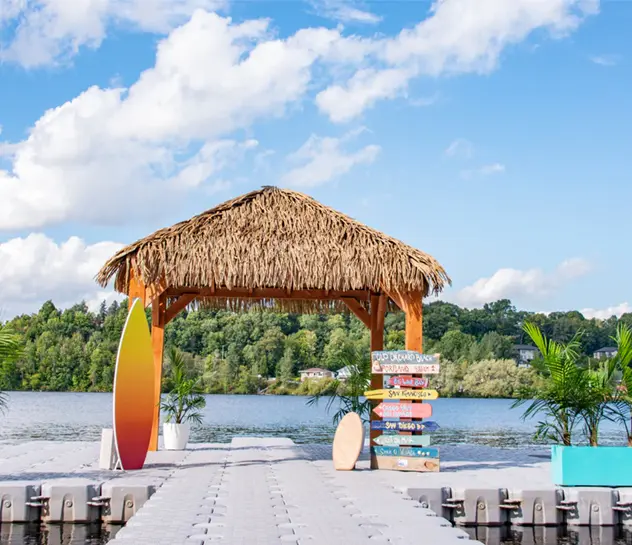
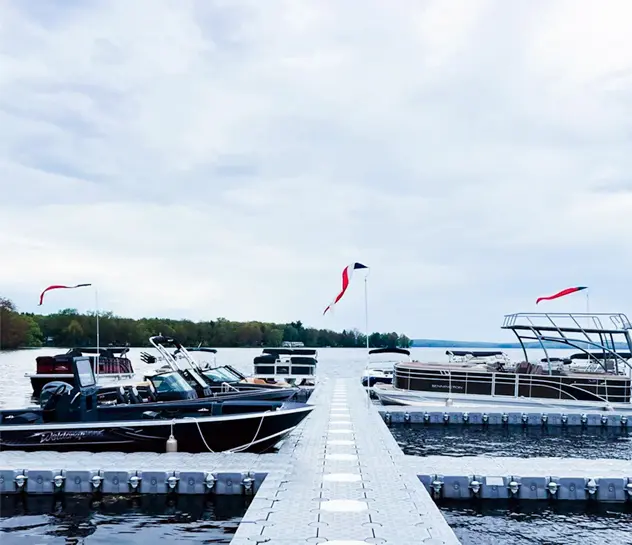
Our operational model is built around four core capabilities: highly specialized personnel, a flexible R&D mechanism, advanced clean-production technologies, and professional lifecycle support.
We employ engineering, sales, and quality assurance professionals focused on delivering customer satisfaction and technical support for every project.
Our design process allows us to rapidly adapt specifications for bespoke applications, meeting complex load requirements and unique spatial layouts.
We utilize energy-saving blow molding machinery and closed-loop water systems, keeping our manufacturing processes aligned with international eco-friendly standards.
Thanks to its flexible interlocking modular design, the system performs well in major storm events. The flexibility distributes wave energy across the platform, preventing stress points that cause rigid docks to crack. Performance depends on proper anchoring (piles, block anchors, or seafloor anchors). Over the years, our customers have reported excellent survivability, even in areas affected by high-strength typhoons.
Yes, in regions without a local distributor, we coordinate direct factory-to-port shipments. We prepare the modules, connector pins, and accessories, and ship them to your nearest freight terminal for convenient pickup or delivery.
The system is designed for year-round installation in fresh and saltwater environments. The convex shape of the cubes allows the platform to rise above freezing ice sheets. This protects the dock from crush damage, allowing it to remain in place through the winter.
The primary concern is moving water or strong currents carrying large ice sheets. If the ice melts in place, the dock can remain in the water. However, if there are moving ice blocks that would damage stationary wooden or metal docks, the modular dock should be decommissioned for the season to prevent damage from floating debris.
For general walkways and access piers, we recommend a minimum width of three cubes. This configuration provides a stable walking surface that supports body weight, utilizing the buoyancy of individual cubes (each providing approximately 200 lbs of load-carrying capacity).
Yes, the dock operates effectively in shallow waters, drawing only 2 to 4 inches of draft when unladen. The main requirement is sufficient water depth at the entry point of the dock to allow the craft's hull to clear the ramp during drive-on and drive-off maneuvers.
We began production in 2019, establishing our facility as one of the early modular plastic dock manufacturers in Taizhou, Zhejiang. Combining automated blow molding technology with strict quality control, we supply high-durability modular marine platforms to international markets.
 ShengHuang