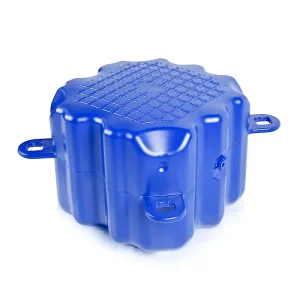
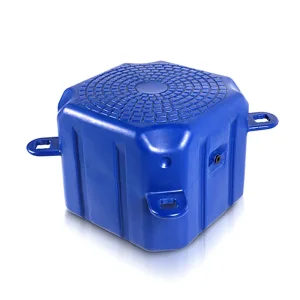
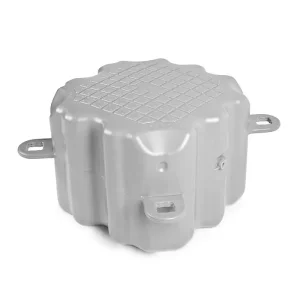
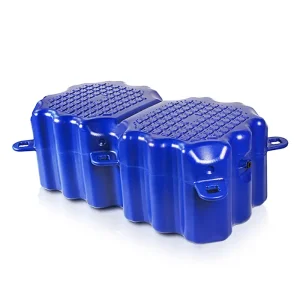
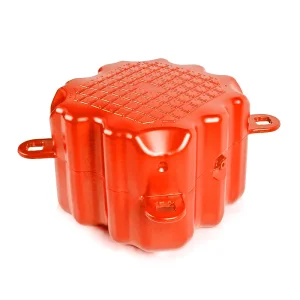
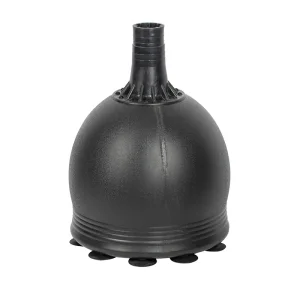
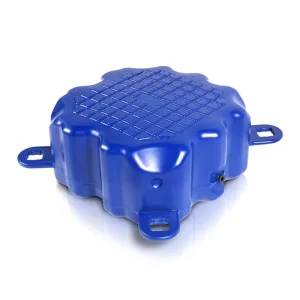
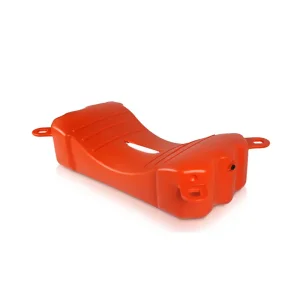
Direct from our state-of-the-art Taizhou blow molding factory. Optimized for stability, resilience, and high buoyancy.
The global marine leisure and commercial harbor industries have witnessed massive growth over the last decade. As Personal Watercraft (PWC) such as Jet Skis, WaveRunners, and Sea-Doos increase in weight, horsepower, and dimensional scale, the demand for robust shore handling solutions—specifically Rolling Jet Ski Stands and modular dry docking units—has scaled proportionally.
Marinas, rental operators, dry-dock storage facilities, and private resort owners globally require systems that protect hull integrity, resist marine fouling, and ease the logistical strain of launching and retrieving watercraft. Modern solutions must leverage advances in high-density polymer compounds to replace traditional heavy steel frames that easily rust in salty marine conditions.
Shenghuang Industrial & Trade Blow Molding Factory has positioned itself at the center of this technological shift, manufacturing modular systems that serve as dual-purpose staging platforms and marine dry docks, combining rolling support flexibility with robust HDPE buoyancy blocks.
9001 Quality Certified
kg/m² Buoyancy Rate
Year Established
Recyclable Polymers
Why High-Density Polyethylene (HDPE) remains the definitive material choice for severe marine and logistics environments.
Blow molding creates seamless hollow structures with uniform wall thickness, avoiding weak seams. This is essential for structural stability when supporting localized load stresses from heavy watercraft hulls.
UV-stabilized HDPE displays superior degradation resistance. Our marine formulations do not rot, swell, or leak chemicals, making them fully compliant with global aquatic preservation mandates.
Unlike metal stands or concrete slipways, blow-molded docks and rollers deform slightly under extreme shock loads before recovering their original shape, protecting the hull during docking.
Shenghuang Industrial & Trade Blow Molding Factory operates within Huangyan, Taizhou, Zhejiang—a region globally recognized as the "Molding Hometown." This positioning provides clear competitive advantages for international purchasers looking to source bulk orders of floating platforms, dry docks, and marine infrastructure components.
Our proximity to primary raw plastic suppliers, UV stabilizer chemical compounding plants, and custom tooling machine shops allows us to shorten research and development cycles. If a marine distributor requires a customized rolling jet ski dock with specific dimensions, our engineering team can produce functional tooling in a fraction of the time required by Western competitors.
By investing heavily in multi-layer co-extrusion blow molding machinery and automated robotic trimming, we achieve high dimensional accuracy. Our ISO 9001 compliance is not merely a certification; it governs every raw material batch verification process, parison thickness control, drop-test testing sequence, and stress load analysis.
| Performance Indicator | Traditional Steel / Wood Docks | Shenghuang HDPE Blow-Molded Solutions | B2B Operational Benefit |
|---|---|---|---|
| Service Life Cycle | 3 to 5 Years (Rust / Rot prone) | 15+ Years (Maintenance-Free) | Lowers long-term capital expenditure |
| Chemical & Salt Resistance | Poor (Rapid degradation in seawater) | Excellent (Inert to saltwater and acids) | Universal deployment in global marine zones |
| Dynamic Load Tolerance | Rigid / Prone to fracturing at weld points | High flexural recovery index | Withstands impact from high-wave surges |
| Installation Velocity | Complex, requiring heavy machinery | Modular modular interlocking (1 day assembly) | Reduces on-site labor and setup costs |
Global corporations face strict carbon footprint regulations. Shenghuang incorporates recyclable high-molecular-weight polyethylene, optimized energy-efficient extrusion systems, and zero-waste scrap recycling loops. Our environmental practices reduce scope 3 emissions for our clients without compromising the structural integrity of the final marine product.
From private lake properties to heavy commercial marine rental operations, our HDPE platforms offer tailored performance.
Heavy daily launch-and-retrieve frequencies demand robust support surfaces. Our drive-on modular U-floating docks minimize hull abrasion, allowing rental fleets to park and deploy without winching.
Modular HDPE blocks integrate into existing docks, letting marina operators extend slips. Their high buoyancy handles changing water levels during high and low tides.
Unlike concrete, our flexible blocks handle freeze pressure. The modular cubes lift slightly when ice shifts, preventing compression damage and allowing year-round installation.
Sourcing commercial marine equipment requires thorough due diligence. Procurement departments should assess the following technical parameters when selecting a supplier:
Direct engineering answers addressing material behavior, wave survival, cold-weather deployment, and sizing.
A wider range of blow-molded industrial solutions and protective equipment, built to international specifications.
 ShengHuang