Explore our primary selection of blow-molded industrial modular units, buoys, heavy-duty sandbags, and custom structural platforms designed for extreme environmental resilience.
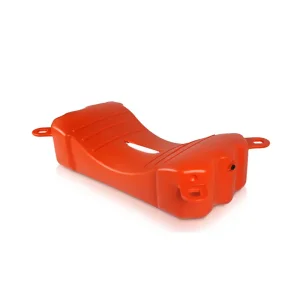
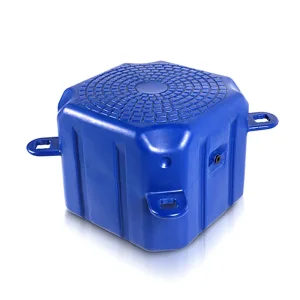
Founded in 2019, Shenghuang Industrial & Trade Blow Molding Factory is a leading innovator and strategic manufacturing hub in the global plastic blow molding industry. Headquartered in Huangyan, Taizhou, Zhejiang province—internationally recognized as the "Mould Hometown of China"—the company benefits from a world-class manufacturing ecosystem, robust logistical infrastructure, and seasoned technical talent.
We specialize in engineering high-precision, heavy-duty blow-molded products tailored for environmental marine installations, packaging solutions, automotive components, and custom structural applications. Driven by rigorous quality assurance and cutting-edge automation, we translate complex client designs into high-performance, field-proven plastic products.
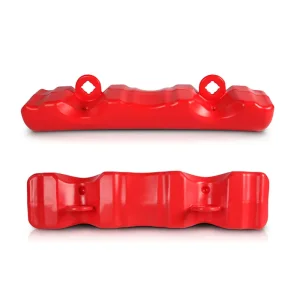
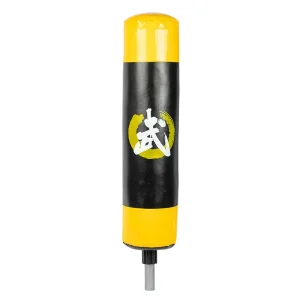
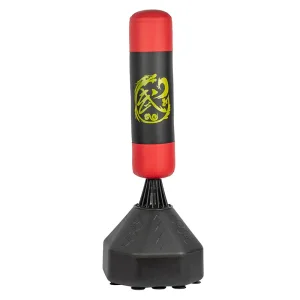
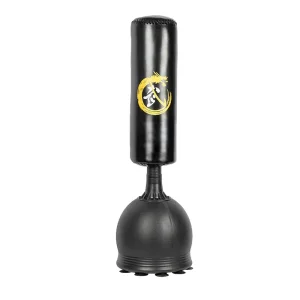
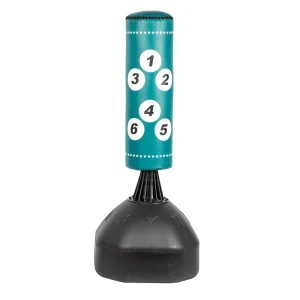
Our factory integrates advanced multi-layer automated blow molding lines, enabling the extrusion of components with uniform wall thickness, high impact resilience, and exceptional environmental stress crack resistance (ESCR). Our product line spans marine pontoons, commercial floats, specialized liquid containers, boxing equipment components, and bespoke industrial parts.
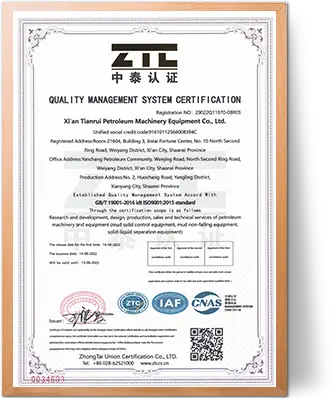
By strictly adhering to the ISO 9001 quality management framework, we guarantee traceable quality controls from raw material reception (virgin HDPE with UV stabilizers) to final pressure and buoyancy load trials. This ensures that every modular block leaving our facility stands up to the harshest marine, chemical, and physical stresses.

Analyzing the macroeconomic shifts, regulatory pressures, and material science innovations driving the modern floating dock market.
Traditional marine construction relied heavily on chemically treated wood (releasing toxic copper chrome arsenate) and heavy concrete structures that disrupt benthic marine habitats. Global environmental mandates now favor inert, food-grade High-Density Polyethylene (HDPE) modular pontoon systems. HDPE releases zero microplastics or hazardous chemicals, is 100% recyclable, and aligns with circular economy goals.
With escalating global temperatures, marine developers are facing more frequent and severe storm surges, hurricanes, and tidal shifts. Rigid docks easily fracture under lateral force. Modular Voyager floating docks utilize composite, flexible HDPE connections, dispersing wave energy throughout the platform structure. This enables dock assemblies to survive typhoons and heavy ice pressure.
The utility of floating platforms has extended far beyond basic leisure docks. The rise of Floating Solar Photovoltaic (FPV) arrays, automated offshore aquaculture cages, and floating eco-resorts requires robust, standardized modular platforms. Shenghuang's engineering team actively designs specialized U-docks and high-buoyancy square components to support heavy commercial equipment.
For commercial projects, utility infrastructure, and municipal developments, purchasing decision-makers prioritize structural longevity, safety ratings, compliance certification, and supply chain scalability.
Commercial operators source modules containing premium UV stabilizers (such as UV-8 or UV-12) to resist solar photo-degradation. In high-salinity marine environments, inferior materials discolor, become brittle, and crack within 36 months. Shenghuang utilizes virgin grade Lupolen HDPE infused with custom antioxidant and carbon black masterbatch packages, extending the operational lifetime to over 15 years even in tropical coastal zones.
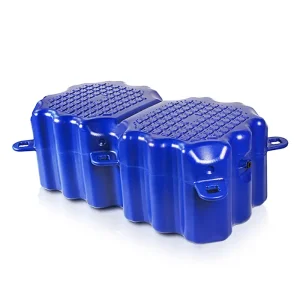
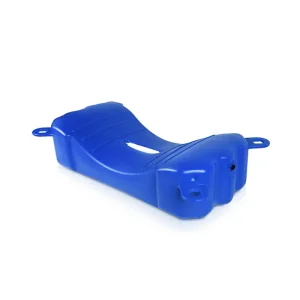
Safety audits require clear engineering data on load-bearing capacities. Our standard single-layer modular cubes support up to 350 kg/m² of active buoyancy. Our heavy industrial twins and concave-convex designs are engineered to handle high static loads, offering maximum stability for commercial traffic, maintenance machinery, and large tourist events.
Shenghuang's production capabilities harness Taizhou's industrial clusters to deliver cost efficiency, custom design flexibility, and rapid order fulfillment.
Our factory floors utilize state-of-the-art blow molding equipment with parison thickness control program arrays. This setup maintains precise wall-thickness parameters, eliminating stress concentration points and structural weaknesses common in low-tier manufacturing.
Our integration of clean recycling loops and closed-loop material conveying reduces energy consumption and chemical waste. All scrap material generated during flash cutting is instantly recycled and processed for secondary industrial uses, supporting green manufacturing practices.
Located close to Ningbo-Zhoushan and Shanghai Ports, our supply chain guarantees low inland transit times, stable container availability, and streamlined customs clearance, minimizing lead times for global projects.









Our modular HDPE pontoons serve diverse applications, including industrial dredging operations, municipal leisure parks, aquaculture installations, and heavy-duty sporting equipment setups.
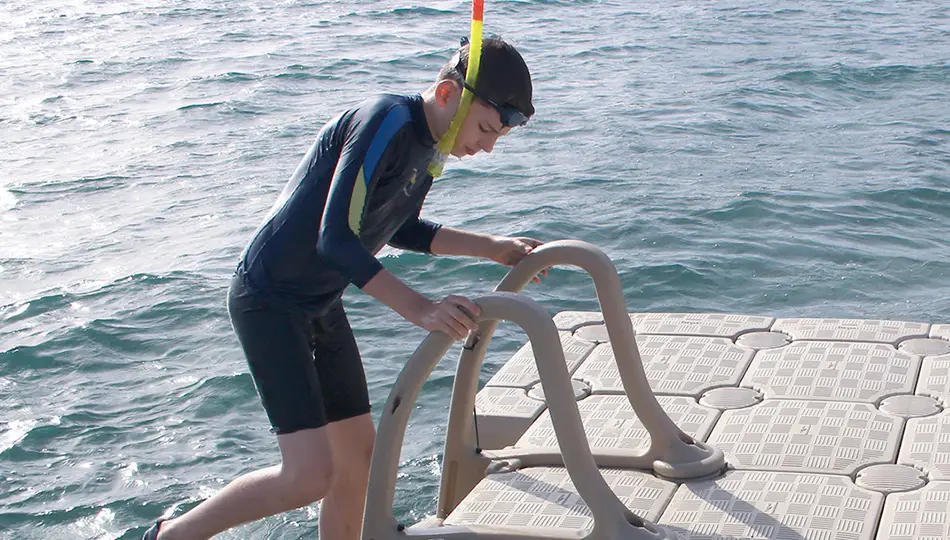
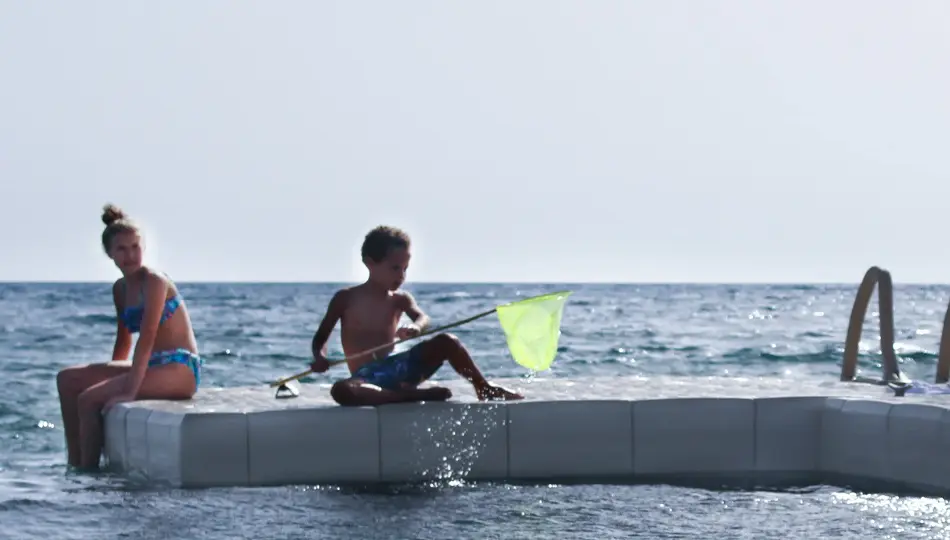
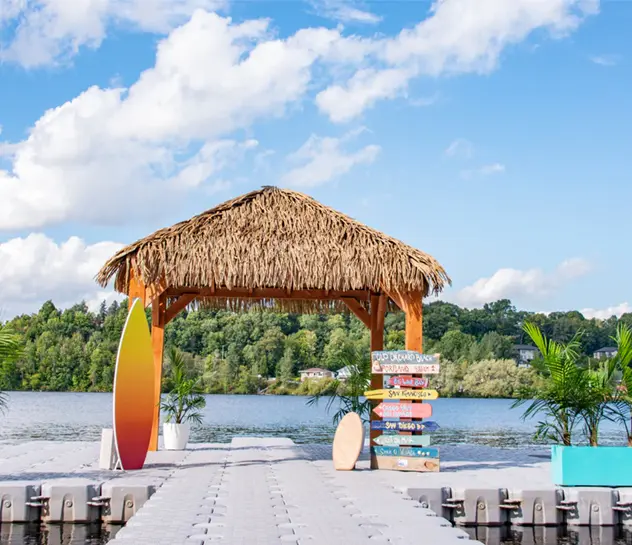
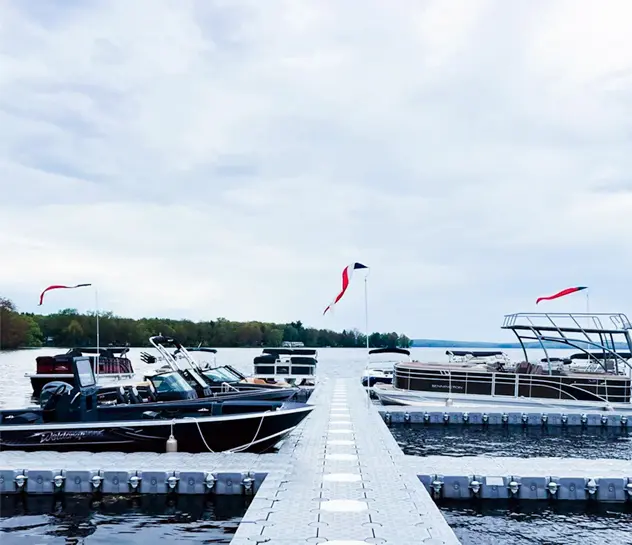
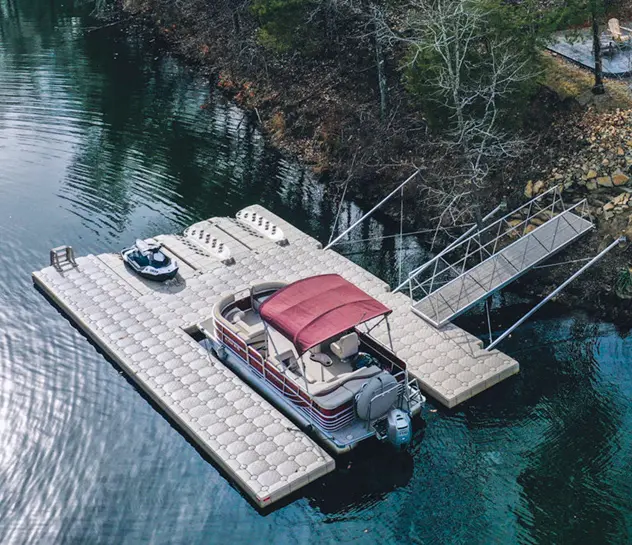
Every aquatic environment presents unique challenges. Here is how Shenghuang's Voyager Floating Docks perform in specific field conditions:
Coastal marine docks experience massive vertical shifting twice daily. Standard dock setups buckle under the pressure. The Voyager modular float uses flexible pin connections that let the platform curve and conform to waves, minimizing stress on shoreline anchor points. For high-tide scenarios, we integrate heavy-gauge pile guides or self-adjusting anchors to keep the platform securely positioned.
Moving ice sheets can damage traditional steel-framed docks. Voyager HDPE modular cubes feature a tapered base design. When water freezes and expands, the ice squeezes the floats upward, causing the platform to slide on top of the ice rather than being crushed. When the spring thaw occurs, the cubes naturally settle back down to water level.
In estuaries and shallow rivers, low tides can leave floating structures resting on the bottom. The flat, reinforced bottom of our HDPE cubes allows them to settle on mud, sand, or smooth gravel beds without puncture risks. At high tide, the cubes simply float back up. The dock requires only 2 to 4 inches of draft when unladen.
Mine tailings ponds and highly acidic volcanic lakes degrade standard metallic and wood float components. Shenghuang's engineering-grade HDPE resists acids, alkalis, and solvents. When combined with our UV stabilizers, these floats withstand high-UV radiation climates without degradation, scaling, or chalking.
Our service philosophy blends material science expertise, manufacturing capacity, and customer support.
We employ a dedicated engineering and quality assurance team. From 3D CAD modeling to structural load calculations, we assist clients at every stage to ensure compliance and project success.
Our R&D division supports rapid prototyping. We can customize colors, dimensions, surface patterns, or mechanical attachment points to meet specific project guidelines.
We continuously upgrade our extrusion blow molding technology. This enables us to maintain tight wall thickness tolerances, high dimensional stability, and efficient production cycles.
We offer comprehensive support services, including pre-sales project configuration, structural design, container loading optimization, and global logistics coordination.
Providing clear engineering explanations for designers, developers, and distributors sourcing modular floating structures.
The system's modular design and flexible interlocking pins allow it to bend and conform to wave action rather than resisting it. This dynamic flexibility distributes wave energy across the entire structure. The longevity of the installation depends on proper anchoring. In typhoon-prone regions, we recommend using heavy-duty pile guides and elastic mooring lines to accommodate vertical surging while securing the dock horizontally.
Yes. If we do not have an active distributor in your territory, Shenghuang ships directly from our factory in Zhejiang. We package and secure the components in containers (20GP or 40HQ) and arrange delivery to your nearest seaport or freight terminal for local pickup.
Yes. Voyager floating docks are engineered to remain in place year-round, including in freezing and saltwater environments. The high-density polyethylene construction resists ice adhesion, and the tapered shape of the cubes helps the assembly slide upward when squeezed by expanding ice, preventing damage.
The primary challenge with winter ice is water flow and movement. If ice thaws and melts in place, the system is unaffected. However, if your location experiences heavy spring currents with large, moving ice sheets, they can sheer and damage any fixed or floating structure. In these high-risk areas, we recommend towing the modular system to a protected bay or storing it on land during the winter.
For general safety and stability, a walking platform should be at least three cubes wide (approximately 1.5 meters). This width provides a stable walking surface and supports typical weight loads. Each individual cube provides approximately 90 kg (200 lbs) of buoyancy, resulting in a balanced, secure walkway.
Yes. The unladen draft of the cubes is 2 to 4 inches, allowing the dock to float in very shallow water. However, the water depth at the launch end must be sufficient to allow watercraft to slide off the dock without hitting the bottom. The system is designed to rest safely on mud or sand during low tides, provided there are no sharp rocks or debris that could puncture the plastic.
Our factory established its floating dock division in 2019, making us one of the early modern modular HDPE manufacturers in the Zhejiang region. Today, Shenghuang is a major supplier of modular floating components in China, exporting products to commercial, recreational, and industrial clients worldwide.
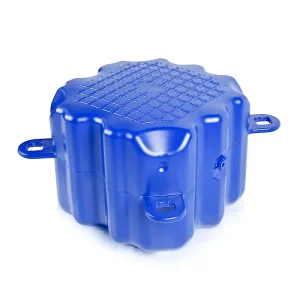
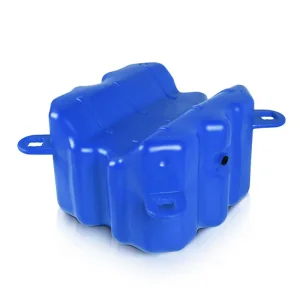
Select from our high-density modular units, specialty colored single docks, and heavy-duty double-wide structures.
 ShengHuang