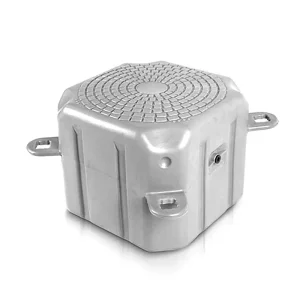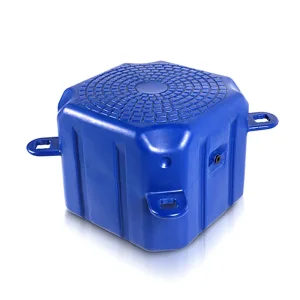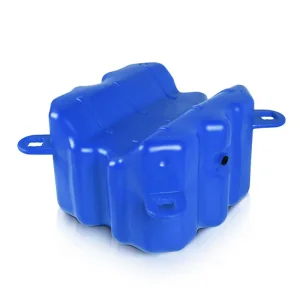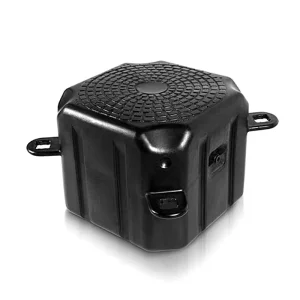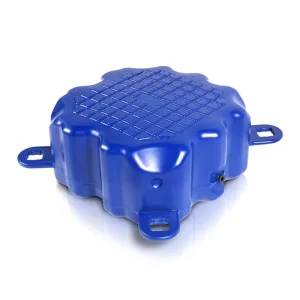
Over the past decade, marine infrastructure has undergone a paradigm shift from rigid, high-maintenance wood and concrete structures to flexible, high-density modular floating systems. Known globally as Jet Dock installations, these drive-on dry-dock configurations offer unparalleled safety, convenience, and protection for watercraft. By utilizing specialized High-Density Polyethylene (HDPE) structures, engineers have resolved age-old maritime challenges such as corrosion, marine growth adhesion, and high-impact structural fatigue.
As a leading pioneer in high-performance polymer extrusion, Shenghuang Industrial & Trade Blow Molding Factory has established itself at the forefront of this industrial transformation. Operating out of Huangyan, Taizhou, Zhejiang—the global epicenter of precision mold making and plastics manufacturing—we design, engineer, and manufacture heavy-duty floating platforms and industrial components that meet the rigid performance demands of marine operators, defense organizations, and recreational facilities worldwide.
Our OEM modular docks are designed for a 15+ year operational lifespan. Engineered with zero metal fasteners below the waterline, they eliminate galvanic corrosion risk entirely.
Establishment Year
Buoyancy Per SQM
Quality Standard
Recyclable Polymers
From commercial maritime logistics and military rapid-deployment docks to aquaculture farms and eco-tourism resorts, HDPE modular floating platforms are reshaping coastal infrastructure.
Commercial ports and public marinas use modular jet docks to reduce boat maintenance. By dry-docking boats out of the water, operators eliminate the need for antifouling paints, saving thousands of dollars per vessel in annual maintenance. The rapid drive-on mechanism allows security forces and harbor masters to launch vessels in seconds, optimizing response times.
Offshore solar farms, floating walkways for wind turbine access, and aquaculture cages rely on the flexibility of modular HDPE cubes. The systems withstand open-sea swell patterns, absorbing wave energy through micro-deflection instead of resisting force rigidly, preventing structural stress cracking.
From Olympic rowing platforms and luxury yacht slipways to rapid military bridge deployments, our floating platforms are engineered to meet strict load-bearing parameters. Dual-lock security ensures stability under high foot traffic and dynamic vehicular loading during drive-on maneuvers.
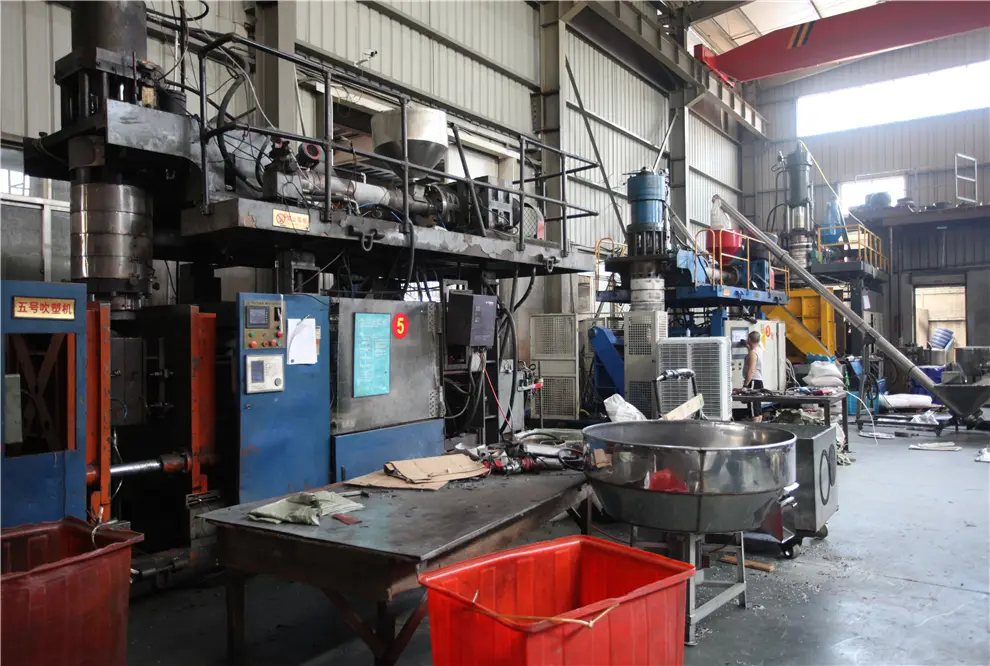
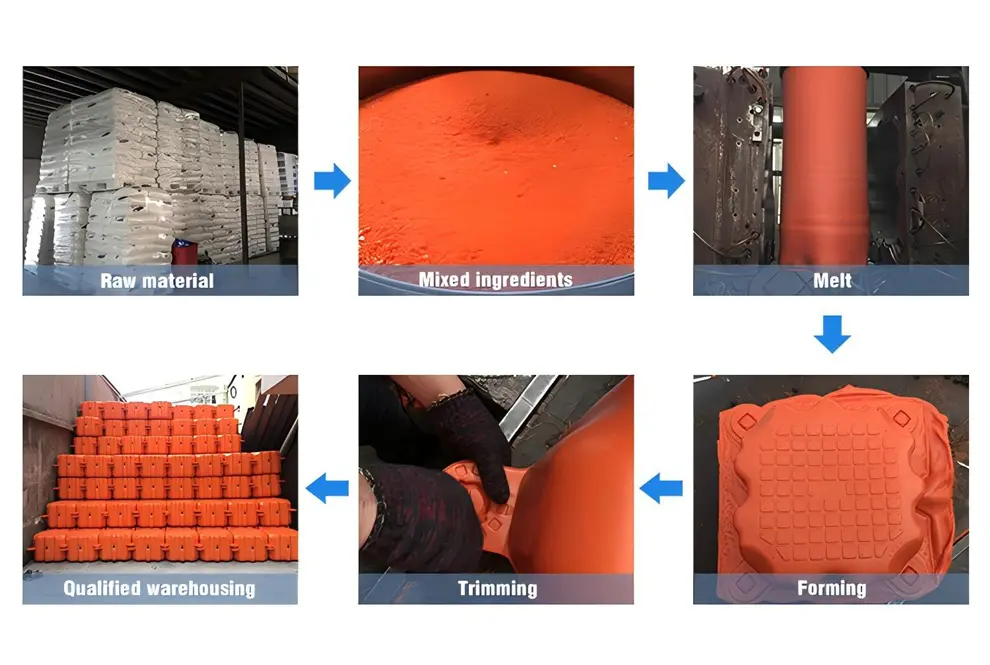
Our state-of-the-art automated blow molding lines utilize a high-precision extrusion process. Raw polymer resins are melted and extruded into a parison, which is then captured within a water-cooled steel mold. High-pressure air expands the parison against the mold cavity walls, forming a perfectly seamless, hollow structural element with uniform wall thickness and zero internal stress concentration points.
Every batch of raw material undergoes rigorous testing, including density verification, melt flow index (MFI) analysis, and environmental stress crack resistance (ESCR) checks, ensuring full alignment with international maritime safety codes.
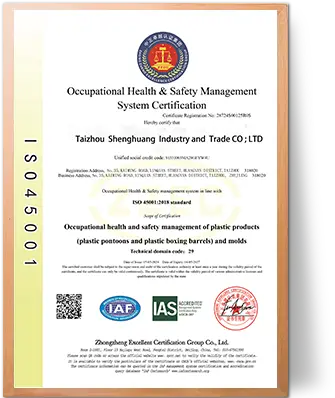
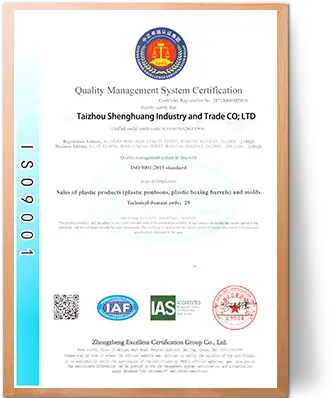
Under the guidance of the ISO 9001:2015 Quality Management System, Shenghuang ensures that every step of the supply chain—from raw material sourcing to structural drop testing—is fully documented. This precision engineering guarantees that our modular cubes can handle severe physical abuse, including high impact from docking hulls and extreme temperature shifts.
Our engineering division continuously refines the molecular alignment of our high-molecular-weight polyethylene resins. By integrating advanced hindered amine light stabilizers (HALS), we achieve unparalleled UV protection, ensuring the polymer matrix remains resilient in high-salinity, high-UV tropical regions like Southeast Asia, the Middle East, and Latin America.
A commitment to rigorous engineering, global compliance, and environmentally sound production processes.
Environmental stewardship is a core design philosophy at Shenghuang. Traditional pressure-treated wood docks leach toxic heavy metals (like CCA) into fragile marine ecosystems. In contrast, our HDPE floating systems are chemically inert, non-toxic, and 100% recyclable at the end of their operational lifecycle.
We actively reduce energy and carbon consumption throughout our production facilities in Huangyan. By optimizing cycle times on our heavy-tonnage blow molding machinery and recovering waste thermal energy, we manufacture products that minimize the global carbon footprint while meeting the highest regulatory compliance standards.
To verify our engineering claims, our product portfolio undergoes standard load and destruction tests. Our structural designs are approved for marine service, indicating that they resist cracking and degradation under constant tidal cycling.
Installations in rivers or tidal channels require strategic anchoring layouts. Standard installation practices combine heavy-duty steel piling with high-tensile HDPE sliders. This setup allows the dock to self-adjust vertically with changing water levels, eliminating structural stress from lateral river currents or wave action.
Traditional docks must be removed before winter to prevent damage from ice expansion. Our HDPE cubes have a unique sloped bottom design. As water freezes and expands, the ice squeezes the docks upward, causing the platform to slide smoothly on top of the ice. This design prevents damage and saves on winter removal and spring installation costs.
In tidal flats, the platform must sit directly on the seafloor during low tide. Our HDPE bottom structure is reinforced to withstand abrasive sand and gravel. With a dry draw of only 2 to 4 inches, the system floats back up as the tide comes in, making it ideal for tidal zones.
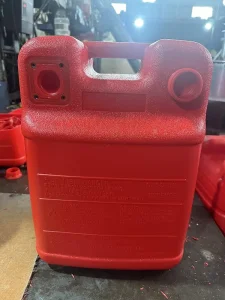
Shenghuang's engineering capabilities extend beyond marine pontoons. As a leading blow molding manufacturer, we recognize the shared material and structural demands between maritime floating platforms and other heavy-duty industrial applications. For example, our Marine HDPE Portable Fuel Tanks (12L & 24L) are built with the same chemical-resistant, impact-resistant polymers to ensure secure fuel storage on boats and watercraft.
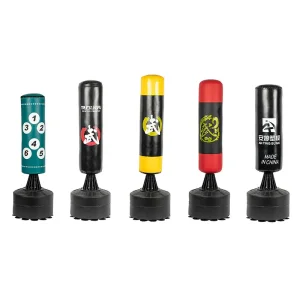
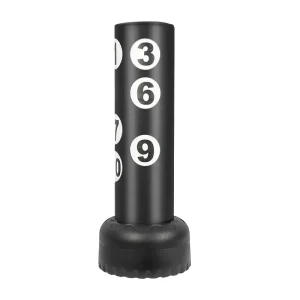
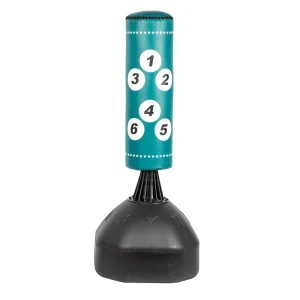
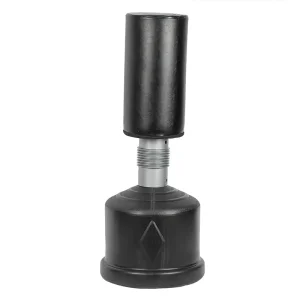
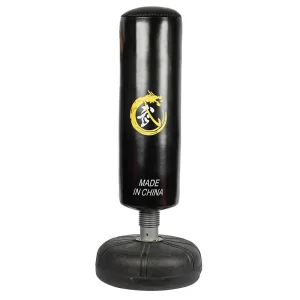
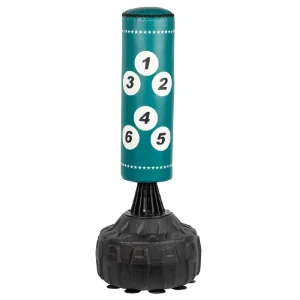
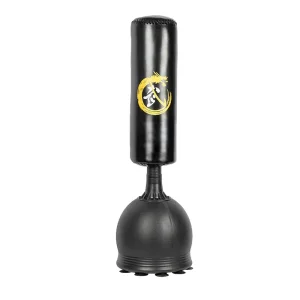
Similarly, we manufacture high-capacity bases for professional training gear, such as our Boxing Sandbag QJ Series (QJ 007, QJ002, QJ008, QJ009, QJ0011). These bases are engineered using the same robust blow molding techniques to ensure they are leak-proof, impact-resistant, and stable under dynamic physical loads. By utilizing the same high-grade plastics across these diverse applications, we ensure consistent quality, durability, and cost efficiency for our global OEM clients.
At Shenghuang, innovation drives our growth. We maintain a dedicated research and development division focused on creating next-generation high-performance plastics and advanced molding processes. Our flexible R&D system allows us to tailor products to specific client requirements, including custom dimensions, specialized colors, and modified buoyancy specs.
Whether you need a custom-molded pontoon for an industrial offshore energy site, a unique boxing base design, or specialized marine accessories, our engineering team can take your project from initial CAD modeling to high-volume production.
Our sales, engineering, and support teams work together to ensure seamless execution from order placement to global delivery.
We design custom tooling and prototypes to meet specialized load, volume, or structural requirements.
We use advanced parison programming to ensure uniform wall thickness and structural strength across all configurations.
We provide installation layout guides, mooring plans, and structural warranties for international projects.








 ShengHuang