Explore our premium select line of industrial-grade modular pontoons, training structures, and custom marine accessories direct from our manufacturing facility.
A comprehensive analysis of modular marine infrastructure, mechanical reliability under dynamic hydrodynamic loads, and advanced extrusion blow molding methodologies.
Modern offshore industrial operations, deep-water aquaculture installations, and waterfront transport logistics demand resilient structural systems capable of withstanding turbulent marine environments. Historically, steel-framed and concrete-cast pontoons served as the industry baseline. However, these systems exhibit accelerated deterioration curves due to electrochemical corrosion (saltwater oxidation) and excessive mechanical shear stress from tidal action.
Over the last decade, high-molecular polymer extrusion systems have revolutionized maritime construction. High-Density Polyethylene (HDPE) modular floating platforms, produced via automated blow molding techniques, present a superior alternative. They combine outstanding structural durability, high buoyancy density (exceeding 350kg/m² in multi-layered configurations), and chemical inertness. This whitepaper details the engineering paradigms, localization frameworks, and optimization methods that position modern Chinese ODM factories at the center of the global marine supply chain.
Our industrial-grade HDPE floating units are molecularly structured to resist continuous UV exposure (UV8 rating) and chemical decomposition. This ensures structural performance for over 15 years in extreme coastal zones.
The operational lifecycle of an ODM marine floating work platform depends heavily on the chemical purity and formulation of its raw material. We exclusively use virgin high-density polyethylene polymer chains characterized by minimal branching. This configuration maximizes material density (0.941–0.965 g/cm³) and tensile strength.
In addition, advanced stabilizers like carbon black and chemical light absorbers are integrated into the polymer matrix. This configuration blocks solar degradation, preventing the polymer chains from breaking down due to long-term ultraviolet exposure.
Founded in 2019, Shenghuang Industrial & Trade Blow Molding Factory is a leading innovator in the plastic blow molding industry. With its headquarters located in Huangyan, Taizhou, Zhejiang—an area globally recognized for its robust manufacturing infrastructure and industrial mold design expertise—the company has quickly grown into a trusted supplier of high-quality blow-molded products across multiple sectors, including packaging, automotive parts, household appliances, and environmental applications.
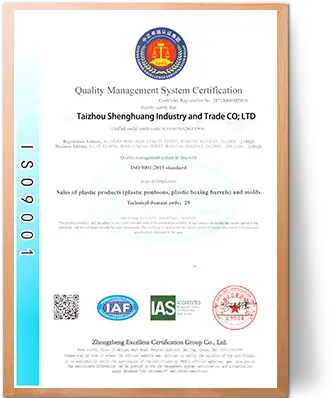
Equipped with state-of-the-art automated blow molding production lines, Shenghuang efficiently produces a wide range of plastic products, such as plastic containers, bottles, pontoons, automotive parts, and custom-designed solutions. These advanced production lines ensure high-precision, durable, and cost-effective plastic products. The company adheres strictly to the ISO 9001 quality management system, ensuring that every stage of production—from raw material procurement to final product testing—meets stringent quality standards.
Connect with Engineers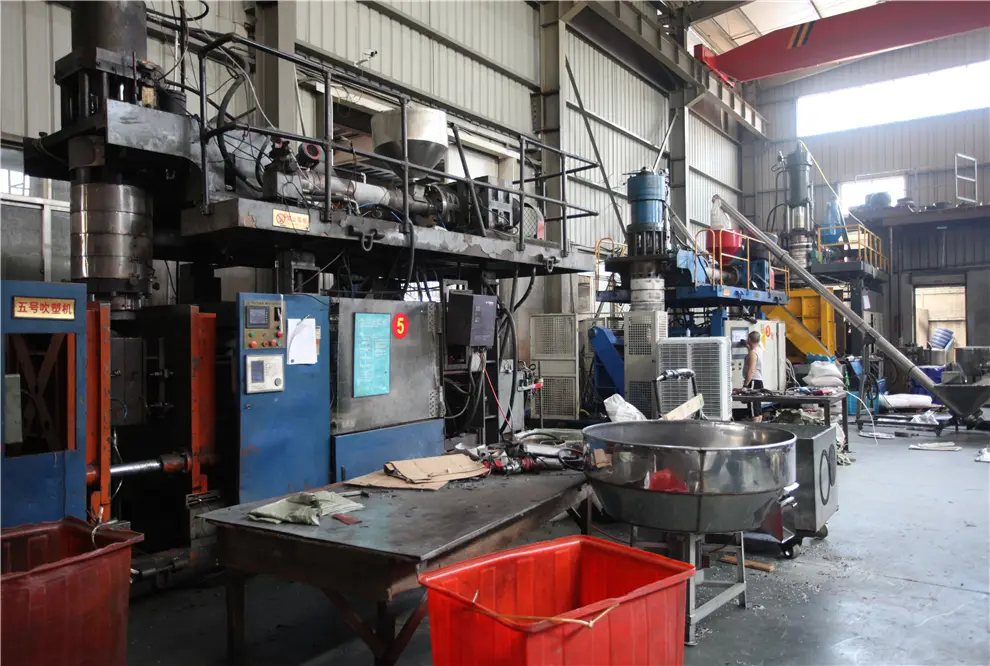
Rigorous raw material inspection and stage-by-stage testing.
Huangyan-based precision engineering tooling for structural integrity.
100% recyclable polymeric compounds with low carbon footprint.
Combining structural performance with efficient production. Our automated extrusion blow molding processes minimize material waste and deliver consistent quality.
Unlike rotational molding, which is slow and can result in uneven wall thickness, our modern high-speed extrusion blow molding process offers precise control. In this process, a molten HDPE tube (parison) is extruded into a water-cooled steel mold, clamped, and inflated at high pressures to form a uniform, single-piece hollow structure. This technique provides several key operational advantages:
Operating out of Taizhou, Zhejiang, our factory benefits from a comprehensive raw material supply chain and direct logistics pathways to major deep-water ports. This strategic location helps minimize transport costs and reduces lead times for international projects.
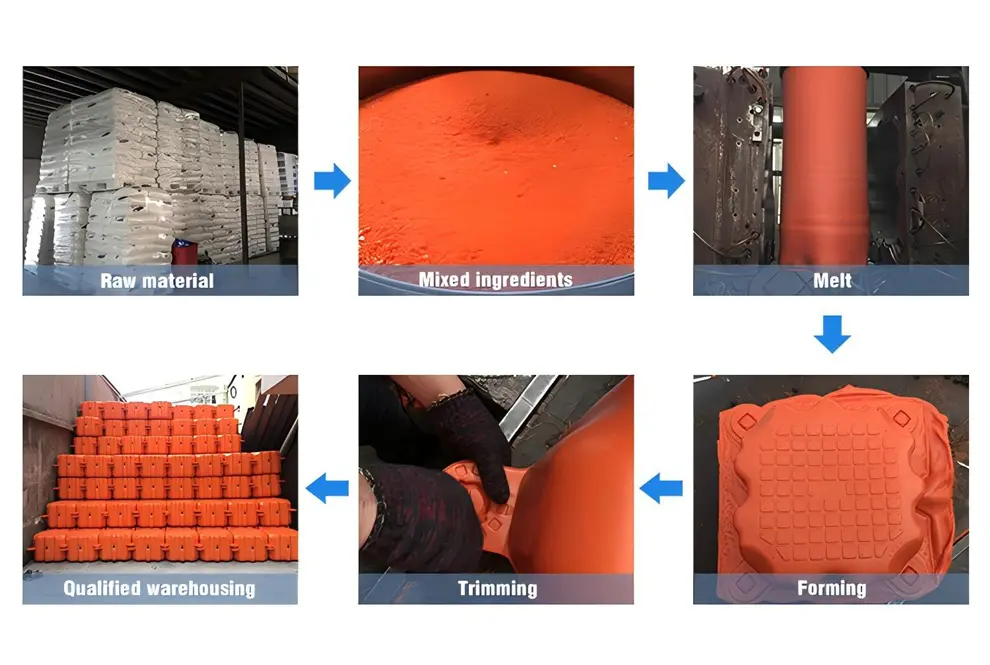
Our commitment to continuous technological development shapes the future of floating platform technology.
We are developing floating platform units with integrated telemetry sensors to monitor structural strain, internal moisture level, and seawater temperature in real time. This enables predictive maintenance for offshore commercial operations.
We aim to transition a portion of our production to bio-derived polyethylene resins. This transition will significantly reduce our carbon footprint while maintaining the mechanical properties of traditional HDPE.
We are engineering flexible elastomeric connection points that distribute structural stress evenly, helping platforms better withstand tidal swells and stormy coastal conditions.
Modern coastal structures face unique challenges due to rising sea levels and intense storm events. Standard pontoon configurations can struggle with high shear stress during typhoons. Our engineering roadmap addresses these concerns through modular, flexible link systems. Rather than resisting waves with rigid force, our platforms are designed to deflect and distribute kinetic energy across the entire grid, minimizing wear on localized mooring points.
How modular floating HDPE units are used across diverse marine, industrial, and commercial projects.
With land availability decreasing, offshore solar installations are expanding rapidly. Floating photovoltaic (FPV) arrays require durable, chemically stable support platforms that can withstand constant exposure to saltwater and UV radiation. Our custom modular pontoons provide a stable, long-lasting foundation for PV panels, optimizing solar output without using valuable land resources.
Modern aquaculture relies on reliable access walkways and work platforms to manage feed systems and monitor stock. Our non-toxic, food-contact-safe HDPE platforms prevent chemical leaching, ensuring a safe environment for fish and shellfish. The slip-resistant surface design also ensures a safer working environment for staff in wet conditions.
During harbor maintenance, bridge building, or dredging operations, crew members need a stable platform to handle heavy equipment and materials. Our modular design allows operators to configure platforms of various sizes and load capacities, adapting easily to specific project requirements.
From local marinas to high-end resorts, our modular systems provide an attractive, low-maintenance floating dock solution. The platforms are easy to configure, expand, or re-arrange as docking needs change over time.
Ensuring compliance with international standards and streamlining transcontinental logistics.
Operating a global marine project requires adherence to various regional safety, environmental, and engineering codes. Our engineering team provides comprehensive support throughout the design and specification process, helping to streamline certification and approval stages:
Collaborating with marine developers, solar operators, and industrial suppliers worldwide.






Common questions regarding installation, environmental performance, stability, and logistics of our modular floating platforms.
Our modular floating platforms are designed to handle stormy coastal conditions. The flexible connection system allows the platform to flex and distribute wave energy, reducing stress on any single point. Depending on the installation and anchoring system used, our customers report excellent results even in areas hit directly by typhoons.
Yes. If there is no local dealer in your region, we can ship your modular system directly from our factory to your nearest freight terminal for convenient pickup or arrange direct delivery to your project site.
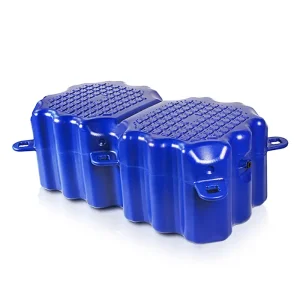
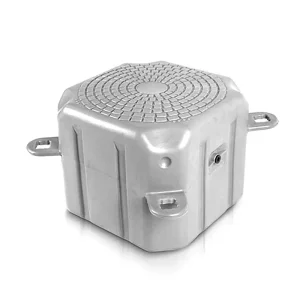
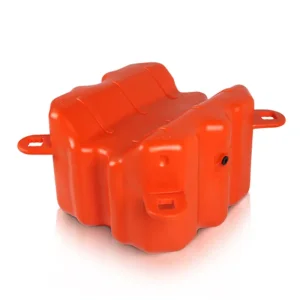
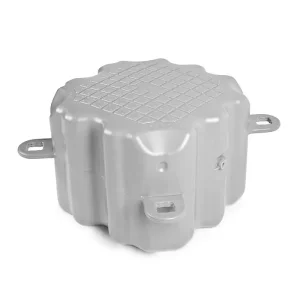
Absolutely. The system is designed to remain in the water year-round, including in saltwater and freezing conditions. The tapered shape of our modular cubes helps the platform pop up on top of the ice as it freezes, reducing lateral pressure on the structure.
The main factor is water flow and ice movement. In static ice conditions, the platform is designed to sit safely on top of the ice. However, if your location experiences moving ice blocks or heavy currents during the spring thaw, these forces can damage stationary structures. In such areas, we recommend storing the platform during the winter months.
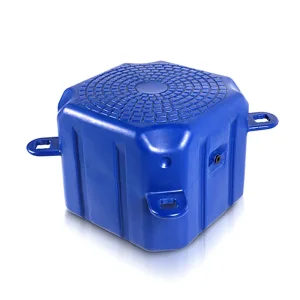
For a stable walking platform, gangway, or pier, we recommend a minimum width of three cubes. This width provides excellent stability and comfortably supports weight. Each individual cube has a buoyancy rating of approximately 90kg (200 lbs), ensuring reliable support underfoot.
Yes. The modular cubes draw only 2 to 4 inches (5 to 10 cm) of water when unloaded. The platform can sit flat on the seabed or riverbed during low tide, provided the surface is relatively free of sharp rocks. Ensure there is enough water depth at the end of the dock for vessels to back off safely.
Shenghuang began manufacturing floating docks in 2019, growing into a leading supplier of blow-molded products in China. Our facility focuses on high-quality modular designs and durable plastics for a variety of industrial and recreational applications.
Browse additional sizes, color configurations, and custom heavy-duty gear options manufactured to international safety standards.
 ShengHuang