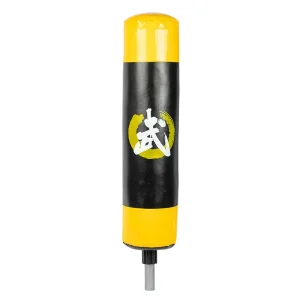
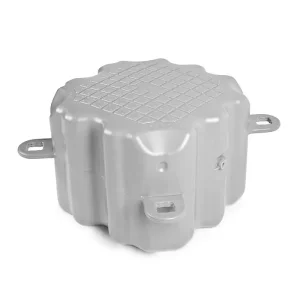
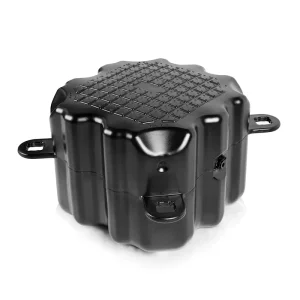
Direct from factory-certified extrusion and blow molding production facilities. Real-world solutions matching globally recognized ASTM standards.
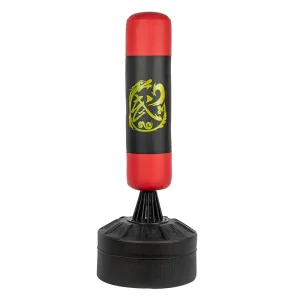
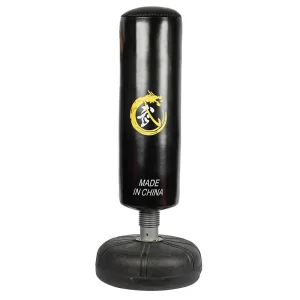
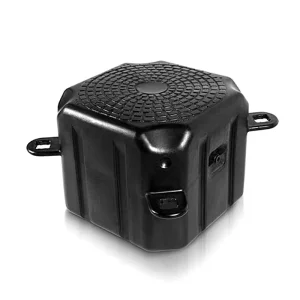
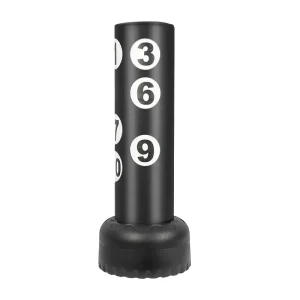
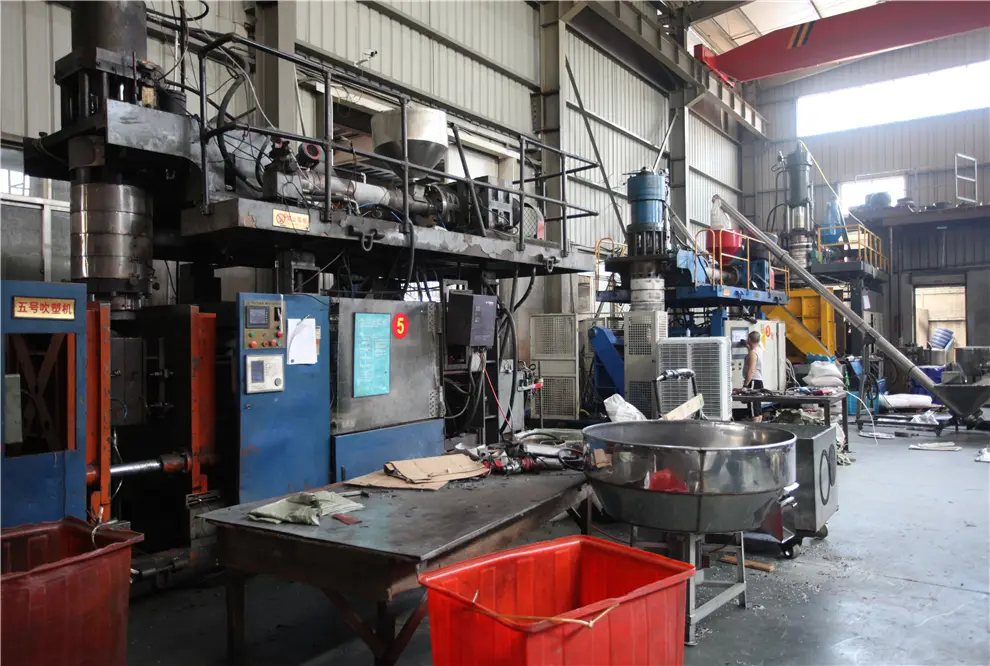
Founded in 2019, Shenghuang Industrial & Trade Blow Molding Factory has established itself as an innovative frontrunner in the specialized plastic blow molding industry. Headquartered in Huangyan, Taizhou, Zhejiang—an area globally recognized for its advanced machinery tooling infrastructure—the corporation provides high-performance custom industrial products to leading brands around the world.
Adhering rigidly to the ISO 9001:2015 quality management systems, our state-of-the-art automated blow molding lines deliver precise wall thickness control, high load capacities, and absolute dimensional stability. We leverage high-molecular-weight High-Density Polyethylene (HMW-HDPE) paired with structural UV stabilizers, ensuring each modular block can withstand extreme maritime stresses, intense solar radiation, and dynamic temperature differentials.
By investing heavily in modern R&D alongside sustainable materials processing, Shenghuang reduces environmental footprints without sacrificing structural safety. This dedication positions us as the preferred ODM supplier for marine infrastructure developments, global fitness systems, and custom containers worldwide.
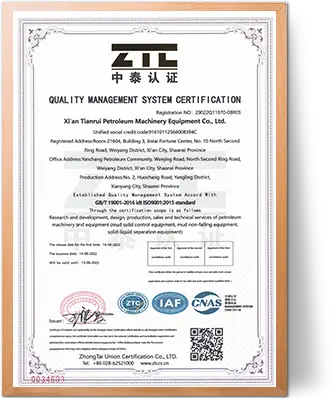
Shenghuang manufactures under strict quality assurances validated by leading international organizations.





Analyzing key procurement triggers, stress points, and purchasing criteria for commercial, municipal, and industrial marine infrastructure projects.
Large-scale coastal resorts and municipal parks require distinct architectural configurations. Our ODM capabilities allow rapid prototyping of complex geometries, customized structural wall thicknesses, and custom colors to integrate seamlessly into local zoning requirements.
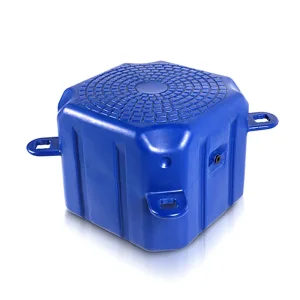
B2B procurers look for docks capable of supporting heavy loads, including maintenance vehicles, public gatherings, and light marine craft. Our modular cubes offer a certified 350 kg/m² buoyancy rating, backed by uniform wall thickness from blow molding automation.
Docks situated in tropical marine climates face intense solar exposure and high salinity. By integrating UV8-rated stabilizers into high-density polyethylene, our products prevent degradation, discoloration, and structural stress cracking over decades of direct exposure.
From industrial aquaculture platforms to recreational beach walkways—how modular engineering addresses environmental and mechanical challenges.
Modern offshore operations demand stable structures for workforces and heavy machinery. Wooden or concrete docks suffer from water absorption, biological degradation, and expensive maintenance. Shenghuang's modular HDPE platforms resist corrosion, marine growth, and chemical spills.
The interlocking structural design spreads dynamic loads evenly across the grid system, reducing localized stress points. Whether used as a simple gangway or an industrial cage platform, our structures maintain stable buoyancy in variable tidal zones.
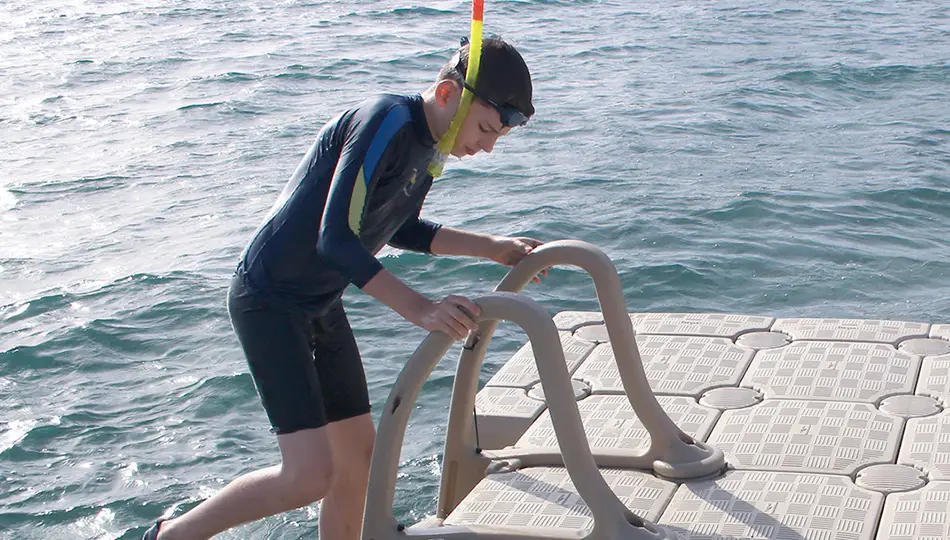
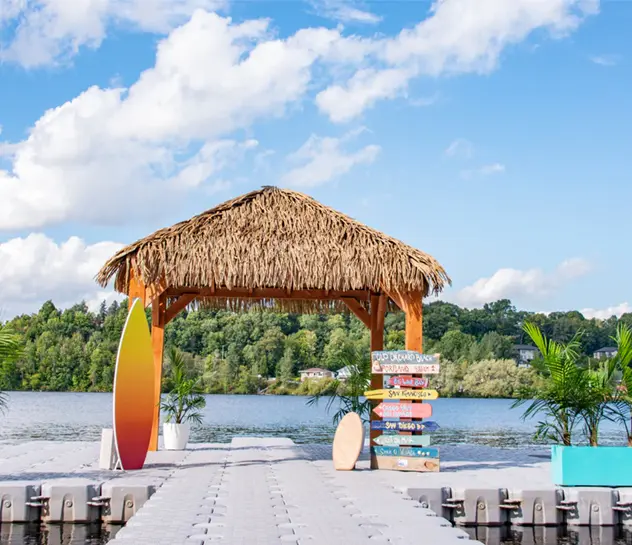
Coastal conservation regulations limit the use of permanent concrete piles or chemically treated lumber. Shenghuang's modular HDPE floating beach docks sit on the water's surface, minimizing ecological disruption. They reflect minimal light, do not leach chemicals, and allow natural current patterns to continue.
For seasonal beach operations, these docks can be assembled, expanded, or stored during severe winters. This flexibility protects capital investments and keeps beaches pristine.
A closer look at the material science, manufacturing tolerances, and automated blow molding technologies that define our marine products.
| Performance Indicator | Technical Specification Details | Operational Engineering Benefit |
|---|---|---|
| Base Material Composition | High-Molecular-Weight HDPE (HMW-HDPE) with UV8 Stabilizers | Excellent resistance to stress cracking, impact fatigue, and solar degradation. |
| Load Capacity Rating | 350 kg/m² (Single-layer arrangement) | Supports heavy machinery, service crew, and marine craft. |
| Thermal Endurance Range | -60°C to +80°C (-76°F to +176°F) | Remains structurally stable in sub-zero ice zones and hot equatorial regions. |
| Chemical & Acid Resistance | Class-A Industrial Hydrocarbon & UV Acidic Exposure Rating | Resists gasoline, engine oils, acid rain, and high-salinity seawater. |
| Structural Connection System | High-shear-strength interlocking lug keys with center pins | Distributes dynamic wave stresses across the entire system. |
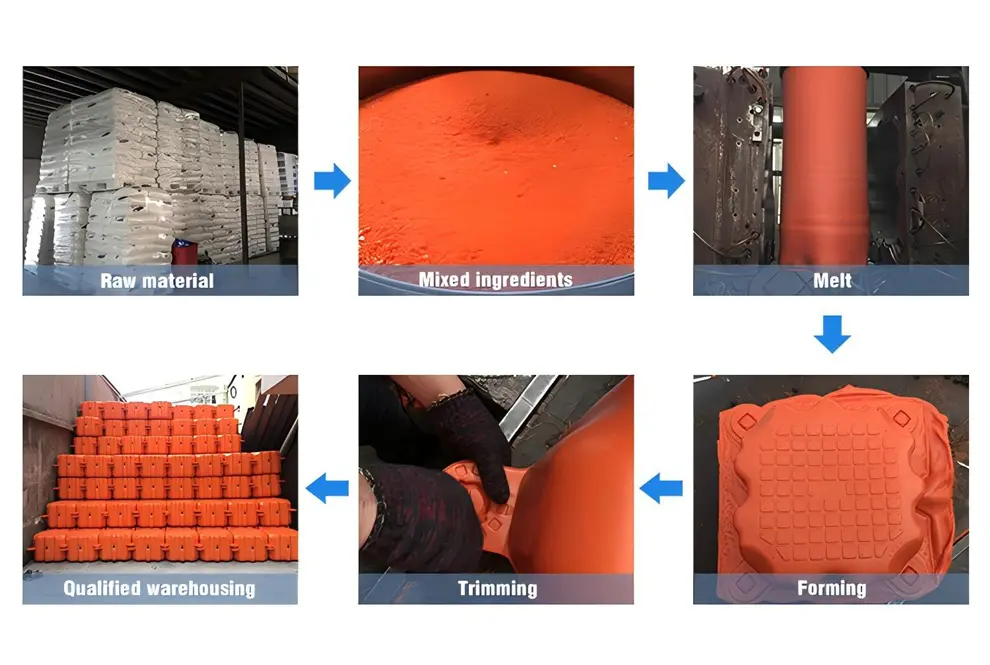
Our factory in Huangyan uses automated blow molding machines to ensure uniform wall thicknesses across each modular block. Consistent wall thickness prevents structural weaknesses, which can lead to leaks and structural failures under constant wave pressure.
During production, Parison Programmer technology controls material distribution at complex radii, corners, and connection lugs. This creates docks with superior impact resistance, offering reliable service for marine, sports, and industrial projects.
A floating structure is only as reliable as its anchoring system. Here is how our configurations adjust to wave energy, tide variances, and localized wind loads.
Best for applications with large tidal variations and fixed pile support structures. Heavy-duty HDPE pile guides secure the floating platform while allowing it to rise and fall smoothly along the vertical wood, steel, or concrete piles.
Ideal for deep-water scenarios or sensitive environments where driving piles is restricted. Heavy concrete anchor blocks sit on the seafloor, connected to the floating structure by high-tensile galvanised chains and marine-grade elastic cords.
For narrow channels, shorelines, or canal settings. Stiff steel or aluminum arms connect to concrete shore abutments, limiting lateral movement while permitting full vertical movement to match high and low tides.
Technical answers to common questions about modular floating docks, engineering specifications, and shipping processes.
Our modular floating docks handle typhoon conditions well due to their flexibility and secure connection lugs. Traditional rigid wood or concrete docks face structural failure from wave stress, but the modular HDPE layout moves with wave energy to dissipate force. In high-wind areas, using proper pile guides or flexible seafloor anchoring systems allows the dock to rise safely with storm surges, preventing the structure from breaking apart.
Yes. The modular floating dock is designed to stay in the water year-round, including in ice. The sloped shape of the modular cubes allows the structure to slide up on top of expanding ice sheets rather than being crushed. However, if your location experiences strong moving ice flows or severe currents during spring thaws, we recommend seasonal removal to protect the anchoring hardware from shifting ice damage.
Our modular cubes require very little water, drawing only 2 to 4 inches (5 to 10 cm) when empty. The system is designed to rest safely on mud, sand, or gravel bottoms during low tide and float back up as the water rises. Ensure there are no sharp rocks or debris on the seabed that could puncture the hulls under heavy weight.
For public safety and stability, walking platforms should be at least three cubes wide (approx. 1.5 meters). A three-cube configuration provides balanced buoyancy that resists tipping or rolling when users walk near the edges. Single or double-row setups are suitable for narrow finger slips or kayak launches but require guiding handrails or anchoring stabilizers.
If you don't have a local dealer, we ship directly from our factory in China to your nearest sea port or freight terminal. Our logistics team handles export documentation, custom packaging, and freight booking to ensure your components arrive safely and ready for assembly.
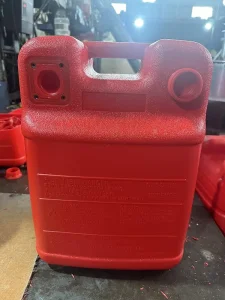
Complete product listings including heavy-duty sandbags, marine-grade fuel tanks, and modular dock structures.
 ShengHuang