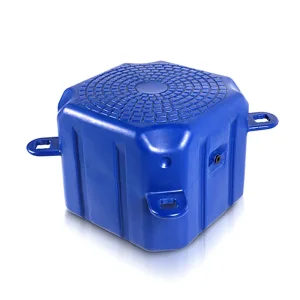
The global marine construction landscape has witnessed a significant structural shift. Traditional, fixed concrete and wooden marine infrastructures are increasingly giving way to modular, adaptive, and towable floating docks. Fueled by rising sea levels, volatile weather patterns, and the expansion of eco-tourism, aquaculture, and marine logistics, industrial operators require docking solutions that offer both structural resilience and transportability.
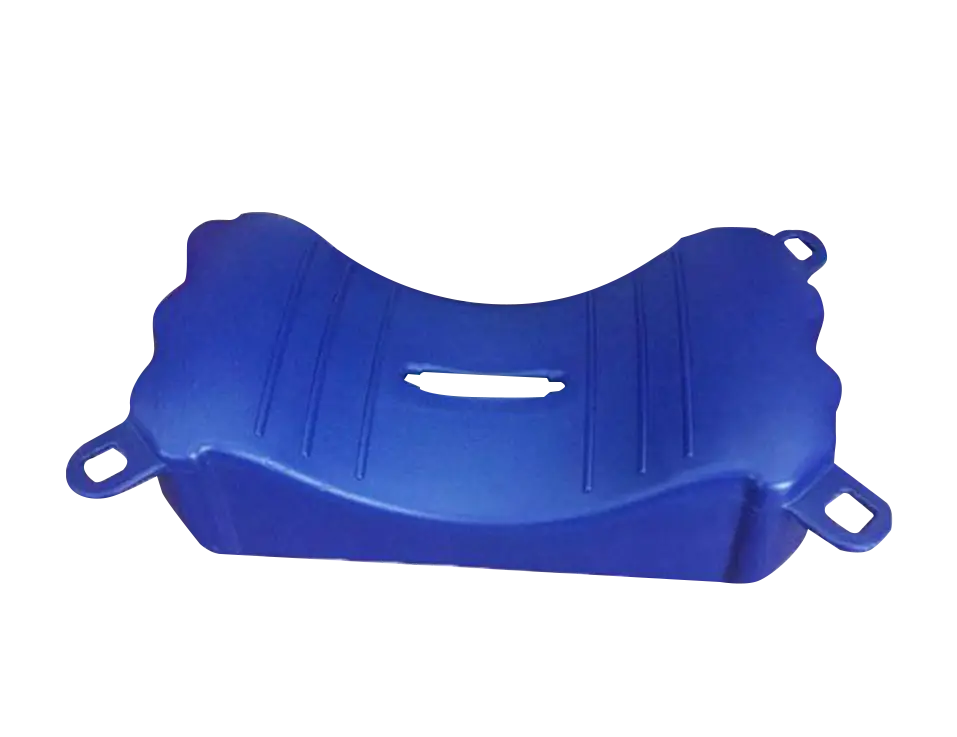
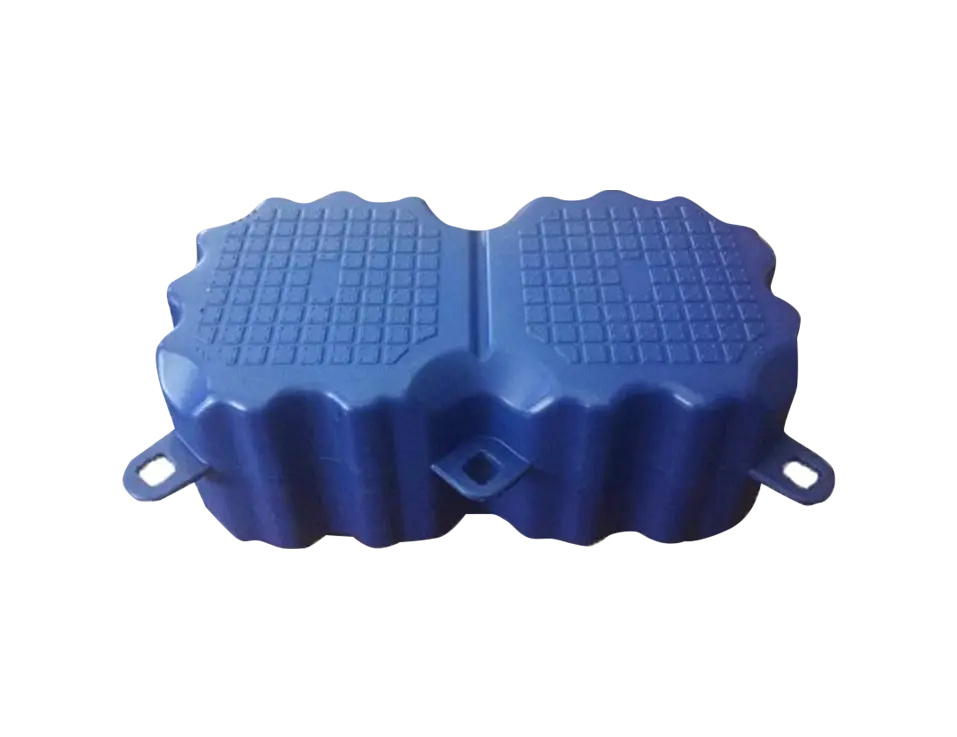
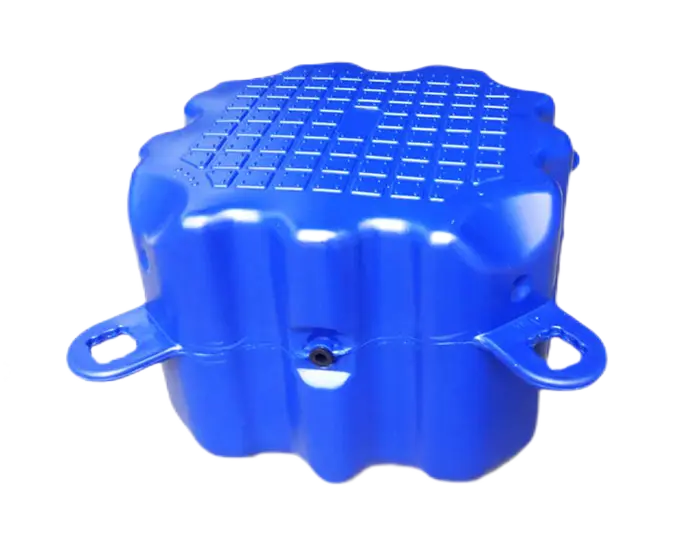
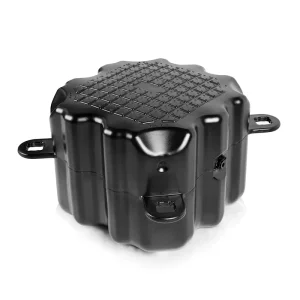
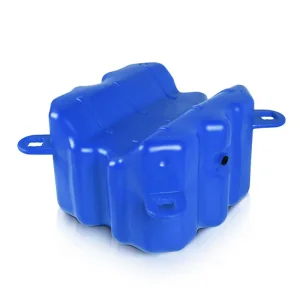
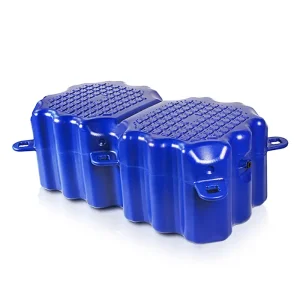
Modern towable floating docks serve as critical utility platforms. They can be dynamically deployed, anchored, and when environmental or operational needs dictate, safely towed to new locations. Engineered primarily from High-Molecular-Weight High-Density Polyethylene (HMWHDPE), these systems provide an exceptional strength-to-weight ratio, ensuring high load capacity while maintaining elasticity to absorb kinetic energy from waves and vessel impact.
Commercial enterprises, municipal port authorities, and utility operators evaluate marine platforms through a rigorous cost-benefit lens. The strategic preference for modular towable docks is driven by:
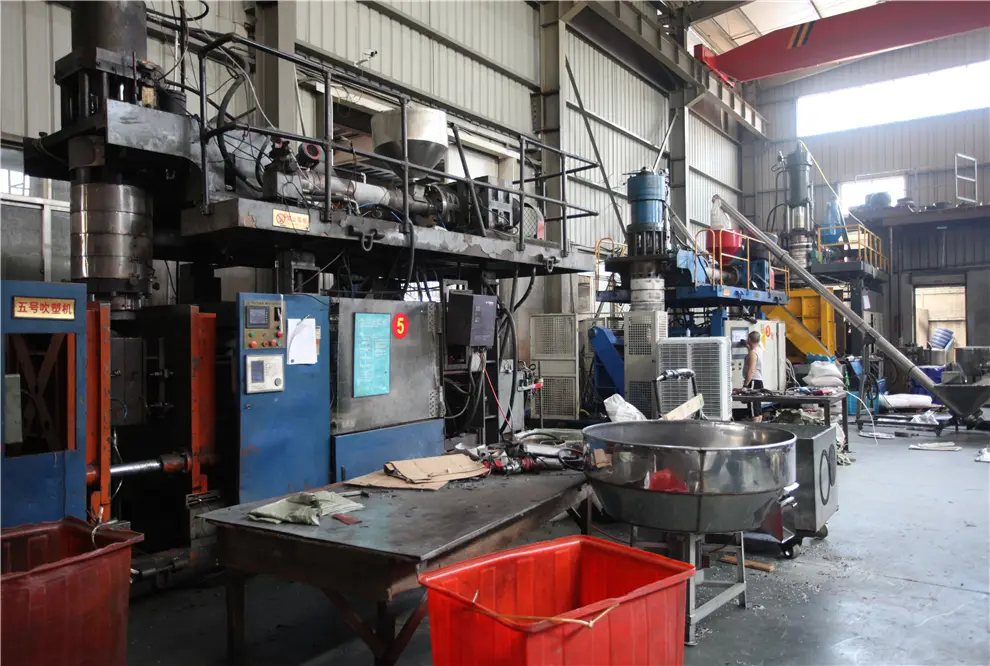
Founded in 2019, Shenghuang Industrial & Trade Blow Molding Factory is a leading innovator in the plastic blow molding sector. Located in Huangyan, Taizhou, Zhejiang—the renowned heart of China’s advanced mold and plastics manufacturing ecosystem—the company has pioneered the design and scale manufacturing of heavy-duty modular floating docks and high-performance blow-molded industrial assets.

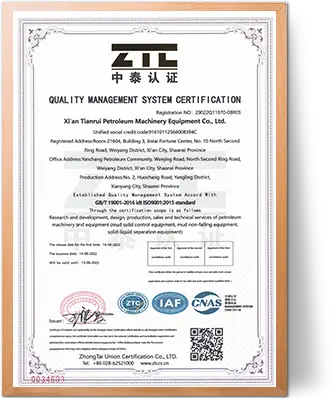

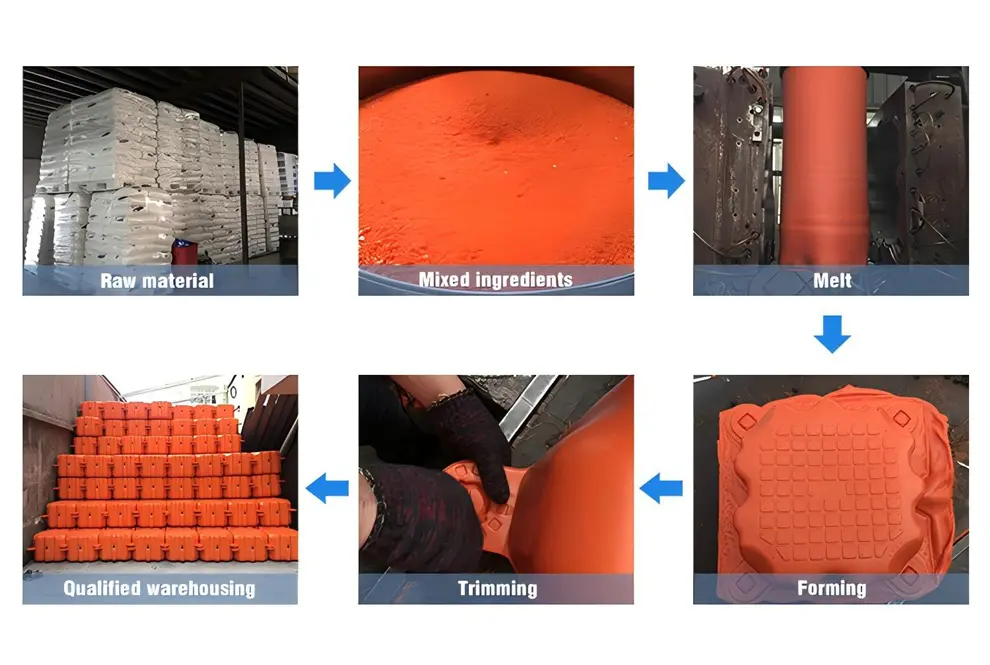
Leveraging state-of-the-art automated blow molding production lines, Shenghuang efficiently processes large-volume components. This engineering infrastructure enables the production of high-precision, structural twin-wall HDPE floating dock cubes, pontoons, automotive parts, packaging assets, and custom-designed solutions. The facility complies strictly with ISO 9001 quality management guidelines, subjecting all batches to pressure tests, drop tests, and accelerated UV weathering testing to verify technical conformity prior to export.
Utilizing high-capacity machinery that ensures uniform wall thickness, eliminating structural weak points and internal stress concentrations common in standard rotational molding.
Constructed from premium high-density polyethylene containing imported anti-UV and anti-oxidant stabilizers to withstand long-term extreme weather and ocean salinity.
Every single batch undergoes load-bearing and flexural tests. Our products are designed to deliver safety, offering high buoyancy of 200kg/m² or more.
As the primary sourcing destination for waterfront projects globally, China’s industrial infrastructure provides significant logistics and efficiency advantages. Sourcing towable floating docks from Taizhou ensures access to a highly integrated raw material, molding, and shipping supply chain. This concentration of expertise translates to a lower Total Cost of Ownership (TCO) for global buyers, shorter lead times, and flexible custom configurations (OEM/ODM).
The physical versatility of modular HDPE cubes allows them to serve diverse commercial functions across different environmental contexts:
These modular, high-stability platforms allow aquaculture operators to establish secure walkways around fish cages. Resistant to chemical deterioration and marine organic growth, they do not disrupt delicate aquatic ecosystems.
For civil engineering, bridge repairs, or dredging operations, these platforms support heavy machinery, generators, and construction crews, providing a stable footing on open water.
Designed with anti-skid surfaces, they are ideal for transient walkways, floating restaurants, and water-sport hubs. Their modularity allows rapid expansion during peak seasons.
We collaborate with major marine infrastructure distributors, resort developers, and municipal planners worldwide. Our blow-molded systems are tested and trusted in over 40 countries.










Our floating dock systems are designed to withstand challenging weather conditions, including typhoons. Thanks to the modular design and high flexural elasticity of our HDPE cubes, wave energy is distributed throughout the structure rather than concentrated on a single rigid point. When anchored correctly with dynamic tensioners, piles, or elastic mooring systems, the docks flex and ride the storm surges, reducing structural failure. Reports from coastal installations hit by major storms confirm excellent survival rates compared to fixed wooden or concrete docks.
Yes. In regions without an active local distributor, we coordinate direct factory shipping. Our logistics team handles consolidated container loading to your closest port or regional freight terminal, providing all customs clearance documentation to ensure smooth import operations.
Absolutely. The dock system can remain in the water year-round, including in freezing conditions. The modular cubes are engineered with a slight outward draft, allowing the dock to pop up on top of the ice sheet as pressure builds, rather than being crushed. However, if your location experiences moving ice flows or severe currents during spring thaws, we recommend temporarily towing the system to a protected inlet or storing it on land.
The primary concern with winter ice is water flow and movement. In static bodies of water where ice thaws in place, the cubes remain undamaged. If, however, your site is subjected to thick, moving sheets of river ice or heavy current flows, these forces can shear away anchoring lines and damage the dock. Under such high-shear conditions, we recommend towing the modular system out of the path of the ice flow.
For safe walking and structural stability, we recommend a minimum width of three cubes (approximately 1.5 meters). This configuration provides a stable center of gravity, preventing tipping and offering a load capacity of approximately 200 lbs (90 kg) per cube to support active foot traffic comfortably.
Yes. The modular cubes require only 2 to 4 inches (5 to 10 cm) of draft when unloaded. During low tides, the dock can rest directly on soft mud or sandy bottom surfaces. It is important to ensure there are no sharp rocks or debris that could puncture the hulls, and that the water depth at the outer edge is sufficient to allow vessels to back off safely.
Our production facilities began dedicated floating dock manufacturing in 2019. We have grown to become a leading exporter in China, integrating design, engineering, mold fabrication, and automated blow molding under one roof to ensure reliable product quality.
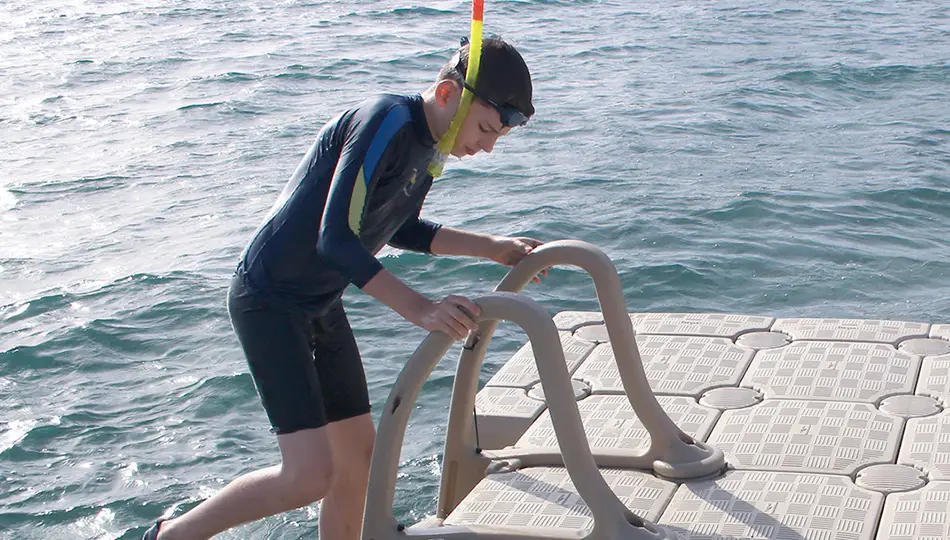
Durable, light-weight modular blocks for general marina assembly.
View Details
Optimized dry dock configuration for marine recreational vehicles.
View Details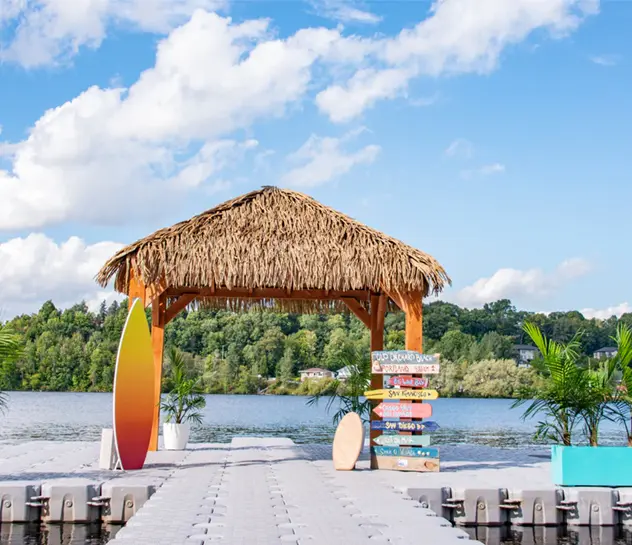
High stability platforms for marine cages and deep water farms.
View Details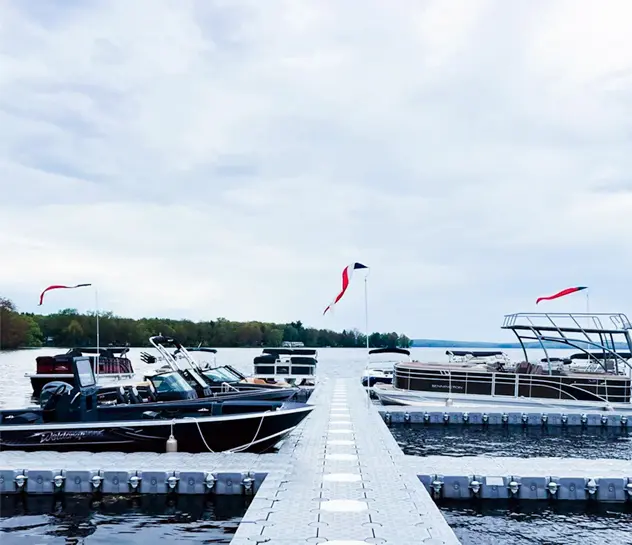
Reconfigurable large-scale floating spaces with high structural safety.
View Details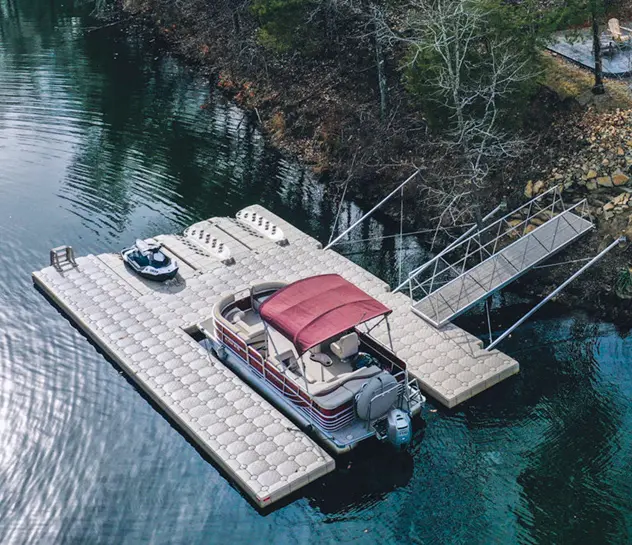
Designed for quick vessel access, loading, and safe mooring.
View Details
 ShengHuang