Floating Dock Accessories turn a simple platform into a safer, more useful waterfront space. The right choices depend on how the dock is used, the water conditions, and the materials in its construction. A family swim area may need a sturdy ladder, non-slip surfaces, and bright, low-glare lighting. A boat slip may benefit more from cleats, bumpers, fenders, and secure anchoring hardware. Small details matter. A poorly placed cleat can obstruct a walkway, while a ladder that sits too high may be difficult to use when the water level changes.
For this overview, dock-planning specialist Morgan Lee offers this guiding principle: “Choose each accessory for a clear job: safe access, secure mooring, or easier daily use.” This is an illustrative editorial quote, not a sourced interview. It reflects a practical way to compare options without assuming one setup suits every dock. Gangways, storage boxes, corner bumpers, and solar lights can also improve convenience, but each should match the dock’s layout and expected loads. Check compatibility, corrosion resistance, attachment methods, and maintenance needs before buying. Product details vary, and manufacturer guidance should take priority where specifications differ. Even experienced owners can overlook a basic issue: accessories add weight and may change how a floating dock responds to movement. The sections ahead explore the main accessory types, what they do, and which details deserve a closer look. A little planning helps.
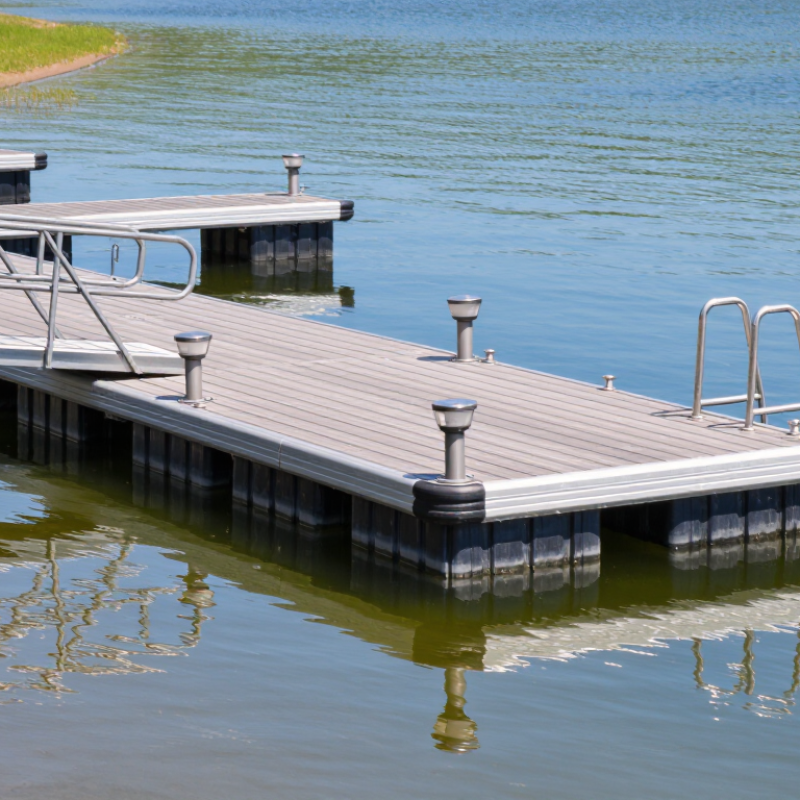
Structural connectors keep floating dock sections aligned while allowing them to respond to changing water levels and wave movement. Common designs include hinge-style brackets, connecting plates, and pin-and-sleeve joints. Each works differently: some allow sections to pivot, while others create a firmer connection. The right choice depends on the dock system, expected loads, and local water conditions. Compatibility matters more than appearance.
During installation, check that mating parts sit flush and that pins or bolts are fully seated. A misaligned connector can put uneven stress on the frame. That small gap matters. Use hardware specified for the dock, especially where metal parts face repeated contact with water. Corrosion-resistant materials can help, but they still need regular inspection. Look for rust, bent plates, worn pin holes, and fasteners that have loosened.
Some movement is normal. A joint designed to flex should not be forced rigid with extra hardware; that may shift stress elsewhere. Not all connectors allow the same range of motion, and product instructions can be easy to overlook. Check them before assembly, then inspect joints after storms or heavy use. A quick check takes little time, though it can reveal wear before sections begin to drift apart.
Anchoring systems keep a floating dock from drifting while allowing it to rise and fall with changing water levels. The right setup depends on water depth, bottom conditions, wind exposure, and dock size. In firm sediment, helical auger anchors can provide a compact hold when installed at the correct angle. Rocky bottoms may call for concrete deadweights, though they need enough mass to resist seasonal loads. That detail matters.
Chains or marine-grade cables connect anchors to the dock, often with some slack for water-level changes. Too little slack can pull hard on attachment points; too much may let the dock swing into a shoreline or neighboring structure. Flexible connectors can reduce sudden strain, but they still need regular inspection for wear, corrosion, and loose fittings. A quick visual check after strong wind is sensible. It is easy to forget.
Where water levels vary widely, guide piles can keep a dock aligned while letting it move vertically. Shore ties may also help control movement, but they should not carry every load alone. One overlooked issue is the lakebed: sediment can shift, and an anchor that held well last year may loosen. Check connections and dock position through the season, especially after storms or spring thaw. Local water conditions differ, so sizing and placement are best confirmed with a qualified installer familiar with the site.
A floating dock changes height with the water, so access equipment needs to move safely with it. A properly sized gangway with a secure, slip-resistant surface helps users cross in wet shoes. Its slope can become steep as water levels shift, so check the transition at different conditions, not only on a calm day. Small details matter.
Handrails give users a steady grip, especially when carrying gear or stepping onto a moving platform. Choose rails that are easy to grasp and firmly attached. A dock ladder with visible steps can help swimmers climb out, while a clear edge and unobstructed route reduce trip hazards. Keep rescue equipment within reach, and make sure it is not hidden behind storage bins.
Lighting helps people see changes in level after dusk. Shielded, low-glare fixtures can illuminate the gangway without shining into users’ eyes. Check fasteners, hinges, decking, and rail connections regularly; salt, weather, and repeated movement can loosen parts. Check them often. A handrail may feel like one more obstacle to some users, so thoughtful placement matters. The best setup balances a stable grip with enough clear space for different users to pass.
A floating dock becomes more useful when its power setup matches the way people actually use it. Marine-rated outlets with weather-resistant covers can support lighting, battery charging, or small maintenance tools. Keep cords routed away from walking paths, and have a qualified marine electrician assess wiring, grounding, and expected electrical loads. Salt spray and repeated splashing can wear down fittings faster than expected. Check them regularly.
Water connections can make rinsing gear or filling a container much easier. A hose bib with a secure, corrosion-resistant fitting is a practical choice; clearly label drinking-water taps if the dock has more than one supply. Use suitable backflow protection and fittings for the system. Keep hoses coiled on a holder rather than stretched across the deck. Small detail, big difference. Water access and electrical outlets should be planned together, with safe spacing and drainage in mind.
Storage accessories help keep frequently used items close without cluttering the dock. A UV-resistant dock box with a lid that latches can hold life jackets, lines, and cleaning supplies. Ventilation helps damp gear dry, while secure mounting reduces movement as the dock shifts. Avoid placing a heavy box where it blocks access or concentrates too much weight in one area. I have seen storage plans look tidy on paper, then feel awkward once people start moving around. Review the layout after installation.
| Accessory type | Primary use | Typical features | Planning considerations |
|---|---|---|---|
| Shore-power pedestal | Provides electrical service for boats and dock users. | Weather-resistant enclosure; outlets and breakers selected for the installation; optional metering or lighting. | Electrical capacity, grounding, bonding, and protection must be designed for the site and applicable marine electrical codes. |
| GFCI-protected receptacle | Supplies power to approved dockside equipment. | Ground-fault protection; weather-resistant cover; enclosure rated for its exposure. | Use suitable outdoor or marine-rated components and have installation checked by a qualified electrician. |
| Fresh-water outlet | Provides water for rinsing, cleaning, or filling onboard tanks. | Hose connection, shutoff valve, and plumbing suitable for the water supply. | Consider freeze protection, drainage, backflow prevention where required, and potable-water-safe materials if used for drinking water. |
| Hose reel or hose holder | Keeps a utility hose organized and accessible. | Manual or retractable storage; corrosion-resistant hardware; hose length matched to the dock layout. | Position it to avoid trip hazards and allow the hose to drain and be stored without sharp bends. |
| Dock box | Stores lines, fenders, cleaning supplies, and other dock essentials. | Lidded weather-resistant storage; optional lockable hardware; sizes vary by available deck space. | Check weight, mounting method, ventilation needs, and clearance so the box does not obstruct walkways or access points. |
| Utility cabinet | Houses selected dock equipment or keeps supplies protected. | Weather-resistant construction; doors or access panels; internal space sized for the intended equipment. | Electrical equipment may require specific ventilation, access, and enclosure ratings; follow the equipment and code requirements. |
| Cable and hose organizers | Route and secure utility lines along the dock. | Clips, guides, or channels sized for the cable or hose; corrosion-resistant fasteners. | Keep lines clear of moving joints, sharp edges, and pedestrian paths; allow for dock movement and inspection. |
| Utility light | Improves visibility near access points and service areas. | Outdoor-rated fixture; low-voltage or line-voltage options; optional motion or photocell control. | Select a fixture suitable for the exposure and aim it to illuminate the dock without creating glare for boaters. |
Specifications and installation requirements vary by location, dock design, and intended use. Confirm applicable electrical, plumbing, and marina requirements before installation.
Choosing floating dock accessories starts with the dock’s movement, not its appearance. A modular dock on a sheltered pond may need simple cleats, a boarding ladder, and low-profile bumpers. A marina dock exposed to wakes or changing water levels needs stronger fenders, adjustable anchoring, and a gangway hinge that can follow vertical movement. Small details matter. Check the dock’s frame material and load rating before adding heavy ladders or utility mounts; concentrated loads can stress connection points.
Local conditions should guide the hardware. NOAA’s 2022 Sea Level Rise Technical Report projects 10–12 inches of sea-level rise along U.S. coastlines by 2050, relative to 2000. That projection is not a site-specific design value, but it makes adjustable connections and adequate gangway travel worth reviewing. In windy or wave-exposed locations, anchor layout and fender spacing deserve more attention than decorative lighting. In cold climates, removable accessories can simplify winter storage. A common oversight is choosing a gangway by dock height alone; shoreline slope and the lowest expected water level matter too. It is easy to over-specify hardware, though, so confirm local water-level records and manufacturer load guidance before buying.
Choose a properly sized gangway with a slip-resistant surface. Test its slope at different water levels, not just on calm days. Wet shoes need grip.
Attach easy-to-grasp handrails firmly, while leaving enough room to pass. A ladder with visible steps helps swimmers climb out. Keep the route clear.
Use shielded, low-glare lighting along the gangway. Check that lights reveal edges without shining into people’s eyes. Placement can be tricky.
Inspect fasteners, hinges, decking, and rail connections. Salt and repeated movement can loosen parts. Check them often.
Keep cords away from walking paths and hoses coiled on holders. Plan outlets, taps, and drainage together. Ask a qualified marine electrician to assess wiring and loads.
A ventilated, UV-resistant box with a latching lid can hold jackets, lines, and cleaning supplies. Mount it securely, but keep routes clear. Check the layout after installation.
Stronger fenders, adjustable anchoring, and a gangway hinge that follows vertical movement may help. Check the frame and load rating before adding heavy equipment.
Consider shoreline slope and the lowest expected water level, not dock height alone. U.S. coastal projections estimate 10–12 inches of sea-level rise by 2050, relative to 2000. That is not a site-specific design value, so review local water records and load guidance.
Floating Dock Accessories play an important role in creating a stable, safe, and practical waterfront platform. Structural connectors join individual dock sections securely, allowing the layout to remain flexible while supporting regular use. Anchoring systems help keep the dock in position despite changing water levels, wind, waves, and currents, with the best option depending on the shoreline and environmental conditions.
Access and safety accessories, such as ladders, handrails, bumpers, and lighting, make entering, leaving, and moving around the dock more comfortable and secure. Utility accessories can also add convenience by providing organized storage, power access, water connections, and space for equipment. Choosing the right accessories requires considering the dock’s design, intended activities, water depth, weather exposure, and maintenance needs. A well-matched combination improves durability, usability, and overall performance.

ShengHuang