Top Hollow Plastic Dock Floats for Global Buyers

Time:2026-10-15 Author:Sienna
0%

Choosing the right Hollow Plastic Dock Floats​ requires more than comparing prices or glossy product photographs. Global buyers must examine buoyancy, wall thickness, ultraviolet resistance, connector strength, and long-term performance in changing water conditions. A float supporting a quiet freshwater walkway may not suit a busy marina exposed to waves, salt, and frequent vessel movement.

Marine safety expert John Adey offers a practical reminder: “A boat, dock, or float system is only as strong as its weakest connection.” This principle deserves attention. Float modules, hinges, fasteners, and anchoring hardware must work as one system. Buyers should request load tables, resin specifications, test information, and clear installation guidance. They should also confirm whether the manufacturer has experience with commercial docks, floating platforms, or modular marina systems.

Details matter.

This guide introduces leading Hollow Plastic Dock Floats​ for international purchasers, focusing on structure, service life, customization, shipping practicality, and supplier reliability. Reputable manufacturers explain limitations instead of promising impossible performance. They identify recommended freeboard, maintenance needs, and suitable installation environments. That transparency supports better decisions.

Still, no ranking is perfect. Product availability, freight costs, regional weather, and local installation skills can change the final choice. A strong-looking float can perform poorly when overloaded or poorly anchored. Buyers should compare technical documents carefully and seek project-specific advice before ordering. The best solution is rarely the cheapest unit. It is the float system that remains stable, repairable, and predictable after years of use.
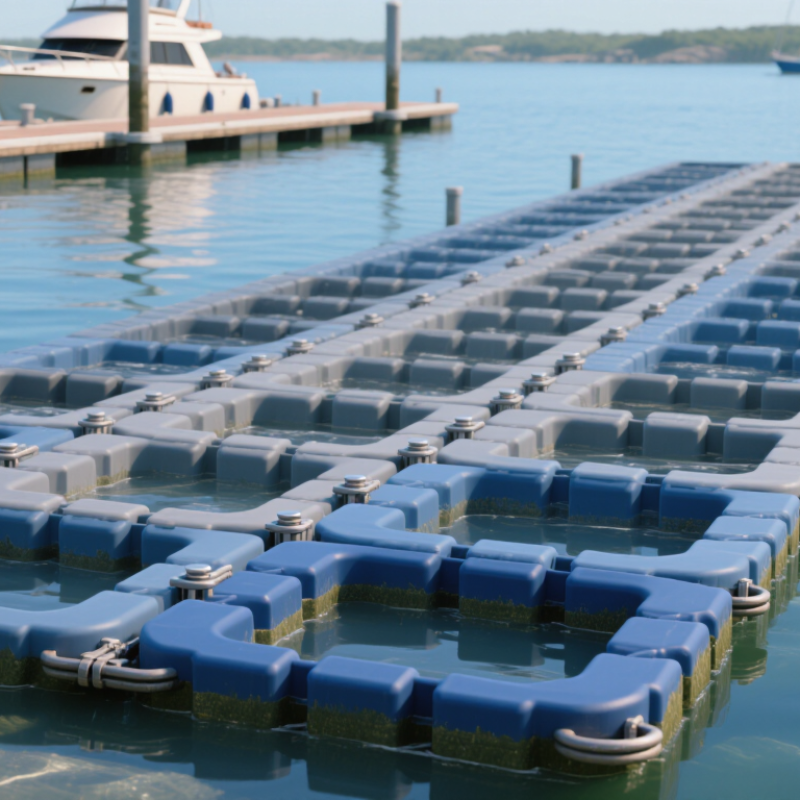
Top Hollow Plastic Dock Floats for Global Buyers

What Hollow Plastic Dock Floats Are and How They Work

Top Hollow Plastic Dock Floats for Global Buyers

Hollow plastic dock floats are sealed buoyancy units that support floating platforms, walkways, and small service docks. Most use tough, rotationally molded polyethylene with internal air space. The material resists water absorption, sunlight, and many common shoreline chemicals. It can still become brittle after years of harsh exposure.

They work through water displacement. When a float enters the water, it pushes aside a volume of water equal to its submerged volume. That upward force supports the float, frame, decking, and live load. A 1,000-kilogram system needs more than 1,000 kilograms of theoretical buoyancy. Designers normally include reserve capacity for waves, uneven loading, ice, and trapped water. Freeboard matters too. A dock sitting too low feels unstable.

Connection details control real performance. Reinforced mounting points, stainless hardware, and flexible joints help distribute movement between floats. Inspection plugs allow checks for cracks, leaks, or condensation. In practice, a damaged hollow unit may not sink immediately, which can hide a serious loss of reserve buoyancy. This is where routine inspection becomes important.

A simple test is useful. Load the platform gradually and observe its trim, movement, and freeboard. Yet calculations should not be replaced by guesswork. Local water density, wave conditions, temperature, and deck layout can change the result. Even a well-made float needs correct spacing and secure anchoring. Mistakes often begin with assuming every hollow chamber carries the same load.

Key Materials, Designs, and Buoyancy Features

Top Hollow Plastic Dock Floats for Global Buyers

Key Materials, Designs, and Buoyancy Features

Hollow dock floats commonly use UV-stabilized HDPE or LLDPE, formed through rotational molding. These plastics resist saltwater, impact, and repeated temperature changes. Wall thickness matters more than a glossy surface. Thin sections may deform under concentrated loads. Field inspections should check corners, molded seams, and connector areas for stress marks.

Buoyancy depends on displaced water, not simply float size. A sealed float measuring two meters by one meter can support roughly two tonnes in fresh water before safety allowances. Actual working capacity should remain lower. Reserve buoyancy protects the dock when people, gear, or waves add unexpected weight. Freeboard matters. A low deck can become uncomfortable and unsafe during choppy conditions.

Design choice affects installation and maintenance. Modular floats with interlocking sides are easier to transport and replace. Internal ribs can limit flexing, although they may complicate molding and cleaning. Some systems use separate air chambers, reducing the effect of one puncture or failed seal. That feature can be valuable, but it does not remove inspection duties. I have seen projects focus on maximum capacity while overlooking connector fatigue. This is a costly lesson. Small details decide. Load tests, sunlight exposure, and seasonal water changes deserve review before global shipment. Materials that perform well in cold ports may soften differently in tropical heat. That difference is easy to underestimate.

How to Compare Dock Floats for Different Waterfront Projects

For global buyers, comparing hollow plastic dock floats starts with project conditions, not catalog photos. Measure water depth, wave exposure, current speed, temperature, and seasonal changes. A calm lake and tidal harbor need different stability. Float dimensions affect freeboard, deck height, and walking comfort. Check net buoyancy, not only gross displacement. Include the float, frame, decking, hardware, and people in the load estimate. Leave a practical safety margin. Real projects often carry more weight than drawings show.

Material details deserve close inspection. Rotomolded polyethylene should resist impact, UV exposure, and repeated wet-dry cycles. Ask for wall thickness, foam filling, density, and test documentation. Hollow units are easy to transport, but a damaged shell can admit water. Inspect welds, plugs, corners, and attachment points before installation. Connector design matters too. Compare pin strength, movement tolerance, replacement access, and corrosion resistance. A secure system should flex slightly without twisting the entire platform. I would not trust a buoyancy claim without checking its test method.

Tips: Request a project-specific load calculation and one physical sample. Place it in water, apply an uneven load, and observe tilt, freeboard, and recovery. Record measurements. Photos can hide weak details.

Also compare logistics and long-term service. Confirm packing efficiency, container quantities, spare parts, installation guidance, and warranty terms. Local water conditions may expose weaknesses that factory tests miss. Ask whether technical support can explain failures clearly. The lowest unit price is rarely the lowest project cost. Small connector failures can stop access and raise maintenance risks. Reconsider the selection after a site trial. That extra check may reveal an assumption nobody questioned.

Installation, Connection Methods, and Stability Considerations

Top Hollow Plastic Dock Floats for Global Buyers

Installation quality determines how well hollow plastic dock floats perform. Choose floats with even surfaces, sealed chambers, and load data from the manufacturer. Inspect every unit for cracks before handling. A damaged float should not enter the water.

Use galvanized or stainless-steel hardware suited to the local water conditions. Connect floats with reinforced brackets, bolts, or approved linking channels. Tighten fasteners evenly, but avoid crushing the plastic. Leave enough movement for waves and temperature changes. Fixed joints can transfer too much stress.

The frame should sit square before decking is attached. Measure diagonals, then check the waterline at several points. Uneven loading may tilt a section. Place heavier equipment near the main support frame, not at the outer edge. Add cross-bracing where long modules meet. This reduces twisting during boarding and side impacts.

Anchoring depends on water depth, current, wind, and seasonal changes. Guide piles allow vertical movement, while flexible lines may suit sheltered water. Use suitable cleats and inspect connection points after the first few days. This step is often skipped. It should not be.

I would not rely on float volume alone. Foam-filled chambers, deck weight, user traffic, and stored equipment all affect stability. Leave a practical reserve buoyancy margin. Exact calculations are still necessary. A dock that feels stable on calm water may behave differently after a sudden wake. Recheck bolts, brackets, and anchor tension throughout the operating season.

Global Buying Factors: Quality, Shipping, and Supplier Selection

Global buying decisions for hollow plastic dock floats start with material quality, not appearance. Rotationally molded HDPE should resist ultraviolet exposure, saltwater, impact, and repeated loading. Ask for resin specifications, wall-thickness records, buoyancy tests, and weld inspection photographs. A clean surface can still hide weak corners.

UNCTAD’s Review of Maritime Transport reports that more than 80% of global merchandise trade by volume travels by sea. That makes shipping design critical. Confirm packed dimensions, container loading plans, gross weight, and unloading equipment before ordering. A float that fits the harbor may waste container space overseas. Request a landed-cost quotation, including inland transport, port charges, insurance, and possible storage. Freight prices change quickly. Treat old quotations carefully.

Supplier selection needs evidence, not confident promises. Request recent test reports, production samples, quality-control procedures, and references from comparable climates. ISO 9001 certification can support process consistency, but it does not prove buoyancy performance. The OECD’s Global Plastics Outlook warns that plastic waste could nearly triple by 2060 without stronger controls. Therefore, ask about UV stabilizers, repair methods, material traceability, and end-of-life recycling. I have seen buyers focus on the lowest unit price and overlook replacement labor. That approach looks efficient, but often is not. No checklist is perfect. Recheck assumptions against tides, wave exposure, maintenance access, and local import requirements.

FAQS

What materials are commonly used for hollow plastic dock floats?

UV-stabilized HDPE or LLDPE is commonly used. These plastics resist saltwater, impacts, sunlight, and changing temperatures. A glossy surface proves little. Check wall thickness, corners, seams, and connector areas for stress marks.

How should buyers compare buoyancy?

Buoyancy depends on displaced water, not float size alone. A sealed float measuring two by one meter may support about two tonnes in fresh water. Actual working capacity must stay lower. Include decking, frames, hardware, people, and equipment. Leave reserve buoyancy for waves and unexpected loads.

Why does freeboard matter on a floating dock?

Freeboard is the deck height above the water. Low freeboard can make walking uncomfortable during choppy conditions. It may also increase splash and instability. Test the float with uneven loads. Watch tilt, recovery, and deck height carefully.

What design features can simplify installation and maintenance?

Modular floats with interlocking sides are easier to transport and replace. Internal ribs can reduce flexing. However, ribs may complicate molding and cleaning. Separate air chambers can limit damage from one failed section. They do not replace inspections.

Which parts require close inspection before installation?

Inspect molded seams, plugs, welds, corners, and attachment points. Connector fatigue deserves special attention. A strong connector should allow slight movement without twisting the platform. Check pin strength, corrosion resistance, and replacement access. Small details decide.

How can buyers test a physical float sample?

Place the sample in water before approving a large order. Apply an uneven load, then record tilt and freeboard. Observe how quickly the float recovers. Repeat the test if conditions change. Photos can hide weak details.

What shipping information should global buyers request?

Confirm packed dimensions, container quantities, gross weight, and unloading requirements. Request a landed-cost quotation. Include inland transport, port charges, insurance, and possible storage. Freight prices change quickly. Old quotations may mislead.

How should buyers evaluate a supplier beyond unit price?

Request resin details, wall-thickness records, buoyancy tests, samples, and quality procedures. Ask for evidence from projects in similar climates. Process certification may support consistency, but it does not prove buoyancy. Review spare parts, repair methods, traceability, and recycling options. The cheapest float may cost more later. I would check that assumption twice.

Conclusion

Hollow Plastic Dock Floats are lightweight, durable flotation units designed to support floating docks, platforms, walkways, and waterfront structures. Their sealed hollow chambers create buoyancy while reducing weight, and common construction features include impact-resistant plastic, UV protection, reinforced walls, and molded connection points. Different sizes, shapes, and internal designs can be selected according to load requirements, water conditions, and the intended use of the project.

When comparing options, buyers should evaluate buoyancy capacity, dimensions, stability, drainage, service life, and compatibility with framing systems. Proper installation typically involves secure fasteners, bolts, brackets, or modular connectors, with careful attention to weight distribution and anchoring. For global purchasing, product consistency, quality inspection, packaging strength, shipping volume, delivery reliability, and supplier communication are equally important. A capable supplier should provide clear technical specifications, customization support, replacement guidance, and documentation to help buyers select safe and cost-effective dock floats for different waterfront applications.


Sienna

Sienna

Sienna is a skilled marketing professional with a deep expertise in our company’s core products and services. With a passion for innovation and detail, she plays a pivotal role in crafting insightful blog posts that not only highlight the unique features of our offerings but also provide valuable......