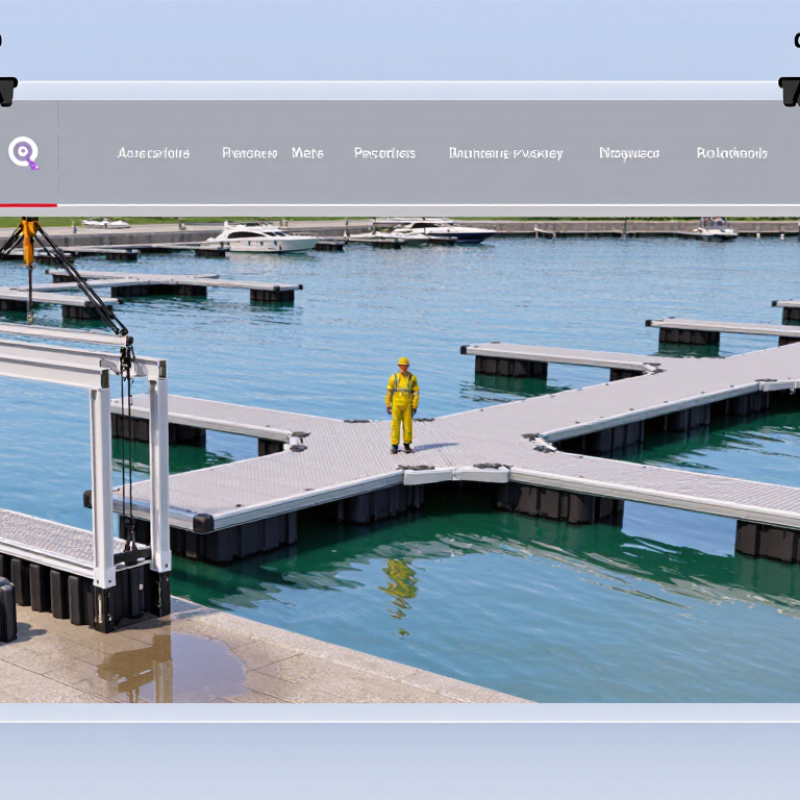
China Top Replacement Dock Floats Manufacturer Guide

Time:2026-09-30 Author:Amelia
0%

China’s replacement dock float industry is moving from basic buoyancy products toward engineered, longer-lasting modular systems. This shift reflects rising demand for marina upgrades, private waterfront access, and damage-resistant floating infrastructure.

Grand View Research’s global floating docks market analysis identifies marina development, recreational boating, and waterfront construction as major growth drivers. MarketsandMarkets also highlights modular construction and improved polymer materials as important industry trends. These reports provide useful direction, but their figures cover floating docks broadly, not Replacement Dock Floats alone. That distinction matters.

It matters greatly.

A reliable replacement float must match the dock’s load, frame spacing, water exposure, and connection hardware. High-density polyethylene shells, closed-cell foam, molded ribs, and corrosion-resistant fasteners can improve service life. However, material claims should be verified through technical sheets, buoyancy tests, and documented quality procedures.

Marine surveyor Steve Henkel notes, “Buoyancy is the foundation of every floating dock.” The statement is simple, yet often overlooked during rushed repairs. A float may look intact while its internal foam absorbs water or its mounting points weaken. Field inspections should check deformation, cracks, fastener corrosion, uneven freeboard, and changes after heavy rain or winter ice.

This guide examines China’s leading Replacement Dock Floats manufacturers through product design, production control, customization, testing, and after-sales support. It also considers practical details, such as lifting a saturated float from muddy water or aligning new modules beneath an aging aluminum frame. No supplier is perfect. Buyers should compare evidence, not promises, and confirm performance against their own site conditions.

China Top Replacement Dock Floats Manufacturer Guide

What Are Replacement Dock Floats and How Do They Work?

Replacement dock floats are sealed buoyant units fitted beneath a dock frame. They displace water, creating an upward force that supports the deck, people, and equipment. In practice, a damaged float is usually replaced after checking its dimensions, attachment points, material, and rated buoyancy. A snug fit matters. Loose straps or uneven spacing can let a dock tilt, especially when people gather along one edge.

To estimate capacity, compare the floats’ combined rated buoyancy with the dock’s weight and expected load, while preserving a safety margin. The principle is simple, but real docks face changing loads, waves, and water levels.

NOAA’s 2022 Sea Level Rise Technical Report projects about 10–12 inches of average rise along U.S. coastlines by 2050, relative to 2000 levels.

That projection is not a dock-design allowance, but it highlights why local water conditions and freeboard deserve attention. Replacement floats restore lift; they do not correct a weak frame or poor load distribution. Inspect seams, fasteners, and trapped water after installation. Small details matter. A field measurement can still be wrong, so recheck the dock’s level under a realistic load.

Key Materials and Specifications of Reliable Dock Floats

Reliable replacement dock floats begin with material selection, not appearance. Rotationally molded HDPE is widely preferred for its impact resistance, weldable surface, and low water absorption. Its density usually ranges from 0.94 to 0.97 g/cm³. PlasticsEurope reported global plastics production at 400.3 million tonnes in 2022, confirming strong material availability. However, recycled content must be checked carefully. It can vary in ultraviolet stability and impact performance.

Closed-cell EPS offers low weight and strong buoyancy. Typical densities range from 15 to 30 kg/m³, but exposed foam can suffer from damage and water ingress. A sealed HDPE shell is therefore essential. Fresh water provides about 1,000 kilograms of buoyant force per cubic metre. Seawater provides approximately 1,025 kilograms, according to standard oceanographic density data. A reliable specification should include float volume, net buoyancy, wall thickness, ballast allowance, and connection strength. Leave a practical reserve of 20% or more after accounting for decking, users, hardware, and wave action.

Dimensions need field experience. A float may meet its rated capacity yet sit too low after seasonal loading. That is easy to miss. I would also request ultraviolet exposure data, low-temperature impact results, and dimensional tolerances. NOAA’s 2022 Sea Level Rise Technical Report highlights increasing coastal water levels, so anchoring and freeboard deserve closer review. No single material is perfect. A cheaper float can look convincing, then deform under repeated impact. Manufacturers should provide test records, traceable resin information, and clear replacement compatibility details.

China Top Replacement Dock Floats Manufacturer Guide - Key Materials and Specifications of Reliable Dock Floats

Specification Typical Material or Benchmark Why It Matters What to Check When Selecting a Replacement
Float shell Rotationally molded, UV-stabilized high-density polyethylene (HDPE); typical HDPE density is approximately 0.94–0.97 g/cm³. HDPE is lightweight, corrosion-resistant, and suitable for outdoor exposure. UV stabilization helps limit sun-related degradation. Confirm the resin is intended for outdoor use and ask for the shell’s nominal wall thickness and manufacturing tolerances.
Shell wall thickness Commercial float shells commonly use walls in the approximate 5–8 mm range; actual thickness varies by design and location on the float. Adequate, consistent wall thickness helps resist impact and service wear. Compare the same measurement locations and request a section or drawing. Do not treat this range as a universal minimum.
Internal flotation Some floats are hollow; others use enclosed expanded polystyrene (EPS) foam. EPS foam density is commonly around 15–30 kg/m³, depending on grade and application. Foam-filled construction can help maintain flotation if the outer shell is punctured, while hollow designs depend on the shell remaining watertight. Confirm whether the float is hollow or foam-filled, how the foam is contained, and whether the design is intended to limit water ingress.
Dimensions and fit Measure length, width, height, mounting-hole spacing, and attachment-point position. Replacement sizes are design-specific. Correct dimensions help maintain dock alignment, clearance, and load distribution. Match the existing float’s mounting geometry and verify clearance at the lowest expected water level.
Displacement and buoyancy Gross displacement is based on the float’s external volume. In fresh water, each cubic metre of displaced water provides approximately 1,000 kg of gross buoyant force before subtracting float weight. Usable capacity is lower than gross displacement because the float’s own weight and the required freeboard must be accounted for. Request rated load or net buoyancy at a stated immersion level, and size the dock for its full intended live and dead loads.
Fasteners and connectors Common options include hot-dip galvanized steel and stainless steel grades such as 304 or 316. Hardware material affects corrosion resistance and service life in wet environments. For saltwater or chloride exposure, assess 316 stainless steel or an appropriate corrosion-protection system. Isolate dissimilar metals where needed.
UV and weather resistance UV-stabilized polymer resin; performance depends on the resin formulation, stabilizer package, color, and exposure conditions. Sunlight, temperature changes, and repeated wetting can age polymer components over time. Ask for applicable weathering or material test information and inspect existing floats for chalking, cracking, or brittleness.
Operating environment Freshwater, brackish-water, and marine installations can place different demands on fasteners, connectors, and maintenance. Salt, ice, waves, debris, and water-level changes affect the complete dock system, not just the float. Specify water type, expected temperature range, wave exposure, ice conditions, and any local structural requirements.
Inspection and maintenance Periodic visual inspection of shells, seams, mounting points, connectors, and surrounding dock structure. Early detection of damage or loose hardware can reduce the risk of flotation loss or connection failure. Set an inspection schedule appropriate to exposure and follow the dock designer’s and applicable local guidance.

Note: Values above are general reference ranges, not universal product ratings. Confirm dimensions, load capacity, materials, and installation requirements against the specific float design and site conditions.

How to Evaluate Chinese Replacement Dock Float Manufacturers

When evaluating Chinese replacement dock float manufacturers, begin with traceable evidence, not polished catalog photos. Request resin grade, melt-flow records, wall-thickness maps, and batch numbers.

The 2023 OECD Global Plastics Outlook reported that only 9% of global plastic waste was recycled in 2019. Therefore, ask whether recycled content is controlled and declared. It can change buoyancy, brittleness, and weld quality.

Inspect one production sample closely. Check rotational-molding seams, corner thickness, threaded inserts, and drain fittings.

A reliable factory should provide buoyancy calculations based on displacement, freeboard, and safety loading. Ask for test methods, not vague claims.

ASTM D638 can support tensile testing, while ASTM G154 can help assess accelerated UV exposure. These tests are useful, but they do not replace a water trial.

Install a sample section, add measured loads, and record deflection after 24 hours.

Audit the manufacturing process if possible. Review mold maintenance, leak testing, packing protection, and corrective-action records. ISO 9001 certification may show process discipline, yet it does not prove float performance. That distinction matters.

Request independent reports with laboratory names, dates, specimen numbers, and failed-result disclosures. Factories that hide weaknesses deserve caution.

My own evaluation would also include saltwater exposure, because a float can perform well in freshwater and disappoint near a busy harbor.

Pricing can mislead. A cheaper unit may use thinner walls or unstable recycled material, and the difference appears only after months of sunlight and repeated impact.

Manufacturing, Quality Control, and Compliance Standards

Selecting a China-based replacement dock floats manufacturer requires more than comparing prices. Manufacturing details decide service life.

A dependable factory should use marine-grade HDPE shells, controlled rotational molding, and closed-cell foam with stable density. PlasticsEurope reported global plastics production at 400.3 million tonnes in 2022. That scale makes resin traceability essential, not optional. Ask for batch records, melt-flow data, UV stabilizer details, and foam-density results. A float should not leave the mold with thin corners, trapped air, or uneven wall thickness.

Quality control must continue after molding. Inspectors should verify dimensions, buoyancy, weld integrity, impact resistance, and water absorption. ASTM F964 provides relevant guidance for floating docks, walkways, and swimming rafts. Factory tests should simulate bolt pressure, wave movement, and repeated loading. A 24-hour buoyancy test is useful, but it is not enough. Real installations face years of sunlight and abrasion.

Compliance also needs evidence. ISO’s 2022 Survey recorded more than 1.2 million ISO 9001 certificates worldwide, yet certification alone cannot prove product quality. Request current certificates, calibration records, nonconformity reports, and corrective-action evidence. Check whether materials comply with the destination market’s chemical and environmental rules. Requirements differ by shoreline, marina type, and public-access use. Some suppliers provide attractive documents but weak testing depth. I have seen this become a costly lesson. A clear factory audit, witnessed load test, and independent inspection reduce that risk.

How to Select, Order, and Maintain Replacement Dock Floats

Selecting replacement dock floats starts with load, not price. Measure deck weight, users, equipment, and wave exposure. Add a practical safety margin. A float that sits low will collect water and flex its frame. NOAA’s 2022 Sea Level Rise Technical Report projects 0.25 to 0.30 meters of average U.S. rise by 2050. Local tide records and future water levels deserve attention.

Size each unit by verified buoyancy, not marketing language. Ask the manufacturer for material density, wall thickness, UV testing, impact performance, and allowable load per float. ASTM D638 tensile testing can help compare plastic strength, but it does not replace a complete dock calculation. The U.S. Army Corps of Engineers Coastal Engineering Manual stresses site-specific wave, wind, and current assessment. Small lakes still create sharp loading.

Order drawings, connection details, bolt grades, packing dimensions, and spare hardware before payment. Confirm mold tolerances and batch inspection records. One missing bracket can delay installation for days. During maintenance, inspect seams, welds, fasteners, and anchor lines each season. Look for whitening, deep scratches, deformation, and trapped water. Rinse salt and sediment after use, then store damaged units out of direct sunlight. I have seen owners replace sound floats because loose hardware caused the real failure. My earlier assumption was too simple: thicker plastic alone does not guarantee better service. Suppliers should document production dates and test results, while buyers should photograph every unit on arrival.

FAQS

What are replacement dock floats?

Replacement dock floats are sealed buoyant units installed beneath a dock frame. They displace water and create upward support. A damaged float needs careful replacement.

How do I choose the correct replacement float?

Check the float’s dimensions, attachment points, material, and rated buoyancy. Confirm it fits the existing frame without forcing straps or fasteners. A snug fit matters.

How much buoyancy does my dock need?

Add the dock weight, expected users, equipment, hardware, and water effects. The combined float rating should exceed that total. Keep at least 20% reserve capacity.

Can extra floats fix an unstable dock?

Not always. Replacement floats restore lift, but they cannot repair a weak frame or poor load distribution. Uneven spacing may cause tilting when people gather along one edge.

Which materials are commonly used for reliable dock floats?

Rotationally molded HDPE offers impact resistance and low water absorption. Closed-cell foam is lightweight and buoyant. Exposed foam can absorb water, so a sealed shell is important.

Does fresh water or seawater affect buoyancy?

Yes. Fresh water provides roughly 1,000 kilograms of buoyant force per cubic metre. Seawater provides about 1,025 kilograms. Actual performance still depends on float volume and loading.

What specifications should I request before buying?

Request float volume, net buoyancy, wall thickness, connection strength, and ballast allowance. Ask for ultraviolet exposure data and low-temperature impact results. The information may still be incomplete.

How should I inspect a newly installed replacement float?

Inspect seams, fasteners, straps, and areas holding trapped water. Check the dock level with realistic loading. A field measurement can be wrong. Check it twice.

Conclusion

This guide explains what Replacement Dock Floats are, how buoyancy supports floating docks, and why proper sizing and installation are essential for stability and safety. It reviews important materials such as high-density polyethylene, rotationally molded plastics, and corrosion-resistant hardware, along with specifications including load capacity, dimensions, flotation volume, UV resistance, and impact strength. These factors help buyers choose floats that match different dock layouts, water conditions, and service requirements.

The guide also presents practical methods for evaluating Chinese replacement dock float manufacturers, including production capability, technical experience, quality inspection procedures, testing records, and communication efficiency. It outlines manufacturing and compliance considerations, from mold design and material control to leak testing, dimensional checks, packaging, and documentation. Finally, readers will learn how to compare quotations, confirm samples, place orders, plan delivery, and maintain Replacement Dock Floats through regular inspections, cleaning, secure fastening, and timely replacement of damaged components.

Amelia

Amelia

Amelia is a seasoned marketing professional with a wealth of expertise in our company’s core offerings. With an unwavering passion for driving growth and innovation, she plays a pivotal role in shaping our marketing strategies and enhancing brand visibility. A key aspect of her responsibilities......