China Top Heavy Duty Floating Pontoons Supplier

Time:2026-11-17 Author:Sophia
0%

Choosing a China Top Heavy Duty Floating Pontoons Supplier means looking beyond price and product photos. These platforms must carry real loads in changing water conditions. A useful comparison starts with the job: expected cargo weight, water depth, current, access needs, and how often the layout may change. Small details matter. Check the stated load capacity, flotation materials, connector design, deck surface, and corrosion protection. Ask how the supplier tests its modules and documents performance. A neat brochure is not the same as verified engineering data.

Heavy Duty Floating Pontoons can support work platforms, temporary access routes, and marine equipment. But no single configuration suits every site. A modular system that works on a sheltered lake may need different anchoring and connection planning in a river or coastal area. Measure twice. Confirm the actual operating conditions with qualified marine professionals before choosing a layout. One practical rule is simple: “Specify the water, the load, and the task before specifying the pontoon.” This is an editorial design principle, not a verified quotation from a named industry expert; no source was supplied to confirm an expert’s name or exact words. That distinction matters. Trustworthy supplier comparisons should separate documented facts from marketing claims, and they should admit where project-specific review is still needed.
China Top Heavy Duty Floating Pontoons Supplier

What Heavy-Duty Floating Pontoons Are and How They Work

China Top Heavy Duty Floating Pontoons Supplier
What Heavy-Duty Floating Pontoons Are and How They Work

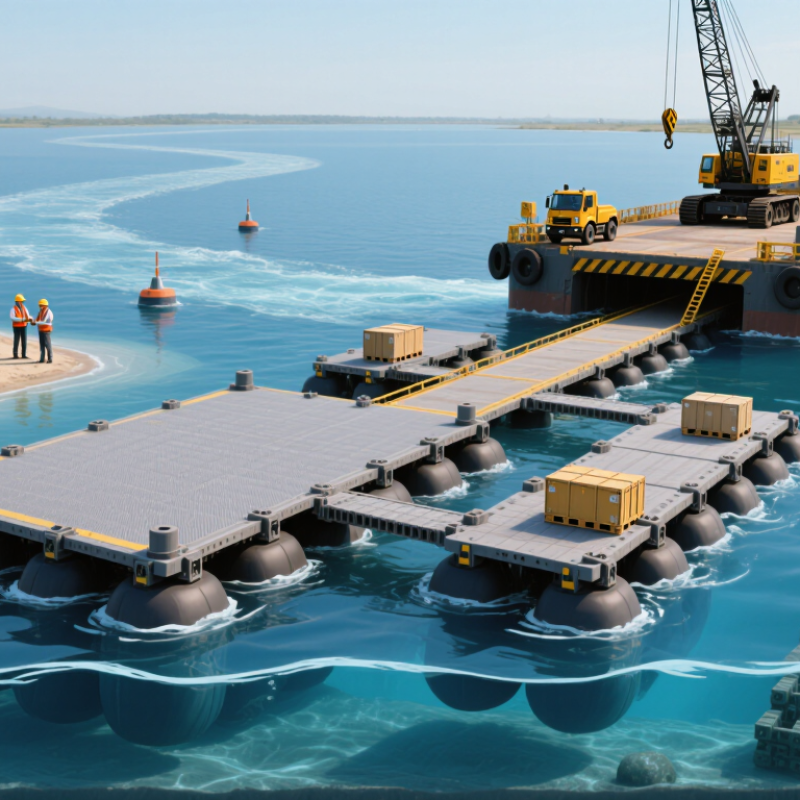
Heavy-duty floating pontoons are buoyant modules used to support platforms, work areas, and equipment on water. Their sealed chambers displace water, creating upward force that carries the structure and its load. A pontoon’s size, wall strength, and internal reinforcement affect how much weight it can safely support. Common materials include corrosion-resistant metals and durable molded plastics, selected for the site and expected service conditions.

Connected pontoons form a larger floating platform. Strong joints help distribute loads across the assembly, while deck supports transfer weight onto the floats. Stability depends on more than total buoyancy: load placement, wave action, water depth, and mooring all matter. For example, a heavy machine positioned near one edge can make a platform tilt, even when its overall capacity seems adequate. That detail is sometimes underestimated. Regular checks can reveal loose connections, cracks, or water ingress before they affect performance.

Tips: Keep heavy loads centered and spread them across the deck. Check connections and flotation chambers before use, especially after rough weather. If the platform feels uneven, reduce the load and review its layout; calculations alone do not always reflect real water conditions.

How Heavy-Duty Floating Pontoons Work

A sealed pontoon displaces water to create buoyant force. This chart compares the theoretical full-submersion displacement of illustrative rectangular pontoons, each 2 m long and 1 m wide, at different depths.

Calculated using freshwater density of approximately 1,000 kg/m³: displacement = length × width × depth × water density. These figures represent theoretical gross displacement, not safe working load. Usable capacity is lower after accounting for pontoon weight, required freeboard, structure, cargo, and operating conditions.

Key Materials and Design Features of Heavy-Duty Floating Pontoons

China Top Heavy Duty Floating Pontoons Supplier

Key Materials and Design Features of Heavy-Duty Floating Pontoons

Heavy-duty floating pontoons must withstand repeated loading, wave motion, and long exposure to water. Material choice influences buoyancy, corrosion resistance, maintenance, and service life. Rotomolded polyethylene modules are lightweight and resist rust, making them suitable for many freshwater and marine applications. Steel or aluminum frames can provide greater stiffness for concentrated loads, but coatings and drainage details need careful attention. No material is perfect.

Small details matter. A wide deck spreads foot traffic, while reinforced edges help protect connection points from impacts. Interlocking connectors should resist shear and uplift while remaining accessible for inspection. Bolts, pins, and locking plates need compatible metals to limit galvanic corrosion. A small mismatch can become expensive.

Pontoons should be sized for the heaviest expected equipment, not an average operating load. Engineers should check freeboard, flotation reserve, and load distribution under realistic conditions, including uneven placement. Anti-slip surfaces help maintain footing when spray reaches the deck, and rounded corners can reduce snagging. Still, specifications cannot capture every site condition. Water levels, current, and seasonal debris deserve review before installation. Reliable supplier documentation should include load data, material details, and clear maintenance guidance.

Common Applications in Marine, Industrial, and Construction Projects

China Top Heavy Duty Floating Pontoons Supplier

Common Applications in Marine, Industrial, and Construction Projects

Heavy-duty floating pontoons create stable, modular work surfaces where land access is difficult. In marine projects, crews use them for quay maintenance, shoreline repairs, temporary access, and equipment staging. UNCTAD’s Review of Maritime Transport 2024 notes that over 80% of global trade by volume moves by sea, underscoring the importance of reliable port infrastructure. A pontoon deck can hold welding gear, hoses, and small machinery, but the rated load and local water conditions must guide every layout. Small errors matter.

Industrial sites use pontoons to reach water intakes, pumps, and riverside pipelines. Construction teams may deploy them for bridge repairs, inspection work, or temporary equipment platforms. The Global Wind Energy Council’s Global Offshore Wind Report 2024 recorded 10.8 GW of new offshore wind installations in 2023, bringing cumulative capacity to 75.2 GW. This expanding sector creates practical needs for temporary marine access and component staging. Still, layouts vary. Uneven loads, changing water levels, and wake can affect stability; engineers should check freeboard, connections, and access routes before work begins. A pontoon is not a substitute for a properly rated lifting vessel.

How to Evaluate a Heavy-Duty Floating Pontoon Supplier in China

China Top Heavy Duty Floating Pontoons Supplier

How to Evaluate a Heavy-Duty Floating Pontoon Supplier in China

UNCTAD’s Review of Maritime Transport 2024 reports that around 80% of global goods trade by volume moves by sea. Ports and waterfront projects therefore need floating systems built for repeated loading, weather, and daily use. When assessing a supplier, ask for project-specific load calculations, stated freeboard, buoyancy data, and details of connector strength. A large rated capacity alone is not enough.

Review material specifications and traceability records for each pontoon component. Ask how the supplier tests UV resistance, weld quality, and impact performance, and request test reports rather than verbal assurances. Check references for installations with similar wave exposure and operating loads. Inspect sample joints and deck surfaces; a neat brochure can hide weak details. No checklist is perfect. Local conditions can still surprise even experienced teams, so independent engineering review is worth considering.

Tips: Ask for drawings, inspection records, and a clear warranty in writing. Confirm what the quoted load means: evenly distributed, or concentrated beneath wheels or equipment? Small details matter.

Manufacturing, Customization, and Quality Control in China’s Pontoon Industry

China’s heavy-duty floating pontoons require careful fabrication, not just thick steel and strong welds. China’s Ministry of Industry and Information Technology reported 48.18 million deadweight tons of shipbuilding completions in 2024, equal to 55.7% of the global total. The figure describes shipbuilding, not pontoon output, but it shows the scale of China’s marine manufacturing base. The World Steel Association recorded 1.005 billion tonnes of crude steel production in China that year. For pontoon buyers, these figures offer context, not a quality guarantee.

Reliable production starts with the use case: payload, water conditions, connection layout, and transport limits. Fabricators can then select materials and set compartment sizes to support the required buoyancy and freeboard. A practical inspection plan checks material certificates, weld appearance, coating coverage, and dimensions before assembly. It should also include leak checks and flotation or load tests suited to the design. Details matter. A small mismatch between modules can complicate installation. One point deserves honest review: custom drawings may still miss site conditions, so measurements should be confirmed with the customer before cutting begins. Quality records should link each inspection result to the relevant module, making later maintenance easier.

FAQS

Where are heavy-duty floating pontoons commonly used?

They provide temporary work surfaces for quay maintenance, shoreline repairs, bridge inspections, and equipment staging.

What equipment can a pontoon deck support?

It may hold welding gear, hoses, and small machinery. Check the rated load before arranging equipment.

Can pontoons provide access to industrial water systems?

Yes. Teams use them to reach water intakes, pumps, and riverside pipelines. Changing water levels can complicate access.

What should engineers check before work begins?

Check freeboard, module connections, access routes, and expected wake. Uneven loads can affect stability.

What information should buyers request from a supplier?

Request project-specific load calculations, buoyancy data, freeboard details, and connector strength information. Ask for drawings, too.

How can buyers assess pontoon quality?

Review material records and test reports for weld quality, UV resistance, and impact performance. Inspect sample joints and deck surfaces.

What does a quoted load rating mean?

Confirm whether it assumes an evenly distributed load or concentrated weight beneath wheels or equipment. The difference matters.

How does customization affect manufacturing and installation?

Fabricators use payload, water conditions, connections, and transport limits to guide design. Confirm site measurements before cutting begins.

What inspections can support quality control?

Check material certificates, weld appearance, coating coverage, and module dimensions. Leak and flotation tests should suit the design.

Can a pontoon replace a lifting vessel?

No. A pontoon is not a substitute for a properly rated lifting vessel. Site conditions can still surprise experienced teams.

Conclusion

Heavy Duty Floating Pontoons are buoyant modular platforms designed to support people, equipment, and materials in demanding water-based environments. Their sections connect to form stable working surfaces, with buoyancy and load capacity determined by the pontoon’s dimensions, internal structure, and intended use. Durable materials, reinforced connections, anti-slip surfaces, and corrosion-resistant components can help improve service life and operational safety.

These pontoons are used for marine access, industrial operations, temporary construction platforms, and other projects near or on water. When evaluating a supplier in China, buyers can consider engineering experience, production capabilities, material specifications, customization options, inspection procedures, and after-sales support. Clear project requirements help suppliers tailor dimensions, load ratings, connection systems, and accessories. Consistent manufacturing and quality control, from material selection through final inspection, are essential for delivering pontoons suited to site conditions and long-term use.

Sophia

Sophia

Sophia is a dedicated marketing professional with an exceptional depth of knowledge about her company's products and services. With a keen understanding of market trends and customer needs, she crafts insightful blog posts that not only inform but also engage readers, enriching the company’s online......