Which Large Floating Dock Modules Are Best in 2026?

Time:2026-11-10 Author:Sophia
0%

Large Floating Dock Modules are judged by more than advertised load capacity. For a marina, work platform, or waterfront access point, the right choice depends on water conditions, intended traffic, service life, and maintenance. A module that feels stable in a sheltered basin may move noticeably in wake, wind, or changing water levels. Details matter.

This 2026 guide compares module types and selection criteria, including flotation materials, deck surfaces, connectors, anchoring options, and expansion potential. It also considers useful evidence: published load ratings, material specifications, warranty terms, and installation guidance from manufacturers. Numbers need context. A stated capacity is not a complete design review.

For buyers, practical checks include how easily modules connect, whether the deck stays usable when wet, and how components can be inspected or replaced. Seasonal ice, saltwater exposure, and frequent boat contact may also affect upkeep. Conditions vary by site.

There is no universal winner. High-density polyethylene modules can suit flexible layouts and routine handling, while concrete or steel-based systems may fit different load and durability demands. Each has trade-offs. We will examine where those differences matter, which questions to ask suppliers, and which claims deserve closer checking. Even careful comparisons have limits; site conditions and competent engineering review can change a recommendation. A dock can look solid on a calm day. That is not the whole story. The goal is a practical shortlist, not a promise that one product works everywhere.
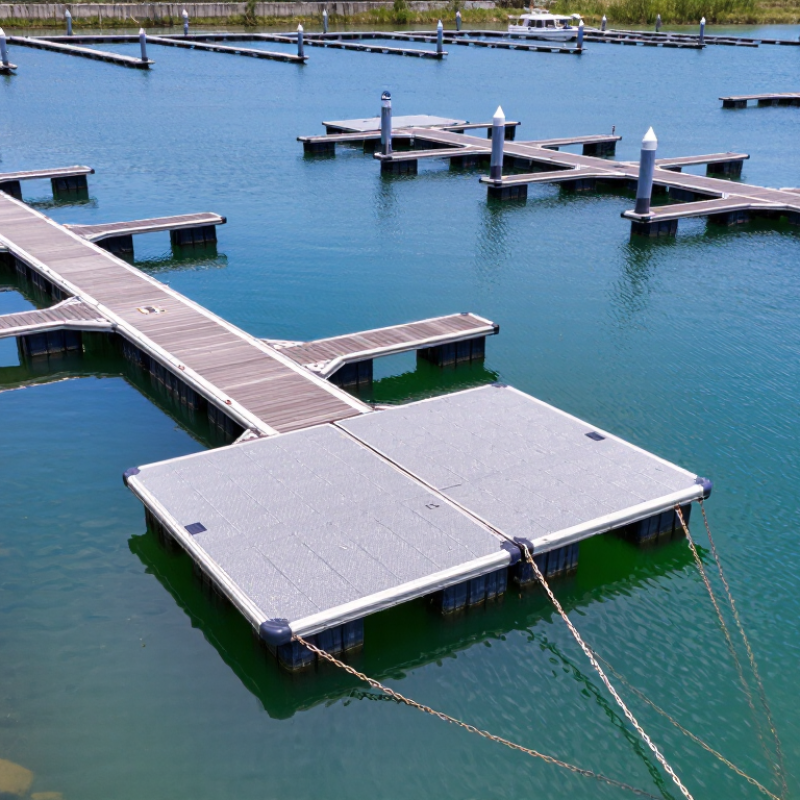
Which Large Floating Dock Modules Are Best in 2026?

What Large Floating Dock Modules Are and How They Work

Large floating dock modules are buoyant platforms joined edge to edge with flexible or pinned connectors. Their sealed floats displace water, supporting the deck, users, and equipment. As water levels rise or fall, the connected surface moves with them. That sounds simple. In practice, waves, wind, and uneven loading can make joints twist or pull. A small service cart parked at one corner can matter.

Module selection starts with measured loads, not deck size alone. Check the rated capacity per unit and per square metre, then account for people, carts, cleats, and gangways. Float material, connector strength, anchoring, and local water conditions also shape performance. NOAA’s 2022 Sea Level Rise Technical Report projects an average rise of 10–12 inches along U.S. coastlines from 2020 to 2050. That figure is a useful planning signal, not a site-specific forecast; floating docks follow water levels, but moorings and shore access still need suitable movement range.

For a real installation, inspect how modules behave under changing loads and rougher water, and ask an engineer to verify the layout and anchoring. A dock may look level while one connector carries extra stress. I would not treat easy assembly as proof of long-term stability.

Key Features That Distinguish Dock Module Types

Which Large Floating Dock Modules Are Best in 2026?

Key Features That Distinguish Dock Module Types

Large floating dock modules differ in buoyancy, weight, surface, and connection style. Rotomolded polyethylene units are relatively light and resist corrosion, making them practical for changing layouts and wet environments. Their molded surfaces can provide grip, though texture and stability vary by design. Check rated loads and connector strength, not just overall size.

Concrete modules offer substantial mass and can feel steady underfoot, especially where wakes disturb lighter platforms. They need suitable water depth and careful installation; their weight makes repositioning harder. Aluminum frames are lighter and often pair with separate floats and deck panels. They can be convenient to service, but inspect joints and coatings for wear. Each type has trade-offs. There is no universal winner.

Connection hardware deserves close attention. Hinged links allow movement between modules, while rigid connections can create a firmer surface but transfer more force between sections. Match the system to expected loads, water movement, and maintenance access. Freeboard matters, too: a tall dock may suit some boats, while a low edge can simplify boarding. Measure actual water levels. Then allow for seasonal changes. Specifications help, but real conditions can be less tidy than a planning chart suggests. A little uncertainty remains.

How to Compare Capacity, Durability, Stability, and Maintenance

Which Large Floating Dock Modules Are Best in 2026?

Choosing large floating dock modules starts with capacity, not appearance. Check the rated load per module and across the assembled platform. A wide dock may carry people, carts, and equipment unevenly. Ask how the rating changes when loads cluster near an edge. Keep a sensible margin for busy days and changing water conditions. Numbers help, but their assumptions matter.

Durability depends on more than a tough-looking surface. Compare UV resistance, impact tolerance, and performance through repeated temperature changes. Inspect connector materials and how securely modules lock together. On a windy site, loose joints can create movement that feels uncomfortable underfoot. Stability also depends on module shape, water depth, and how the dock is anchored. No single specification tells the whole story.

Maintenance deserves a practical test. Can you rinse away grit, inspect the underside, and replace one damaged module without dismantling the platform? Look for clear inspection guidance and accessible spare parts. Details matter. In my experience, small checks catch problems early, though a quick visual inspection can miss wear inside a connector. A simple seasonal log of loose fittings, surface damage, and waterline changes can make comparisons more reliable over time. Choose modules whose performance claims match your actual site, not just a catalog test.

Leading Large Floating Dock Module Options for 2026

Large floating dock modules in 2026 should be selected for their working load, water conditions, and maintenance needs, not size alone. In sheltered marinas, rotational-molded polyethylene modules resist corrosion and allow flexible layouts. Textured deck surfaces help provide grip under wet shoes. Check the connectors regularly; a loose joint can make a wide platform feel unstable. Small details matter.

Concrete floating modules are a practical option for heavier equipment and high-traffic areas. Their mass can help limit movement, but transport and installation may be more demanding.

Aluminum-framed modular systems are lighter to handle and can support configurable walkways. Their joints and fasteners still need inspection, especially where salt water and repeated movement take a toll.

Compare usable buoyancy, freeboard, connection strength, and access to replacement parts before choosing. Ask how the dock performs in local waves, changing water levels, and seasonal debris. A design that works in a calm basin may feel inadequate on an exposed shoreline. It is easy to overvalue rated capacity; real loading and maintenance habits matter too. Request clear load data and installation guidance, then review them with a qualified dock installer.

How to Select the Best Module for Your Site and Intended Use

Choosing a large floating dock module begins with the water around it, not a product photo.

Measure seasonal depth changes, wake, wind direction, and the distance between shore and working area. A sheltered pond may need a different layout from a marina entrance exposed to passing craft. Start with the site, not the catalog. Check whether the dock must carry people, carts, small equipment, or all three. Estimate peak loads, including clustered visitors, rather than relying on average use. Too little freeboard can leave a deck wet; excessive height may make boarding awkward.

Module dimensions should match access and maintenance plans. Wider units can provide stable work space, but may complicate transport, turning, and shoreline fit. Check connector compatibility, slip resistance, UV resistance, and whether hardware suits local water conditions. Small details matter. Ask how anchoring will handle seasonal level changes, and leave room to inspect joints.

For exposed sites, a qualified installer or marine engineer can assess loads and anchoring before purchase. No module is perfect. A short trial layout may reveal awkward access or movement that drawings miss. Treat that as useful evidence, not a failure.

FAQS

What are large floating dock modules?

They are buoyant platforms joined edge to edge. Sealed floats support the deck, people, and equipment. They rise with water.

How should I choose module capacity?

Check rated capacity per module and per square metre. Include people, carts, cleats, and gangways. A small cart at one corner can matter.

What are the main differences between module materials?

Polyethylene units are light and resist corrosion. Concrete feels substantial but needs suitable depth. Aluminum frames are lighter and require joint and coating checks.

Which connectors are better for changing water conditions?

Hinged links allow movement between sections. Rigid links create a firmer surface but can transfer more force. The right choice depends on loads and water movement.

Why does freeboard matter?

Freeboard affects boarding height and how the dock sits beside boats. Measure actual water levels. Seasonal changes can complicate a neat plan.

Will a floating dock automatically handle rising water?

The platform follows water levels, but moorings and shore access need enough movement range. A projected average rise is not a site-specific forecast.

Are concrete modules always more stable?

Their mass can feel steady where wakes disturb lighter platforms. They need suitable depth and careful installation. Repositioning is harder.

How can I check whether a layout is stable?

Inspect modules under changing loads and rougher water. Ask an engineer to verify layout and anchoring. One connector may carry extra stress.

Does easy assembly prove long-term stability?

No. It is not proof. Check connector wear, coatings, and movement over time. I would still question a dock that only looks level.

Conclusion

Large Floating Dock Modules provide adaptable platforms for marinas, waterfront businesses, recreation areas, and other sites that need substantial floating access. They connect to form larger dock systems, with their design, flotation, anchoring, and connection methods affecting how they perform in changing water conditions. Different module types may prioritize load capacity, stability, durability, ease of installation, or flexibility, so the best choice depends on the demands of the location.

This guide explains how to compare modules by capacity, materials, stability, maintenance needs, and expected service conditions. It also reviews the main options available in 2026 and the trade-offs to consider when evaluating them. Before selecting a system, assess water depth and exposure, intended use, expected loads, access requirements, and available maintenance resources. Matching these factors to the module’s features can help create a dependable dock that is practical to install, use, and maintain.


Sophia

Sophia

Sophia is a dedicated marketing professional with an exceptional depth of knowledge about her company's products and services. With a keen understanding of market trends and customer needs, she crafts insightful blog posts that not only inform but also engage readers, enriching the company’s online......