Choosing the right 4x4 Floating Dock Sections can shape the safety, comfort, and lifespan of an entire waterfront system. These compact modules suit private lakes, marinas, fishing platforms, and seasonal access points. However, size alone should not decide the purchase. Buyers need to examine frame materials, float density, deck surfaces, connection hardware, and published load ratings. Small details matter. A slippery surface can become hazardous after rain. Weak connectors may loosen when waves repeatedly strike the dock.
Reliable suppliers should provide clear specifications, installation guidance, warranty terms, and replacement-part support. Look for corrosion-resistant fasteners, UV-stable floats, and decking designed for repeated exposure to water and sunlight. A textured composite surface may offer better footing than smooth boards near a launch area. Check whether each section remains stable when one person stands near its edge. That simple test reveals useful information.
Real waterfront conditions are rarely perfect. Wind, changing water levels, ice, algae, and uneven shorelines can affect performance. I would compare several 4x4 Floating Dock Sections models against the actual site, not only online photographs. Manufacturer claims deserve careful verification. No checklist catches every issue. Measure the shoreline, confirm water depth, and review local installation requirements before ordering. A modular dock can simplify expansion, but poor planning can create costly adjustments later. The strongest choice balances proven construction, practical handling, dependable support, and honest limits.
What Are 4x4 Floating Dock Sections?
Top 4x4 Floating Dock Sections for Sale
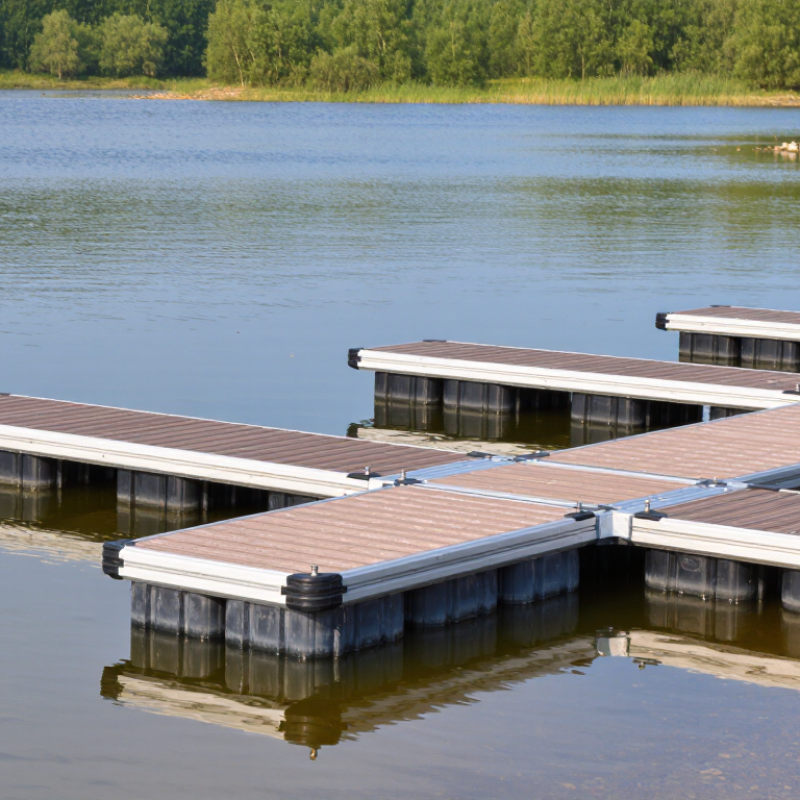
A 4x4 floating dock section is a modular platform measuring approximately four feet by four feet. It floats because sealed chambers or buoyant materials support the frame. Several sections connect to create a walkway, swimming platform, or boat landing. The square shape simplifies transport and layout. It can also fit into irregular shorelines more easily than one large platform.
Most sections use a rigid frame, a walking surface, flotation, and connection hardware. The frame may use treated wood, aluminum, or another water-resistant material. Decking can be textured to improve grip near wet edges. In practical installations, connection points matter as much as flotation. Weak joints can create movement, noise, and difficult repairs. They are not magic. A floating section still needs suitable anchors, safe access, and enough freeboard for local water conditions.
When comparing 4x4 sections for sale, check the rated load, flotation volume, deck thickness, and hardware quality. Ask whether the stated capacity includes people, furniture, and wave movement. A section that feels stable in calm water may flex during wind or boat wake. Installation mistakes can also reduce performance. Leave room for seasonal water changes, inspect fasteners regularly, and replace damaged flotation promptly. Choosing the lightest option may save money initially, but it can increase maintenance later. The best design is usually the one that matches actual use, shoreline conditions, and realistic maintenance time.
Key Features of the Best 4x4 Dock Sections
Top 4x4 Floating Dock Sections for Sale
The best 4x4 dock sections begin with dependable flotation and a stable walking surface. Each section should support normal foot traffic, gear, and changing water levels without excessive flexing. Check the manufacturer’s stated buoyancy and working load, not only the deck size. Load performance changes with water density, wave action, and uneven weight distribution.
Safety matters.
The 2023 U.S. Coast Guard Recreational Boating Statistics recorded 4,012 accidents, 2,620 injuries, and 556 deaths in the United States. These figures are not specific to docks, but they reinforce the need for secure access and clear movement areas. Look for slip-resistant decking, rounded edges, corrosion-resistant fasteners, and connection hardware designed for repeated movement. A reliable 4x4 section should also include practical attachment points for ramps, cleats, or modular extensions. The American Boat and Yacht Council’s waterfront equipment guidance supports careful attention to stability, flotation, and pedestrian safety.
Installation experience exposes small problems. Sections that appear rigid on shore may shift near a wake or strong wind. I would inspect hinge pins, bolts, and float compartments after the first season. Some sales listings provide buoyancy numbers without explaining test conditions. That omission deserves questions. Verify dimensions, material thickness, warranty terms, and replacement-part availability before purchasing.
Top 4x4 Floating Dock Sections for Sale - Key Features of the Best 4x4 Dock Sections
| Dock Section Type |
Nominal Size |
Typical Deck Height |
Approx. Usable Buoyancy* |
Frame and Float Construction |
Deck Surface Options |
Best Use |
| Standard Modular Section |
4 ft × 4 ft
(1.22 m × 1.22 m) |
Approximately 16–20 in
(41–51 cm) |
Approximately 500 lb
(227 kg) at a distributed 6-in freeboard |
Rotational-molded polyethylene float with a corrosion-resistant galvanized or aluminum support frame |
Textured molded surface, pressure-treated boards, or composite decking |
General residential docks, swimming access, and small watercraft |
| Heavy-Duty Utility Section |
4 ft × 4 ft
(1.22 m × 1.22 m) |
Approximately 18–24 in
(46–61 cm) |
Approximately 650–800 lb
(295–363 kg) at a distributed 6-in freeboard |
Reinforced frame, molded polyethylene flotation, and additional underside bracing for higher distributed loads |
Non-slip molded deck, aluminum panels, or reinforced composite boards |
Boat boarding, equipment handling, marina walkways, and frequent foot traffic |
| Low-Profile Access Section |
4 ft × 4 ft
(1.22 m × 1.22 m) |
Approximately 12–16 in
(30–41 cm) |
Approximately 400–550 lb
(181–250 kg) at a distributed 6-in freeboard |
Lightweight polyethylene flotation with a compact aluminum or galvanized-steel frame |
High-grip textured surface or low-maintenance composite decking |
Low-water entry, kayak launching, swimming platforms, and shoreline access |
| Ice- and Wave-Resistant Section |
4 ft × 4 ft
(1.22 m × 1.22 m) |
Approximately 18–24 in
(46–61 cm) |
Approximately 600–750 lb
(272–340 kg) at a distributed 6-in freeboard |
Thick-wall polyethylene float, reinforced corners, heavy-duty connection points, and impact-resistant frame components |
Replaceable non-slip panels, composite boards, or treated timber decking |
Lakes with changing water levels, moderate wave action, and seasonal storage |
*Buoyancy figures are practical comparison values for evenly distributed loads and are not a substitute for the supplier’s engineering rating. Actual capacity varies with float volume, deck material, frame weight, water density, freeboard requirements, connection hardware, and local weather conditions. A 4 × 4 ft section provides approximately 16 square feet of deck area.
Comparing Materials, Stability, and Weight Capacity
Top 4x4 Floating Dock Sections for Sale
Comparing Materials, Stability, and Weight Capacity
A 4x4 floating dock section covers 16 square feet. Its real capacity depends on buoyancy, section weight, and connector strength. Freshwater weighs about 62.4 pounds per cubic foot, while seawater approaches 64 pounds, according to U.S. Geological Survey water-density data. This difference is small, but it affects freeboard when several sections are connected. Never treat a published capacity as usable payload alone. People, furniture, ladders, and waterlogged accessories all consume buoyancy.
Rotational-molded polyethylene usually resists corrosion, impact, and repeated wetting. Aluminum is lighter and stiff, but damaged coatings can expose metal to aggressive water. Galvanized steel offers strong connections, although rust can develop around cuts and fasteners. Timber feels solid underfoot, yet it absorbs water and needs regular inspection. ASTM floating-structure guidance emphasizes checking materials, connections, and environmental loads rather than judging strength from appearance.
Stability comes from width, low center of gravity, and secure hinges. The U.S. Army Corps of Engineers Coastal Engineering Manual shows that wave forces rise sharply with exposure and water depth. A calm lake is not a sheltered ocean inlet. Check wind, current, tide, and seasonal ice conditions. A practical buyer should compare tested load ratings, flotation volume, and expected freeboard. For example, a 1,000-pound rating across 16 square feet equals 62.5 pounds per square foot, before uneven loading is considered. That calculation looks reassuring. It may still be incomplete. Real installations need professional review when waves, public access, or heavy equipment are involved.
How to Choose 4x4 Floating Dock Sections for Sale
Choosing 4x4 floating dock sections for sale requires more than comparing prices and photos. Start with the dock’s intended use. A small fishing platform needs different support than a busy swimming area or loading point. Check the manufacturer’s stated load capacity, buoyancy, and recommended spacing between supports.
Measure the shoreline and water depth carefully. A 4x4 section may look compact online but require extra room for connectors, corner fittings, and access ramps. Select sections with UV-resistant material, sealed flotation, and non-slip surfaces. Inspect the underside when possible. Weak seams or exposed foam can become serious problems after repeated waves and winter movement.
I once underestimated wind exposure on a quiet-looking lake. The dock shifted more than expected. That mistake changed how I evaluate anchoring systems. Choose compatible anchor points, flexible hinges, and hardware designed for constant moisture. Stainless or corrosion-resistant fasteners are usually safer choices, but specifications still matter. Ask for test data and installation instructions before purchasing.
Leave space for maintenance.
Consider who will use the dock. Children, older adults, and people carrying equipment need stable walking surfaces and clear transitions. Rounded edges can reduce injuries, while bright safety markings improve visibility in low light. Local water conditions may also affect permits, anchoring, and seasonal removal requirements, so verify those details with the relevant authority.
Top 4x4 Floating Dock Sections for Sale: How to Choose
Each 4x4-foot dock section provides 16 square feet of deck area. Adding sections increases the platform in 4-foot increments, making it easier to plan the required length and usable space. Before purchasing, verify the manufacturer’s load capacity, floatation, frame material, connector system, deck surface, and compatibility with water conditions.
Installation, Maintenance, and Long-Term Value
Top 4x4 Floating Dock Sections for Sale
Installation, Maintenance, and Long-Term Value
A 4x4 floating dock section can simplify shoreline access when water levels change. Before buying, measure the launch area, water depth, and seasonal wave exposure. A stable layout begins with correctly spaced connectors, suitable flotation, and corrosion-resistant fasteners. Install on a calm day, and use two or more people for positioning. Never rely on appearance alone. Check load ratings and local access requirements before assembly.
Maintenance protects both safety and investment. Inspect float chambers, hinges, bolts, and walking surfaces at least twice each season. Rinse away salt and sediment after use, then let surfaces dry. Tighten loose hardware carefully, but do not overtighten plastic components. Replace cracked parts early. Small damage grows quickly.
Long-term value depends on repairability, not only the purchase price. Modular sections let owners replace one damaged panel instead of rebuilding the entire dock. Choose materials suited to sun, ice, and repeated wetting. A written inspection log helps reveal movement or unusual wear. In my experience, skipped checks create the most expensive problems. I once underestimated winter movement; the dock remained usable, but several connections needed adjustment in spring. That lesson matters. A lower-cost section may be false economy if parts are difficult to source or installation instructions are unclear.
FAQS
It is a modular platform measuring about four feet by four feet.
Look for dependable flotation, a rigid frame, textured decking, and strong connection hardware.
Capacity depends on flotation volume, section weight, deck strength, and connector quality.
Rotational-molded plastic resists corrosion, impact, and repeated wetting.
Stability depends on width, flotation, center of gravity, hinges, wind, currents, and wave exposure.
Compare tested load ratings, flotation volume, deck thickness, dimensions, and hardware quality.
Use suitable anchors, secure connections, and safe access from the shore.
Inspect hinges, bolts, fasteners, flotation chambers, and deck surfaces after the first season.
Conclusion
4x4 Floating Dock Sections are modular platforms designed to create flexible, stable access to lakes, rivers, and other suitable waterfront areas. Their compact dimensions make them practical for building swimming platforms, boat access points, fishing areas, and customized floating layouts. The best sections typically feature durable, water-resistant materials, secure connection points, anti-slip surfaces, and enough buoyancy to support users and equipment safely. When comparing options, consider material strength, overall weight, resistance to weather and water exposure, stability in changing conditions, and stated weight capacity.
Choosing the right 4x4 Floating Dock Sections for sale requires matching the sections to your shoreline, intended use, water conditions, and future expansion plans. Lightweight designs may simplify transport and installation, while heavier or reinforced construction can provide greater stability and longevity. Proper assembly, reliable anchoring, and regular inspections are essential for long-term performance. Cleaning surfaces, checking connectors, and repairing wear early can help protect your investment and maintain a safe, functional dock system for years.

 ShengHuang