What Are the 2026 Best Commercial Floating Dock Parts?

Time:2026-10-20 Author:Madeline
0%

Choosing the best Commercial Floating Dock Parts​ in 2026 requires more than comparing prices or product photographs. A busy marina depends on stable, compatible, and serviceable components every day. Hinges, connectors, flotation modules, decking, cleats, bumpers, and access ramps must work together under changing loads and weather.

Real dock performance often appears in small details. A connector may loosen after repeated wave movement. A deck surface can become slippery after rain. Foam-filled floats may last longer, but only when their frames and fasteners suit the installation. These practical observations matter more than attractive specifications alone. Field inspections, manufacturer documentation, load ratings, and maintenance records provide stronger evidence.

This guide examines the 2026 parts most suitable for commercial floating docks, focusing on safety, durability, compatibility, and long-term operating value. It considers recycled plastic, marine-grade aluminum, galvanized hardware, modular float systems, and corrosion-resistant fastening methods. Expert recommendations still require caution. Site conditions differ. Tidal movement, ultraviolet exposure, vessel traffic, water chemistry, and local maintenance capacity can change the best choice.

Some decisions remain imperfect.

A premium component may fail when installed poorly. A cheaper part may perform well in a protected harbor. Reliable selection therefore combines verified standards, installer experience, warranty terms, and realistic lifecycle costs. The goal is not simply to identify the newest products. It is to match dependable parts with actual commercial demands, while recognizing that even a well-designed dock needs regular inspection and timely replacement.
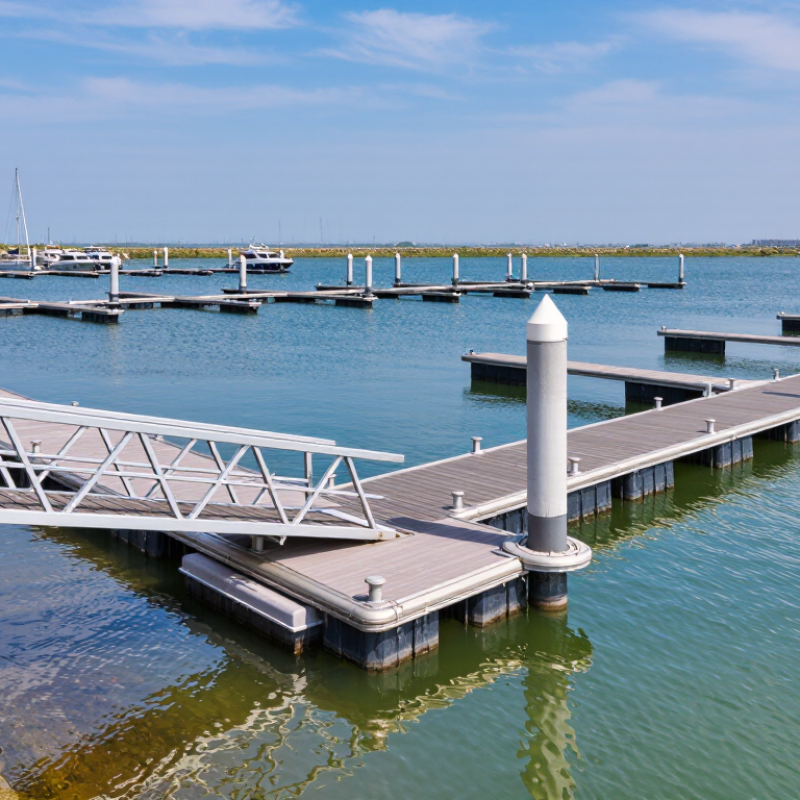
What Are the 2026 Best Commercial Floating Dock Parts?

What Makes a Commercial Floating Dock Part “Best” in 2026

What makes a commercial floating dock part “best” in 2026? It is not simply the strongest component. The best part matches real site conditions, expected traffic, and maintenance capacity. A connector should tolerate repeated movement, while floats must preserve freeboard after years of water absorption and ultraviolet exposure. Small details matter. A loose bolt can become a dangerous gap.

The U.S. Army Corps of Engineers’ Coastal Engineering Manual stresses site-specific analysis of waves, currents, water levels, and wind. Therefore, a reliable dock system needs verified buoyancy and connection loads, not attractive catalog claims. Decking should provide consistent slip resistance when wet, including around ramps and service areas. Hardware also needs corrosion-resistant materials suited to salinity, temperature changes, and galvanic contact. That choice affects both safety and replacement costs.

Future water levels deserve attention. NOAA’s 2022 Sea Level Rise Technical Report projects approximately 10 to 12 inches of average rise along U.S. coastlines by 2050. Adjustable hardware, flexible utility routing, and replaceable wear surfaces can help commercial operators respond. But adaptation is not automatic. A higher dock may still create awkward ramp angles or unstable transitions. The best parts are documented, tested, inspectable, and easy to replace without dismantling an entire platform. Field experience suggests one weakness: buyers often prioritize initial price over lifecycle performance. That habit remains understandable, but it can be expensive.

What Are the 2026 Best Commercial Floating Dock Parts?

The best commercial floating dock parts balance corrosion resistance, structural strength, low maintenance, safety, and modular replacement. This normalized 0–100 benchmark compares common part categories using practical commercial selection criteria.

Higher scores indicate stronger overall suitability for demanding commercial waterfront use. Actual selection should also consider design loads, wave exposure, local codes, water chemistry, anchoring conditions, and manufacturer-certified specifications.

Core Structural Parts for Stability, Strength, and Modular Assembly

What Are the 2026 Best Commercial Floating Dock Parts?

Commercial floating docks need more than buoyancy. Their core parts must manage waves, users, equipment, and repeated movement. High-density polyethylene floats provide corrosion-resistant buoyancy beneath the deck. Aluminum or galvanized steel frames add stiffness without creating excessive dead load. Heavy-duty hinge plates and modular connectors let sections follow water movement while maintaining alignment.

Guide piles, adjustable brackets, and roller assemblies are equally important. NOAA’s 2022 Sea Level Rise Technical Report projects 0.25 to 0.30 meters of U.S. coastal sea-level rise by 2050. Adjustable guides can help preserve usable freeboard as water levels change. ASCE/SEI 7-22 also emphasizes site-specific environmental loads, including wind, waves, and current effects. Dock designers should not treat one load table as universally suitable.

Small parts often decide long-term performance. Stainless or hot-dip galvanized fasteners resist wet exposure, while flexible bumpers protect edges during vessel contact. Continuous cleats distribute mooring forces better than isolated attachment points. Deck panels should drain quickly, even after muddy footwear and heavy rain. In field inspections, connectors usually deserve more attention than the visible decking. That is an uncomfortable lesson. A stronger frame cannot compensate for loose bolts, poor pile clearance, or undersized hinges. Manufacturers and installers should document torque checks, float spacing, and connection wear throughout each operating season.

Safety, Access, and Utility Components for Commercial Dock Operations

What Are the 2026 Best Commercial Floating Dock Parts?

Commercial floating docks need more than buoyancy and a sturdy frame. Their best parts support safe movement, controlled access, and dependable daily work. Safety starts with continuous handrails, high-visibility edge protection, and slip-resistant walking surfaces. These features matter when decks are wet, crowded, or exposed to glare.

Load-rated cleats and bollards secure service boats without creating sharp trip hazards. Flexible bumpers protect both the dock and vessel during changing water levels. Access ladders should include wide steps, firm handholds, and a visible recovery point. Gangways also need suitable slopes, side rails, and stable connections that move safely with the dock.

Utility components make commercial operations more efficient. Protected electrical conduits, water connections, and cable channels reduce loose lines across walking areas. Low-glare lighting improves nighttime access without distracting operators. Drainage details help prevent standing water near work zones. Small details matter.

From a practical inspection view, every component should match expected loads, water conditions, user traffic, and maintenance capacity. Local regulations and qualified engineering review should guide final selection.

Over-specifying parts can increase cost and complicate repairs. Under-specifying them is worse.

A dock may look complete while lacking a safe rescue ladder or clear access route. Regular inspections should check fasteners, float connections, handrails, cleats, and utility covers. Records help identify gradual wear before it becomes an operational problem.

Material Choices and Performance Standards for Long-Term Durability

What Are the 2026 Best Commercial Floating Dock Parts?

Material Choices and Performance Standards for Long-Term Durability

Commercial floating docks need parts that survive repeated loading, sunlight, saltwater, and changing water levels. NOAA’s 2022 Sea Level Rise Technical Report projects 10 to 12 inches of rise along U.S. coastlines by 2050. Adjustable connections are no longer optional in many installations. They are practical risk control.

High-density polyethylene floats resist water absorption and impact during service. UV-stabilized formulations matter because exposed plastic can become brittle over time. Aluminum frames offer low weight and strong corrosion resistance, especially in brackish environments. However, galvanic corrosion can occur when dissimilar metals touch. Insulating washers and compatible fasteners help prevent this failure. Small details matter.

Hot-dip galvanized steel remains useful where high structural capacity is required. Its protection should align with ISO 1461 coating requirements and documented thickness inspections. Stainless fasteners need suitable grades for local salinity, not just attractive appearance. Design checks should consider ASCE 7 environmental loads, access traffic, wave action, and flotation reserve. Manufacturer claims alone are not enough. Field inspection tells the truth. Inspectors should record loose bolts, cracked welds, float deformation, and deck deflection every season. ASTM test data can support selection, but laboratory performance does not perfectly reproduce muddy water, ice, or careless loading. That limitation deserves attention.

How to Select, Compare, and Maintain Floating Dock Parts in 2026

Commercial floating docks in 2026 need parts chosen for traffic, weather, and repeated impact. Start with the working load, water-level changes, and expected service hours. Floats need verified buoyancy. Frames should resist flexing without adding unnecessary weight. For connectors, compare material grade, fastener design, and replacement access. A clever part is useless if crews cannot inspect it. For unusual loads, request a qualified engineering review.

During field inspections, I check hinge movement, cracked welds, loose bolts, and UV damage. I also measure deck deflection after busy operating periods. Small movement often signals a larger issue. Compare more than purchase price. Include freight, installation time, spare parts, corrosion protection, and downtime. Ask suppliers for test data, warranty limits, and clear installation drawings. Select components with traceable specifications and documented maintenance requirements.

Maintenance should follow a written schedule, adjusted after storms or unusually heavy use. Rinse salt and sediment from joints, then inspect drainage paths. Replace distorted connectors early. Do not tighten every bolt blindly; over-tightening can deform plastic or restrict movement joints. Keep photos and torque records for each inspection. One lesson deserves attention: I once treated surface rust as cosmetic. It was not. Hidden corrosion had already reduced thread engagement. Commercial docks are forgiving, until they are not.

What Are the 2026 Best Commercial Floating Dock Parts? - How to Select, Compare, and Maintain Floating Dock Parts in 2026

Comparative guidance for commercial floating dock systems. Performance values are typical planning ranges; final selection should follow local codes, site conditions, engineering calculations, and the component manufacturer's published specifications.
Dock Part Common Commercial Material Primary Function Typical Planning Service Life Load or Performance Considerations Best Selection Criteria for 2026 Routine Maintenance Replacement Priority
Float Modules Rotomolded polyethylene shell with expanded polystyrene or closed-cell foam fill Provides buoyancy and supports the deck frame, users, and equipment 20–30 years when protected from impact, excessive ultraviolet exposure, and incompatible chemicals Confirm net buoyancy after subtracting module, frame, deck, live-load, wave, and freeboard requirements Choose UV-stabilized polyethylene, sealed construction, certified buoyancy data, replaceable connection points, and adequate freeboard Inspect for cracks, deformation, loose fasteners, water intrusion, and loss of freeboard at least twice per year High
Structural Frame Hot-dip galvanized steel, marine-grade aluminum, or engineered composite members Transfers deck and operational loads to the floats and connection system 20–40 years, depending on coating quality, galvanic protection, fatigue, and water exposure Check bending, deflection, fatigue, impact, uplift, and connection loads rather than relying only on static capacity Compare section strength, corrosion protection, weight, weld quality, modularity, and compatibility with fasteners Check corrosion, welds, bolt torque, distortion, coating damage, and frame-to-float interfaces High
Deck Panels Pressure-treated timber, aluminum grating, fiber-reinforced composite, or recycled plastic lumber Creates the walking and working surface 10–25 years, depending on material, drainage, traffic, sunlight, and maintenance Evaluate uniform live load, concentrated wheel loads, slip resistance, drainage, deflection, and accessibility requirements Prioritize a documented load rating, low water absorption, replaceable panels, anti-slip texture, and low heat buildup Remove debris, inspect for rot, splitting, loose boards, broken grating, trip hazards, and slippery biofilm High
Hinges and Gangway Connections Hot-dip galvanized steel, stainless steel, or corrosion-resistant aluminum assemblies Allows controlled movement between the floating dock, gangway, ramp, and shore connection 10–25 years, depending on movement cycles, wave climate, and corrosion exposure Must accommodate vertical tide range, angular movement, dynamic impact, and emergency access conditions Compare movement range, pin diameter, bearing design, replaceability, edge protection, and documented working load Lubricate compatible moving parts, inspect pins and retainers, and check for binding, excessive play, or deformation High
Guide Piles and Pile Sleeves Steel, concrete, or timber piles with polyethylene or composite sleeves Restrains lateral movement while allowing the dock to rise and fall with water level 15–40 years, influenced by water chemistry, corrosion zone, scour, impact, and pile design Consider lateral environmental loads, current, wind, vessel impact, wave action, soil capacity, and tidal range Verify geotechnical design, corrosion allowance, sleeve clearance, pile alignment, and access for inspection Inspect alignment, pile wear, sleeve cracking, abrasion, corrosion, scour, and changes in free movement High
Cleats and Mooring Hardware Hot-dip galvanized steel, stainless steel, or marine-grade aluminum Secures boats, service craft, fenders, and temporary working lines 10–25 years, depending on shock loading, line abrasion, corrosion, and hardware quality Use working-load and ultimate-load data that account for vessel size, wind, current, wave action, and mooring angle Select through-bolted hardware with backing plates, rounded edges, replaceable fasteners, and a clearly documented load rating Check bolts, backing plates, cracks, sharp edges, corrosion, line wear, and signs of overload after severe weather High
Fender System Marine elastomer, recycled rubber, polyethylene, or composite fender profiles Absorbs vessel contact energy and protects the dock edge and hull 5–15 years, depending on impact frequency, ultraviolet exposure, abrasion, and temperature Match energy absorption, reaction force, compression range, contact area, and vessel approach speed to the berth Compare compression behavior, recovery, abrasion resistance, attachment method, replaceable sections, and temperature range Inspect for tearing, permanent deformation, missing bolts, hardening, separation, and exposed sharp edges High
Anchoring and Mooring Lines Galvanized chain, synthetic rope, anchor rods, deadweight anchors, or engineered mooring assemblies Controls horizontal position and limits drift during normal and extreme conditions 5–20 years, depending on rope type, abrasion, ultraviolet exposure, corrosion, and cycling Design for wind, current, waves, ice where applicable, water-level change, fatigue, chafe, and redundancy Check breaking strength, working-load limit, elasticity, chafe protection, inspection access, and emergency release provisions Inspect for broken wires, glazing, fraying, corrosion, chain elongation, chafe, and anchor movement High
Connection Brackets and Fasteners Hot-dip galvanized steel, stainless steel, or coated structural fasteners Joins float modules, frame members, deck panels, ramps, and accessories 10–30 years, subject to galvanic corrosion, vibration, fatigue, and joint movement Assess shear, tension, prying, fatigue, slip, joint stiffness, and load transfer across modular connections Use compatible metals, isolating washers where needed, locking features, accessible inspection points, and standardized spares Check torque, missing hardware, corrosion, elongation of holes, cracked brackets, and movement at joints High
Safety Rails and Access Gates Aluminum, galvanized steel, stainless steel, or composite rail systems Reduces fall risk and controls access around edges, ramps, and service areas 10–25 years, depending on impact, corrosion, UV exposure, and traffic Confirm guard height, openings, handrail geometry, gate latching, edge loads, and local accessibility requirements Choose modular sections, self-closing gates where required, corrosion-resistant fittings, and high-visibility edge marking Test gates and latches, tighten fittings, inspect posts, and replace damaged or sharp components immediately High
Utility Conduits and Service Boxes UV-resistant polyethylene, marine-grade PVC, stainless steel, or sealed composite enclosures Routes and protects electrical, water, fire, and communications services 10–25 years, depending on sealing, movement, sunlight, chemicals, and service environment Allow for dock movement, bend radius, thermal expansion, watertight entry, mechanical protection, and electrical separation Look for watertight ratings appropriate to the location, flexible transitions, drainage, lockable covers, and easy service access Inspect seals, covers, conduit supports, cable chafe, water ingress, corrosion, and unauthorized modifications Medium
Navigation and Safety Lighting Sealed LED fixtures with corrosion-resistant housings and protected wiring Improves visibility of dock edges, access routes, hazards, and operating areas 5–15 years, depending on operating hours, moisture, salt exposure, impact, and power quality Consider illuminance, glare, emergency operation, ingress protection, voltage drop, and visibility from the approach channel Select sealed low-energy fixtures with replaceable components, protected cable routes, automatic controls, and photometric data Clean lenses, test circuits, inspect cable glands, check mounting, and replace flickering or water-damaged units Medium
Wheelchair Ramps and Boarding Transitions Aluminum, galvanized steel, composite decking, and non-slip surface materials Provides safer movement between shore, gangway, dock, and vessels 10–25 years, depending on corrosion, loading, hinge cycles, and surface wear Check slope, width, transition angle, handrails, edge protection, rolling resistance, and changing water levels Compare adjustable geometry, anti-slip performance, load rating, drainage, edge protection, and compliance with applicable codes Inspect surface grip, hinges, handrails, transition plates, fasteners, and changes in level after storms or maintenance work High
Bumpers and Corner Protectors Flexible elastomer, recycled rubber, polyethylene, or composite impact profiles Protects corners, dock edges, vessels, and adjacent structures from low-energy contact 5–15 years, depending on impact frequency, abrasion, UV exposure, and temperature Evaluate thickness, energy absorption, attachment strength, compression, and coverage at vessel contact zones Select replaceable profiles with rounded geometry, secure backing, high abrasion resistance, and visible damage indicators Check for tears, missing sections, loose bolts, permanent compression, and exposed structural edges Medium
Drainage and Debris-Control Components UV-resistant polymer, stainless steel, aluminum, or galvanized mesh Removes standing water and reduces debris accumulation and slip hazards 10–20 years, depending on blockage, corrosion, impact, and cleaning frequency Size openings and drainage paths for rainfall, washdown, runoff, and safe foot traffic without creating trip hazards Prioritize self-draining deck details, removable screens, corrosion resistance, accessible cleanouts, and safe opening dimensions Clear leaves, sediment, algae, and trash; inspect grates, outlets, and drainage paths after heavy rainfall Medium
Inspection and Monitoring Accessories Corrosion-resistant fasteners, level markers, load labels, inspection ports, and optional sensors Supports condition monitoring, load control, preventive maintenance, and safe operation 5–20 years, depending on sensor type, enclosure, exposure, and inspection program Useful indicators include freeboard, tilt, connection movement, corrosion rate, water ingress, and abnormal vibration Choose clearly readable labels, accessible inspection points, replaceable sensors, data continuity, and documented alarm limits Record measurements, verify labels, test sensors, inspect housings, and compare readings with baseline conditions Low

FAQS

What makes a commercial floating dock part “best” in 2026?

The best part matches site conditions, traffic, water movement, and maintenance capacity. No universal part exists. It should be tested, documented, inspectable, and replaceable.

How should site conditions influence part selection?

Review waves, currents, water levels, wind, salinity, and temperature changes. These conditions affect connectors, floats, frames, and fasteners. A qualified engineer should review unusual or heavy loads.

What should operators check when choosing floats?

Choose floats with verified buoyancy and enough freeboard for long-term use. Water absorption and ultraviolet exposure can reduce performance. Check whether the dock remains stable after years of service.

Which features matter in connectors and hinges?

Compare material grade, fastener design, movement capacity, and replacement access. Connectors should tolerate repeated motion and impacts. A loose bolt can create a dangerous gap.

How important is wet-surface slip resistance?

Very important. Decking should resist slipping near ramps, service areas, and busy boarding points. Inspect wet surfaces after heavy traffic. A visually clean deck may still feel unsafe.

How can operators control corrosion problems?

Select corrosion-resistant materials suited to salinity and temperature changes. Consider galvanic contact between different metals. Rinse salt and sediment from joints. Surface rust is not always cosmetic.

Should future water-level changes affect dock design?

Yes. Adjustable hardware and flexible utility routing can support changing water levels. Replaceable wear surfaces also reduce future disruption. A higher dock may still create poor ramp angles.

How should the total cost of a dock part be compared?

Include purchase price, freight, installation time, spare parts, corrosion protection, and downtime. A cheaper connector may require earlier replacement. Initial price can hide lifecycle costs.

What should a routine maintenance inspection include?

Check hinge movement, cracked welds, loose bolts, UV damage, drainage, and deck deflection. Inspect after storms or unusually heavy use. Keep photographs and torque records. Do not tighten every bolt blindly.

What is one maintenance lesson worth remembering?

I once treated surface rust as cosmetic. That judgment was wrong. Hidden corrosion had reduced thread engagement. Inspect beneath surfaces, not only what looks obvious.

Conclusion

The best Commercial Floating Dock Parts in 2026 are designed to deliver reliable stability, strength, safety, and flexible assembly for demanding commercial environments. Essential structural components include buoyancy modules, frames, connectors, decking, anchoring systems, and adjustable support elements that work together to create a secure and modular platform. These parts should support changing water levels, frequent use, heavy loads, and efficient expansion or reconfiguration without compromising structural integrity.

Safety and operational efficiency also depend on suitable access ramps, handrails, cleats, bumpers, lighting, utility supports, and maintenance-friendly fittings. Durable materials should resist corrosion, ultraviolet exposure, impact, moisture, and temperature changes while meeting appropriate performance and safety standards. When selecting, compare load capacity, compatibility, installation requirements, service life, and total ownership cost rather than focusing only on price. Regular inspections, cleaning, tightening, and timely replacement of worn components help maintain dependable performance throughout the dock’s service life.


Madeline

Madeline

Madeline is a dedicated marketing professional with a wealth of expertise in our company's core offerings. With a keen understanding of the industry, she brings a unique perspective to her role, consistently delivering high-quality content that highlights the superior aspects of our products. As......